三線

Chinese

three
 
thread; string; wire
thread; string; wire; line
trad. (三線/三綫) 三 線/綫
simp. (三线) 三 线

Pronunciation


Noun

三線

  1. (often attributive) third line; third tier
    三線城市/三线城市  ―  sānxiàn chéngshì  ―  third-tier city

Coordinate terms

Japanese

Etymology 1

Kanji in this term
三 線
さん
Grade: 1
しん
Grade: 2
on’yomi irregular

From Okinawan 三線 (sanshin, literally “three strings”).

Pronunciation

  • (Tokyo) さんしん [sàńshíń] (Heiban – [0])[1]
  • IPA(key): [sã̠ɰ̃ɕĩɴ]

Noun

三(さん)線(しん) • (sanshin) 

  1. a fretless plucked lute with three strings and a skin-covered body originally from Okinawa, the precursor to the shamisen
    Synonyms: 蛇皮線 (jabisen), 蛇味線 (jamisen)
Descendants
  • → English: sanshin
See also

Etymology 2

Kanji in this term
三 線
さん
Grade: 1
せん
Grade: 2
on’yomi

From 三 (san, “three”) +‎ 線 (sen, “string”).

Pronunciation

  • (Tokyo) さんせん [sàńséń] (Heiban – [0])[1]
  • IPA(key): [sã̠ɰ̃sẽ̞ɴ]

Noun

三(さん)線(せん) • (sansen) 

  1. Synonym of 三味線 (shamisen): a Japanese plucked string instrument played similarly to a banjo

References

  1. Matsumura, Akira, editor (2006), 大辞林 [Daijirin] (in Japanese), Third edition, Tōkyō: Sanseidō, →ISBN

Okinawan
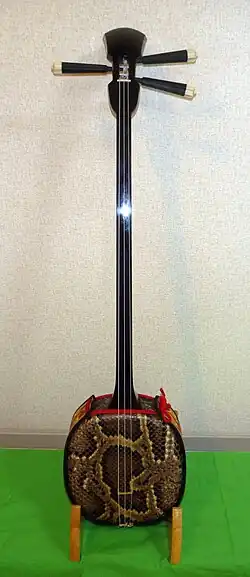
三線 (sanshin): a three-stringed fretless lute with a snakeskin body

Etymology

Kanji in this term
三 線
さん
Grade: 1
しん
Grade: 2
on’yomi

From Mandarin 三弦 (sānxián, “sanxian”).

Pronunciation

    • (Shuri) さ​んしん [sáꜜǹshìǹ] (Kakō – [1])[1]
    • IPA(key): [sãɰ̃ɕĩɴ]

    Noun

    三(さん)線(しん) (sanshin) 

    1. a fretless plucked lute with three strings and skin-covered body, a precursor to the shamisen

    Derived terms

    • 三(さん)線(しん)張(は)やー (sanshin hayā)
    • 歌(うた)三(さん)線(しん) (utasanshin)

    Descendants

    References

    1. 沖縄語辞典 (Okinawago Jiten, “Okinawan Dictionary”)‎, 1963

    Further reading

    This article is issued from Wiktionary. The text is licensed under Creative Commons - Attribution - Sharealike. Additional terms may apply for the media files.