五大明王
Japanese
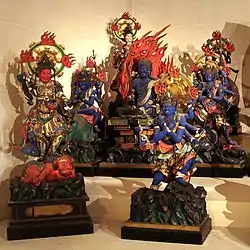
五大明王 (Go Dai Myōō): the Five Wisdom Kings are the blue figures to the right in this image.
| Kanji in this term | |||
|---|---|---|---|
| 五 | 大 | 明 | 王 |
| ご Grade: 1 |
だい Grade: 1 |
みょう Grade: 2 |
おう Grade: 1 |
| on’yomi | |||
Etymology
Buddhist term, imported into Japanese when Buddhism was introduced to Japan, some time during the Kofun, Asuka, and Nara periods.
From Middle Chinese 五大明王 (*ngǒ *dhɑ̀i *miæng *hiuɑng, literally “five great wisdom kings”). The 明王 (*miæng *hiuɑng, “wisdom king”) portion is a translation of Sanskrit विद्याराज (vidyārāja, “knowledge king”).
Usage notes
When borrowed into English, this term is more often romanized as Godai Myōō.
Synonyms
- 五大尊 (ごだいそん, Go Dai Son): the Five Great Reverences
- 五大尊明王 (ごだいそんみょうおう, Go Dai Son Myōō): the Five Great Reverent Wisdom Kings
- 五力明王 (ごりきみょうおう, Go Riki Myōō): the Five Powerful Wisdom Kings
References
- Matsumura, Akira, editor (2006), 大辞林 [Daijirin] (in Japanese), Third edition, Tōkyō: Sanseidō, →ISBN
- Shōgaku Tosho (1988) 国語大辞典(新装版) [Unabridged Dictionary of Japanese (Revised Edition)] (in Japanese), Tōkyō: Shogakukan, →ISBN
This article is issued from Wiktionary. The text is licensed under Creative Commons - Attribution - Sharealike. Additional terms may apply for the media files.