明
| ||||||||
Translingual
| Stroke order | |||
|---|---|---|---|
 | |||
Han character
明 (Kangxi radical 72, 日+4, 8 strokes, cangjie input 日月 (AB), four-corner 67020, composition ⿰日月)
References
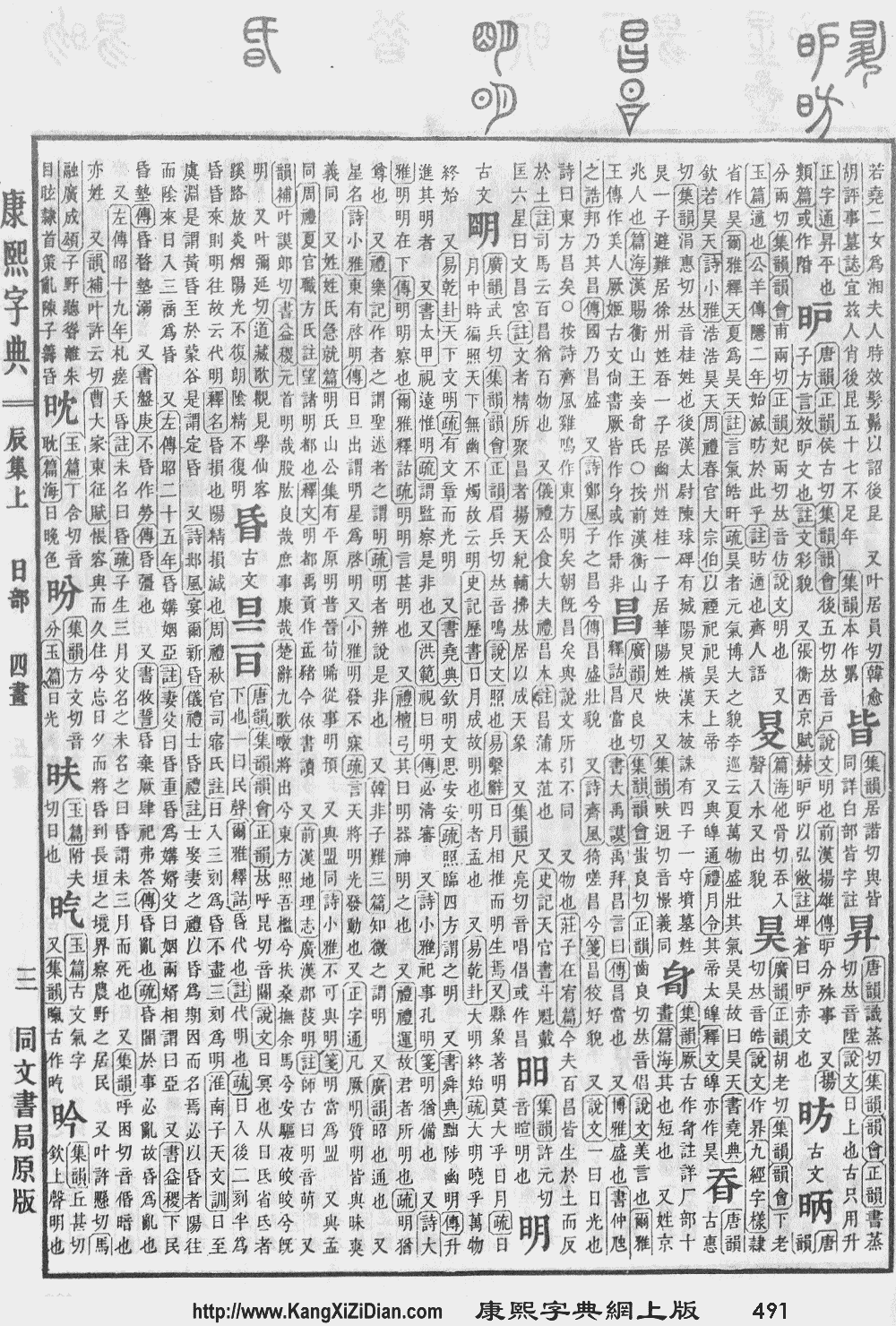
- Kangxi Dictionary: page 491, character 12
- Dai Kanwa Jiten: character 13805
- Dae Jaweon: page 852, character 18
- Hanyu Da Zidian (first edition): volume 2, page 1491, character 8
- Unihan data for U+660E
Chinese
| simp. and trad. |
明 | |
|---|---|---|
| alternative forms | 朙 眀 几 𤰾 𣇱 | |
Glyph origin
| Historical forms of the character 明 | |||||
|---|---|---|---|---|---|
| Shang | Western Zhou | Warring States | Shuowen Jiezi (compiled in Han) | Liushutong (compiled in Ming) | |
| Oracle bone script | Bronze inscriptions | Chu slip and silk script | Ancient script | Small seal script | Transcribed ancient scripts |
 |
 |
 |
 |
 |
 |
Ideogrammic compound (會意/会意) : 日 (“sun”) + 月 (“moon”) – the sun just rising and the moon not yet set – dawn (天明 (tiānmíng)). Alternatively, it may be interpreted as two bright celestial bodies – bright. This form was already found in the oracle bone script and was prevalent throughout the eras.
Three other forms were found in the oracle bone script:
- 朙 (míng) < 囧 (“window”) + 月 – the moon shining through a window – moonlight. This form was also prevalent in the ancient scripts and was considered to be the standard form in Shuowen. See this form's entry for its historical forms.
- 眀 (míng) < 目 (“eye”) + 月 – bright eyes. This form was rarely attested, so it is still uncertain whether this form is actually equivalent to 明. It reappeared in the bamboo script of the Qin dynasty, but this was probably a corruption of 朙 (míng).
- 𤰾 < 田 + 月 – probably a corruption of the above forms.
Etymology
Of either Proto-Sino-Tibetan origin, compare
- Tibetan མདངས (mdangs, “facial color, appearance, brightness”) (Bodman, 1980), or
- Proto-Sino-Tibetan *brwaŋ (“loud; bright”) (STDET); making it cognate with Burmese ပြင်း (prang:, “acute; violent”), Burmese ပြောင် (praung, “to shine”).
Or from Austroasiatic, cognate with 亮 (OC *raŋs, “bright”) (Schuessler, 2007). For more see 亮 (OC *raŋs).
盟 (OC *mraŋ, *mraːŋs, “covenant”) is a derivative (Schuessler, 2007).
Pronunciation
Definitions
明
- bright; light; brilliant
- 明月 ― míngyuè ― splendid moon
- 東方未明,顛倒衣裳。 [Pre-Classical Chinese, trad.]
- From: The Classic of Poetry, c. 11th – 7th centuries BCE, translated based on James Legge's version
- Dōngfāng wèimíng, diāndǎo yīcháng. [Pinyin]
- Before the east was bright,
I was putting on my clothes upside down;
东方未明,颠倒衣裳。 [Pre-Classical Chinese, simp.]
- clear; limpid (transparent; light-conducting; not obscured)
- manifest; apparent (easily seen, perceived, or detected)
- vision; sight (the ability to see)
- 失明 ― shīmíng ― to be blind; to lose eyesight
- 明足以察秋毫之末,而不見輿薪。 [Classical Chinese, trad.]
- From: Mencius, c. 4th century BCE, translated based on James Legge's version
- Míng zúyǐ chá qiūháo zhī mò, ér bùjiàn yúxīn. [Pinyin]
- [M]y eyesight is sharp enough to examine the point of an autumn hair, but I do not see a cart-load of firewood.
明足以察秋毫之末,而不见舆薪。 [Classical Chinese, simp.]
- (of vision) acute; sharp; keen
- (figurative) intellect; knowledge; judgement; discernment; sensibility
- (figurative) intelligent; sensible; informed; wise
- 王之不明,豈足福哉! [Classical Chinese, trad.]
- From: The Records of the Grand Historian, by Sima Qian, c. 91 BCE
- Wáng zhī bùmíng, qǐ zú fú zāi! [Pinyin]
- How can a monarch's lack of judgement be a blessing? (Literally, "That the monarch is not wise, how can this amount to a blessing?")
王之不明,岂足福哉! [Classical Chinese, simp.]
- to understand; to know
- evidently
- (literary) to make known
- 古之欲明明德於天下者,先治其國。 [Classical Chinese, trad.]
- From: The Book of Rites, c. 4th – 2nd century BCE
- Gǔ zhī yù míng míngdé yú tiānxià zhě, xiān zhì qí guó. [Pinyin]
- The ancients who wished to illustrate illustrious virtue throughout the kingdom, first ordered well their own states.
古之欲明明德于天下者,先治其国。 [Classical Chinese, simp.]
- next; following
- (literary) tomorrow
- (~朝) Ming dynasty
- a surname, listed as #111 on the Baijiaxing
- (~母) (Chinese linguistics) the Middle Chinese initial of 明 (MC mjaeng)
See also
Compounds
- 三明 (sānmíng)
- 三明治 (sānmíngzhì)
- 不明 (bùmíng)
- 五明
- 休明
- 伯明罕
- 修明 (xiūmíng)
- 催明鳥/催明鸟
- 光明 (guāngmíng)
- 光明燈/光明灯 (guāngmíngdēng)
- 克明 (kèmíng)
- 公明 (gōngmíng)
- 公生明
- 分明 (fēnmíng)
- 判明 (pànmíng)
- 剖明
- 半透明 (bàntòumíng)
- 南明 (Nánmíng)
- 呈明
- 哉生明
- 唐明皇 (Tángmínghuáng)
- 喪明/丧明
- 嚮明/向明
- 嚴明/严明 (yánmíng)
- 因明
- 圓明園/圆明园 (Yuánmíngyuán)
- 夜明 (yèmíng)
- 夜明珠 (yèmíngzhū)
- 大明 (Dàmíng)
- 大明星
- 大明曆/大明历
- 大明湖 (Dàmínghú)
- 天明 (tiānmíng)
- 失明 (shīmíng)
- 孔明 (Kǒngmíng)
- 孔明燈/孔明灯 (kǒngmíngdēng)
- 宣明 (xuānmíng)
- 小明 (Xiǎomíng)
- 小聰明/小聪明 (xiǎocōngmíng)
- 平明 (píngmíng)
- 幽明
- 幽明錄/幽明录
- 廉明 (liánmíng)
- 復明/复明 (fùmíng)
- 打明火
- 投明
- 挑明
- 指明 (zhǐmíng)
- 擺明/摆明 (bǎimíng)
- 敘明/叙明
- 啟明/启明 (qǐmíng)
- 文明 (wénmíng)
- 文明人 (wénmíngrén)
- 文明戲/文明戏 (wénmíngxì)
- 文明病
- 方明
- 旦明 (dànmíng)
- 明世 (míngshì)
- 明丟丟/明丢丢
- 明主 (míngzhǔ)
- 明了 (míngliǎo)
- 明亮 (míngliàng)
- 明亮亮
- 明亮隔
- 明人 (míngrén)
- 明令 (mínglìng)
- 明仔載/明仔载 (bîn-á-chài)
- 明信片 (míngxìnpiàn)
- 明倫堂/明伦堂
- 明允
- 明光 (Míngguāng)
- 明光光
- 明光瓦亮
- 明兒/明儿 (míngr)
- 明兩/明两
- 明公 (mínggōng)
- 明凈/明净
- 明分
- 明刑
- 明前
- 明升暗降
- 明君 (míngjūn)
- 明命
- 明哲 (míngzhé)
- 明喻 (míngyù)
- 明器 (míngqì)
- 明四家
- 明堂
- 明夜
- 明天 (míngtiān)
- 明太祖
- 明夷 (míngyí)
- 明妃
- 明如翦
- 明威
- 明媚 (míngmèi)
- 明密
- 明察 (míngchá)
- 明察暗訪/明察暗访 (míngchá'ànfǎng)
- 明察秋毫 (míngchá qiūháo)
- 明局
- 明師/明师
- 明幌幌
- 明年 (míngnián)
- 明府
- 明度 (míngdù)
- 明後/明后
- 明徹/明彻
- 明德 (míngdé)
- 明德茶
- 明心 (míngxīn)
- 明志 (míngzhì)
- 明忘八
- 明快 (míngkuài)
- 明恕
- 明悟
- 明慎
- 明慧 (mínghuì)
- 明打明
- 明挖
- 明搶/明抢
- 明據/明据
- 明擺著/明摆着
- 明教 (míngjiào)
- 明文 (míngwén)
- 明新
- 明斷/明断
- 明旌
- 明日 (míngrì)
- 明旦 (míngdàn)
- 明早 (míngzǎo)
- 昆明 (Kūnmíng)
- 昌明 (chāngmíng)
- 昏明
- 明明 (míngmíng)
- 昆明池
- 昆明湖 (Kūnmíng Hú)
- 明星 (míngxīng)
- 明時/明时
- 明晃晃 (mínghuǎnghuǎng)
- 明晨
- 明晰 (míngxī)
- 明智 (míngzhì)
- 明暗 (míng'àn)
- 明暢/明畅
- 明曉/明晓
- 明月 (míngyuè)
- 明月光
- 明朗 (mínglǎng)
- 明朝
- 明杖
- 明板
- 明槍/明枪
- 明槍易躲,暗箭難防/明枪易躲,暗箭难防 (míngqiāng yì duǒ, ànjiàn nán fáng)
- 明槍暗箭/明枪暗箭
- 明樓/明楼
- 明正
- 明水 (Míngshuǐ)
- 明決/明决
- 明汪汪
- 明河 (mínghé)
- 明法
- 明治 (Míngzhì)
- 明淨/明净 (míngjìng)
- 明溝/明沟
- 明滅/明灭
- 明滴溜
- 明潔/明洁
- 明澈 (míngchè)
- 明火 (mínghuǒ)
- 明燈/明灯 (míngdēng)
- 明燭/明烛
- 明燦燦/明灿灿
- 明牌
- 明牧
- 明王 (míngwáng)
- 明玕
- 明珠 (míngzhū)
- 明琅
- 明理 (mínglǐ)
- 明瑟
- 明璫/明珰
- 明瓦
- 明當/明当
- 明發/明发
- 明白
- 明白人 (míngbairén)
- 明盛
- 明盤/明盘
- 明目 (míngmù)
- 明目張膽/明目张胆 (míngmùzhāngdǎn)
- 明眸 (míngmóu)
- 明眼
- 明眼人 (míngyǎnrén)
- 明瞭/明了 (míngliǎo)
- 明知 (míngzhī)
- 明知道
- 明石 (míngshí)
- 明確/明确 (míngquè)
- 明碼/明码 (míngmǎ)
- 明礬/明矾 (míngfán)
- 明示 (míngshì)
- 明祀
- 明神
- 明秀
- 明節/明节
- 明範/明范
- 明經/明经
- 明線/明线
- 明者
- 明聖/明圣
- 明肌雪
- 明膠/明胶 (míngjiāo)
- 明臺/明台
- 明良
- 明蘆/明芦 (Mínglú)
- 明處/明处
- 明蝦/明虾 (míngxiā)
- 明蟾 (míngchán)
- 明衣
- 明見/明见
- 明言 (míngyán)
- 明訓/明训
- 明詔/明诏
- 明詩/明诗
- 明誓
- 明說/明说 (míngshuō)
- 明調/明调
- 明講/明讲
- 明證/明证 (míngzhèng)
- 明豔/明艳 (míngyàn)
- 明貺/明贶
- 明賢/明贤
- 明輪/明轮
- 明辨 (míngbiàn)
- 明通 (Míngtōng)
- 明達/明达 (míngdá)
- 明道
- 明遠樓/明远楼
- 明銳/明锐
- 明鏡/明镜 (míngjìng)
- 明鐙/明镫
- 明鑒/明鉴
- 明鑑/明鉴
- 明閃閃/明闪闪
- 明間/明间
- 明開/明开
- 明降
- 明靈/明灵 (mínglíng)
- 明靜/明静
- 明順/明顺
- 明顯/明显 (míngxiǎn)
- 明駝/明驼
- 明麗/明丽 (mínglì)
- 昭明 (zhāomíng)
- 春明
- 晨明 (chénmíng)
- 晦明 (huìmíng)
- 月明 (yuèmíng)
- 朏明
- 朧明/胧明
- 未明 (wèimíng)
- 朱明 (zhūmíng)
- 東明/东明 (Dōngmíng)
- 松明 (sōngmíng)
- 查明 (chámíng)
- 標明/标明 (biāomíng)
- 正明師/正明师
- 永明體/永明体
- 沒天明/没天明
- 決明/决明 (juémíng)
- 決明子/决明子 (juémíngzǐ)
- 注明 (zhùmíng)
- 洞明
- 流明 (liúmíng)
- 淺明/浅明
- 清明 (qīngmíng)
- 清明河 (Qīngmínghé)
- 清明節/清明节 (Qīngmíngjié)
- 澄明 (chéngmíng)
- 焦明 (jiāomíng)
- 無明/无明 (wúmíng)
- 無明火/无明火 (wúmínghuǒ)
- 照明 (zhàomíng)
- 照明彈/照明弹
- 申明 (shēnmíng)
- 發明/发明 (fāmíng)
- 發明家/发明家 (fāmíngjiā)
- 真理越辯越明/真理越辩越明 (zhēnlǐ yuèbiànyuèmíng)
- 知人者智,自知者明 (zhī rén zhě zhì, zì zhī zhě míng)
- 石決明/石决明 (shíjuémíng)
- 砸明火
- 神明 (shénmíng)
- 稟明/禀明
- 空明
- 簡明/简明 (jiǎnmíng)
- 精明 (jīngmíng)
- 聖明/圣明 (shèngmíng)
- 聰明/聪明 (cōngmíng)
- 聲明/声明 (shēngmíng)
- 聰明人/聪明人 (cōngmíngrén)
- 至明
- 芵明
- 英明 (yīngmíng)
- 薄明
- 虛明/虚明
- 表明 (biǎomíng)
- 言明 (yánmíng)
- 註明/注明 (zhùmíng)
- 詳明/详明 (xiángmíng)
- 說明/说明 (shuōmíng)
- 說明文/说明文 (shuōmíngwén)
- 說明書/说明书 (shuōmíngshū)
- 證明/证明 (zhèngmíng)
- 證明書/证明书 (zhèngmíngshū)
- 質明/质明
- 賢明/贤明 (xiánmíng)
- 趙公明/赵公明
- 趕明兒/赶明儿
- 載明/载明
- 辨明 (biànmíng)
- 透明 (tòumíng)
- 通明 (tōngmíng)
- 透明化
- 透明度 (tòumíngdù)
- 透明漆
- 透明體/透明体 (tòumíngtǐ)
- 過明路/过明路
- 遲明/迟明
- 重明 (chóngmíng)
- 野決明/野决明
- 長明燈/长明灯 (chángmíngdēng)
- 開明/开明 (kāimíng)
- 闡明/阐明 (chǎnmíng)
- 陽明/阳明 (yángmíng)
- 陽明山/阳明山
- 靜明園/静明园
- 頭明/头明
- 顯明/显明 (xiǎnmíng)
- 餘明/余明
- 馬明王/马明王
- 驗明/验明
- 高明 (gāomíng)
- 鬼聰明/鬼聪明
- 鮮明/鲜明 (xiānmíng)
- 鷦明/鹪明 (jiāomíng)
- 黃明/黄明
- 黃明膠/黄明胶
- 黎明 (límíng)
- 齊明/齐明
Descendants
References
- Dictionary of Chinese Character Variants (教育部異體字字典), A01784
- “明”, in 漢語多功能字庫 (Multi-function Chinese Character Database), 香港中文大學 (the Chinese University of Hong Kong), 2014–
Japanese
Readings
- Go-on: みょう (myō, Jōyō)←みやう (myau, historical)
- Kan-on: めい (mei, Jōyō)
- Tō-on: みん (min)
- Kun: あかり (akari, 明かり, Jōyō); あかるい (akarui, 明るい, Jōyō); あかるむ (akarumu, 明るむ, Jōyō); あからむ (akaramu, 明らむ, Jōyō); あきらか (akiraka, 明らか, Jōyō); あける (akeru, 明ける, Jōyō); あく (aku, 明く, Jōyō); あくる (akuru, 明くる, Jōyō); あかす (akasu, 明かす, Jōyō)
- Nanori: あ (a); あか (aka); あかり (akari); あかる (akaru); あき (aki); あきら (akira); あけ (ake); あける (akeru); きよし (kiyoshi); くに (kuni); さとし (satoshi); てる (teru); とおる (tōru); とし (toshi); なお (nao); のり (nori); はじめ (hajime); はる (haru); ひろ (hiro); み (mi); みつ (mitsu); よし (yoshi)
Compounds
Etymology 1
| Kanji in this term |
|---|
| 明 |
| めい Grade: 2 |
| kan’on |
From Middle Chinese 明 (MC mjaeng).
The 漢音 (kan'on, literally “Han sound”) reading, so likely a later borrowing from Middle Chinese.
Affix
明 • (mei)
- bright, brightening
- clarifying, understanding
- brighten, enlighten
- open to the world
- deity, god
Derived terms
- 明暗 (meian)
- 明快 (meikai)
- 明解 (meikai)
- 明海 (meikai)
- 明確 (meikaku)
- 明鏡 (meikyō)
- 明君 (meikun)
- 明言 (meigen)
- 明察 (meisatsu)
- 明示 (meiji)
- 明治 (Meiji)
- 明晰 (meiseki)
- 明白 (meihaku)
- 明瞭 (meiryō)
- 解明 (kaimei)
- 究明 (kyūmei)
- 克明 (kokumei)
- 松明 (shōmei)
- 照明 (shōmei)
- 証明 (shōmei)
- 晨明 (shinmei)
- 透明 (tōmei)
- 薄明 (hakumei)
- 発明 (hatsumei)
- 不明 (fumei)
- 文明 (bunmei)
Etymology 2
| Kanji in this term |
|---|
| 明 |
| みょう Grade: 2 |
| goon |
/mʲau/ → /mʲɔː/ → /mʲoː/
From Middle Chinese 明 (MC mjaeng).
The 呉音 (goon, literally “Wu sound”) reading, so likely the earlier borrowing from Middle Chinese.
The Buddhist senses are a translation of Sanskrit विद्या (vidyā, “knowledge, wisdom”).[1]
Affix
- bright
- light, lamp
- clarifying
- passing to the next in time
- graceful, respectful
- (Buddhism) passing of knowledge, scholarship, or study
Derived terms
Noun
Etymology 3
| Kanji in this term |
|---|
| 明 |
| みん Grade: 2 |
| tōon |
The 唐音 (tōon, literally “Tang sound”), so likely this reading was borrowed from around the Song dynasty.
Etymology 4
| Kanji in this term |
|---|
| 明 |
| さや Grade: 2 |
| irregular |
| For pronunciation and definitions of 明 – see the following entry. | ||
| ||
| (This term, 明, is an alternative spelling of the above term.) |
Etymology 5
| Kanji in this term |
|---|
| 明 |
| あき(ら) Grade: 2 |
| nanori |
Nominalization of the stem of adjective 明らか (akiraka, “clear, visible”).
References
- Matsumura, Akira (1995) 大辞泉 [Daijisen] (in Japanese), First edition, Tōkyō: Shogakukan, →ISBN
Kunigami
Miyako
Okinawan
Vietnamese
Han character
明: Hán Việt readings: minh (
明: Nôm readings: mừng[1][2][3][4][5], minh[2][5], mầng[2][5], miêng[3][5], mênh[3]
References
- Nguyễn (2014).
- Nguyễn et al. (2009).
- Trần (2004).
- Hồ (1976).
- Taberd & Pigneau de Béhaine (1838).