凭
See also: 憑
| ||||||||
Translingual
Han character
凭 (Kangxi radical 16, 几+6, 8 strokes, cangjie input 人土竹弓 (OGHN), four-corner 22217, composition ⿱任几)
Derived characters
- 𠶉, 𬊠, 𢀫
Related characters
- 憑 (Orthodox traditional form of 凭)
References
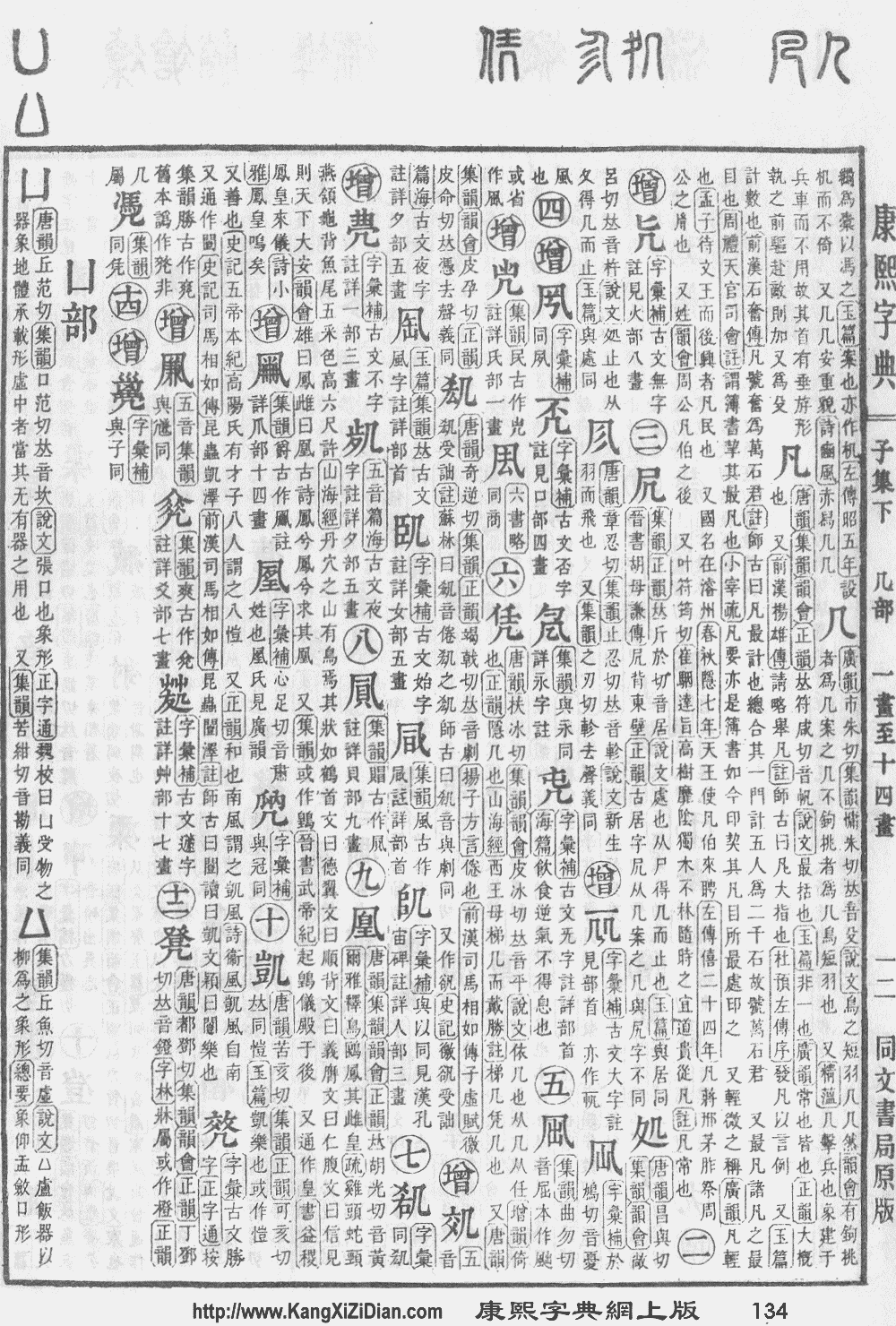
- Kangxi Dictionary: page 134, character 16
- Dai Kanwa Jiten: character 1766
- Dae Jaweon: page 299, character 33
- Hanyu Da Zidian (first edition): volume 1, page 277, character 22
- Unihan data for U+51ED
Chinese
Glyph origin
| Historical forms of the character 凭 | |
|---|---|
| Shuowen Jiezi (compiled in Han) | Liushutong (compiled in Ming) |
| Small seal script | Transcribed ancient scripts |
 |
 |
Definitions
| For pronunciation and definitions of 凭 – see 憑 (“to lean on; to lean against; to depend on; to rely on; etc.”). (This character is the simplified and variant traditional form of 憑). |
Notes:
|
Japanese
Kanji
凭
- This term needs a translation to English. Please help out and add a translation, then remove the text
{{rfdef}}.
Vietnamese
Han character
凭: Hán Nôm readings: bằng, bẵng, phẳng, vững
- This term needs a translation to English. Please help out and add a translation, then remove the text
{{rfdef}}.
References
This article is issued from Wiktionary. The text is licensed under Creative Commons - Attribution - Sharealike. Additional terms may apply for the media files.