憑
| ||||||||
Translingual
Han character
憑 (Kangxi radical 61, 心+12, 16 strokes, cangjie input 戈火心 (IFP), four-corner 31332, composition ⿱馮心)
Derived characters
- 𧂋
Related characters
- 凭 (Simplified form of 憑)
References
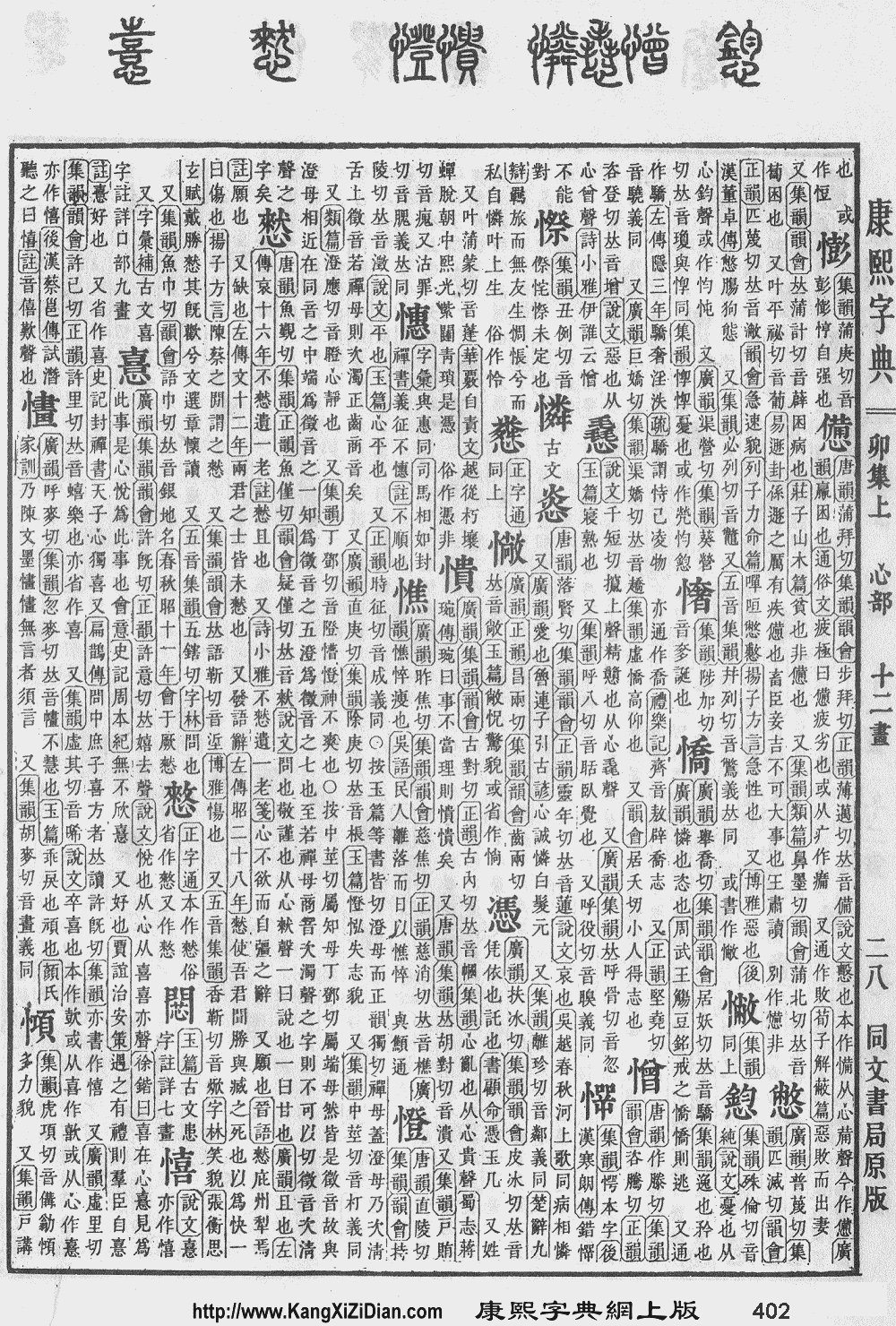
- Kangxi Dictionary: page 402, character 16
- Dai Kanwa Jiten: character 11210
- Dae Jaweon: page 742, character 18
- Hanyu Da Zidian (first edition): volume 4, page 2351, character 2
- Unihan data for U+6191
Chinese
Glyph origin
Characters in the same phonetic series (仌) (Zhengzhang, 2003)
Phono-semantic compound (形聲/形声, OC *bɯŋ) : phonetic 馮 (OC *brɯŋ, *bɯŋ) + semantic 心.
Pronunciation
Definitions
憑
Synonyms
- (to depend on):
- 仗恃 (zhàngshì) (literary, chiefly derogatory)
- 仰仗 (yǎngzhàng)
- 仰賴/仰赖 (yǎnglài)
- 依 (yī)
- 依仗 (yīzhàng)
- 依倚 (Hokkien)
- 依恃 (yīshì) (literary)
- 依歸/依归 (yīguī) (literary)
- 依託/依托 (yītuō)
- 依賴/依赖 (yīlài)
- 依附 (yīfù)
- 依靠 (yīkào)
- 倚仗 (yǐzhàng)
- 倚倚 (Xiamen Hokkien, Zhangzhou Hokkien)
- 借助 (jièzhù)
- 倚賴/倚赖 (yǐlài)
- 倚靠 (yǐkào)
- 寄 (jì)
- 展品棒 (Zhangzhou Hokkien)
- 怙恃 (hùshì) (literary)
- 憑仗/凭仗 (píngzhàng)
- 憑依/凭依 (píngyī)
- 憑借/凭借 (píngjiè)
- 憑恃/凭恃 (píngshì)
- 憑靠/凭靠 (píngkào)
- 指 (zhǐ)
- 據/据
- 歸依/归依 (guīyī) (literary)
- 聊 (liáo) (formal)
- 賴/赖 (lài) (literary, or in compounds only)
- (no matter):
- (on the basis of):
- (proof):
- 佐證/佐证 (zuǒzhèng)
- 例證/例证 (lìzhèng)
- 信 (literary, or in compounds)
- 信據/信据 (xìnjù) (literary, reliable evidence)
- 力證/力证 (lìzhèng) (strong evidence)
- 印證/印证 (yìnzhèng)
- 實證/实证 (shízhèng) (concrete evidence)
- 干證 (Hokkien)
- 憑信/凭信 (píngxìn)
- 憑據/凭据 (píngjù)
- 憑條/凭条 (Min Nan)
- 憑證/凭证 (píngzhèng)
- 據/据 (literary, or in compounds)
- 論證/论证 (lùnzhèng)
- 證/证 (zhèng)
- 證據/证据 (zhèngjù)
- 證明/证明 (zhèngmíng)
- 證見/证见 (Hokkien, literary)
- (to request):
Compounds
- 不足為憑/不足为凭 (bùzúwéipíng)
- 任憑/任凭 (rènpíng)
- 依憑/依凭 (yīpíng)
- 債權憑證/债权凭证
- 公憑/公凭
- 受益憑證/受益凭证
- 口說無憑/口说无凭 (kǒushuōwúpíng)
- 各憑本事/各凭本事
- 單憑/单凭
- 執憑文帖/执凭文帖
- 專賣憑證/专卖凭证
- 憑仗/凭仗 (píngzhàng)
- 憑依/凭依 (píngyī)
- 憑信/凭信 (píngxìn)
- 憑借/凭借 (píngjiè)
- 憑倚/凭倚
- 憑准
- 憑券/凭券
- 憑單/凭单 (píngdān)
- 憑噫/凭噫
- 憑媒說合/凭媒说合
- 憑山俯海/凭山俯海
- 憑弔/凭吊 (píngdiào)
- 憑心/凭心
- 憑恃/凭恃 (píngshì)
- 憑摺/凭折
- 憑據/凭据 (píngjù)
- 憑桌/凭桌
- 憑欄/凭栏 (pínglán)
- 憑河暴虎/凭河暴虎
- 憑準/凭准 (píngzhǔn)
- 憑照/凭照
- 憑眺/凭眺
- 憑票/凭票
- 憑空/凭空 (píngkōng)
- 憑空捏造/凭空捏造
- 憑空杜撰
- 憑肩/凭肩
- 憑脈/凭脉
- 憑良心說/凭良心说
- 憑著/凭著
- 憑藉/凭借 (píngjiè)
- 憑虛/凭虚
- 憑虛公子/凭虚公子
- 憑虛構象/凭虚构象
- 憑證/凭证 (píngzhèng)
- 憑軾/凭轼
- 憑闌/凭阑
- 憑陵/凭陵
- 憑險/凭险
- 憑驗/凭验
- 憑高/凭高
- 憑高望遠/凭高望远
- 戴憑奪席/戴凭夺席
- 戴憑重席/戴凭重席
- 文憑/文凭 (wénpíng)
- 有憑有據/有凭有据
- 有證為憑/有证为凭
- 無憑/无凭
- 狐憑鼠伏/狐凭鼠伏
- 白憑無故/白凭无故
- 真憑實據/真凭实据 (zhēnpíngshíjù)
- 空口無憑/空口无凭 (kōngkǒuwúpíng)
- 聽憑/听凭 (tīngpíng)
- 聽憑尊便/听凭尊便 (tīngpíngzūnbiàn)
- 鼠憑社貴/鼠凭社贵
Descendants
Pronunciation
Japanese
Compounds
- 憑依 (hyōi): spirit possession
- 信憑性 (shinpyōsei): credibility
This article is issued from Wiktionary. The text is licensed under Creative Commons - Attribution - Sharealike. Additional terms may apply for the media files.