垌
| ||||||||
Translingual
Han character
垌 (Kangxi radical 32, 土+6, 9 strokes, cangjie input 土月一口 (GBMR), four-corner 47120, composition ⿰土同)
References
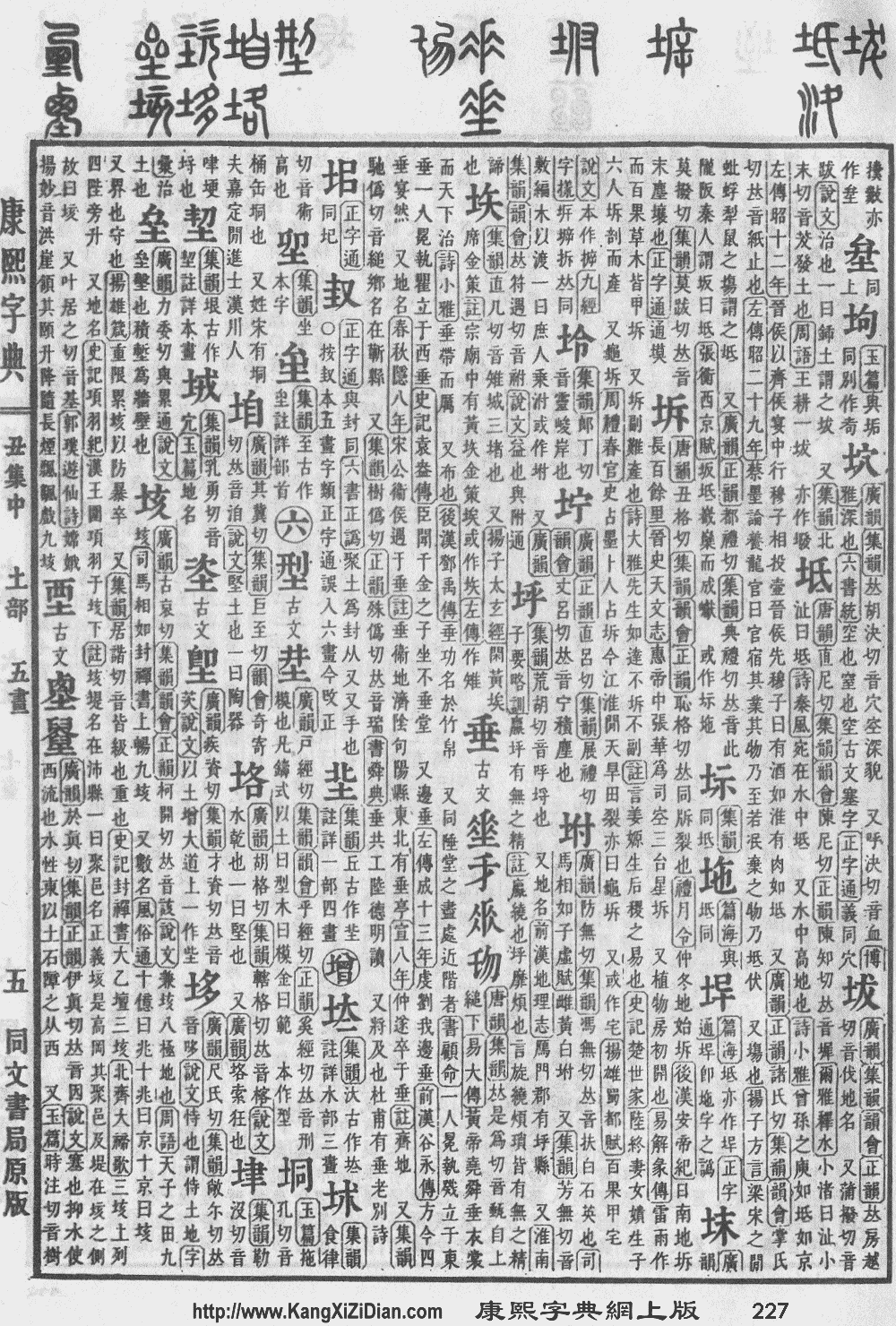
- Kangxi Dictionary: page 227, character 30
- Dai Kanwa Jiten: character 5031
- Dae Jaweon: page 463, character 19
- Hanyu Da Zidian (first edition): volume 1, page 439, character 3
- Unihan data for U+578C
Chinese
Glyph origin
Phono-semantic compound (形聲/形声) : semantic 土 (“earth, ground”) + phonetic 同 (OC *doːŋ).
Pronunciation
Compounds
- 儒垌
- 合傘垌/合伞垌
Pronunciation
References
- “垌”, in 漢語多功能字庫 (Multi-function Chinese Character Database), 香港中文大學 (the Chinese University of Hong Kong), 2014–
Japanese
Kanji
垌
- This term needs a translation to English. Please help out and add a translation, then remove the text
{{rfdef}}.
Korean
Vietnamese
Han character
Hán-Nôm meaning is the same as the Chinese reading. However, đồng in Latin Vietnamese "Chữ Quốc Ngữ" means copper, coin, or currency instead.
- This term needs a translation to English. Please help out and add a translation, then remove the text
{{rfdef}}.
This article is issued from Wiktionary. The text is licensed under Creative Commons - Attribution - Sharealike. Additional terms may apply for the media files.