壻
| ||||||||
Translingual
Han character
壻 (Kangxi radical 33, 士+9, 12 strokes, cangjie input 土弓人月 (GNOB), composition ⿰土胥)
References
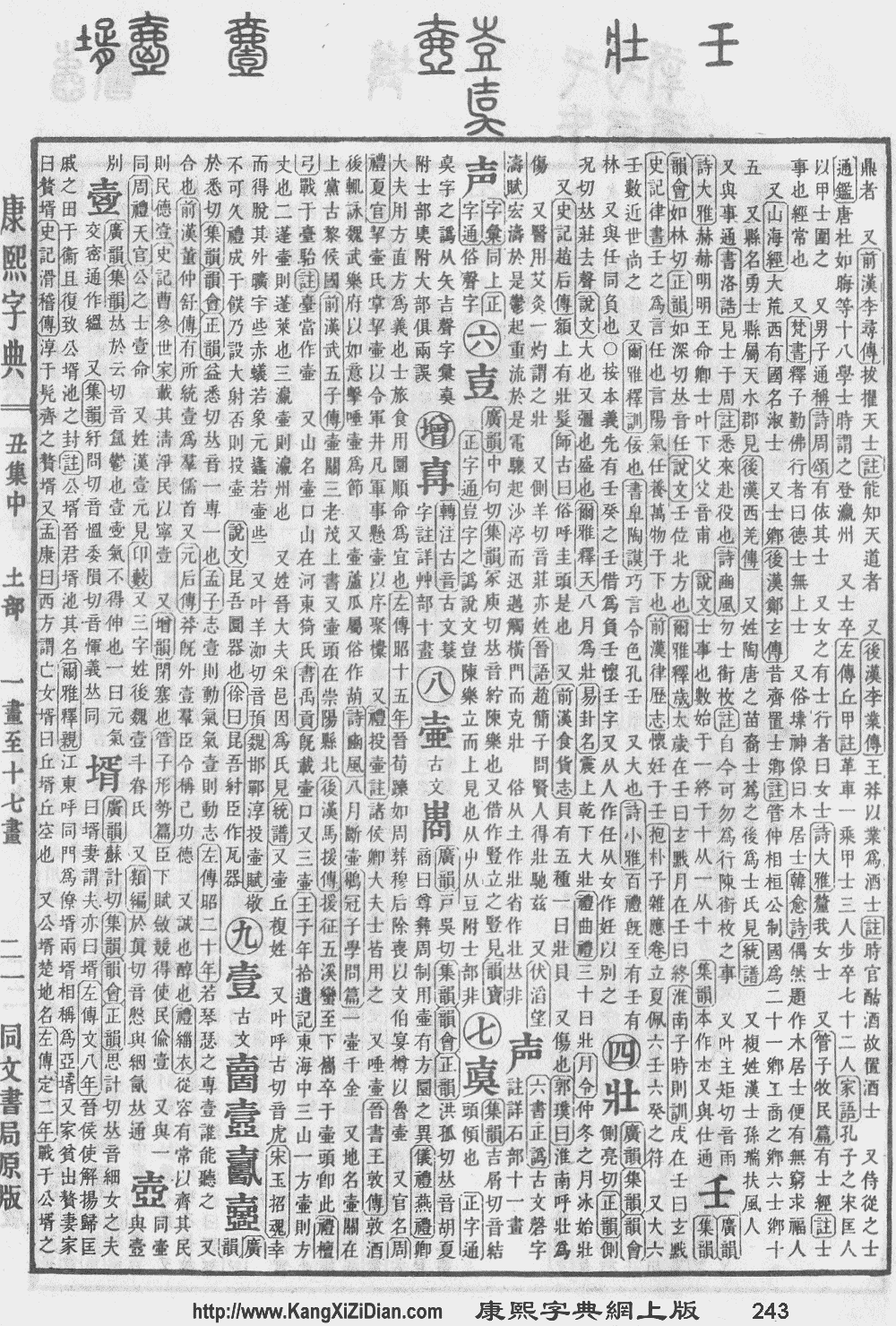
- Kangxi Dictionary: page 243, character 17
- Dai Kanwa Jiten: character 5664
- Hanyu Da Zidian (first edition): volume 1, page 469, character 4
- Unihan data for U+58FB
Chinese
Glyph origin
Characters in the same phonetic series (疋) (Zhengzhang, 2003)
Phono-semantic compound (形聲/形声, OC *sŋeːs) : semantic 士 + phonetic 胥 (OC *sŋa, *sŋaʔ).
Definitions
| For pronunciation and definitions of 壻 – see 婿 (“son-in-law; husband”). (This character is a variant form of 婿). |
Japanese
Korean
Pronunciation
- (SK Standard/Seoul) IPA(key): [sʰʌ̹]
- Phonetic hangul: [서]
Compounds
- 서랑 (壻郞, seorang)
- 서생 (壻甥, seosaeng)
- 서양자 (壻養子, seoyangja)
Vietnamese
This article is issued from Wiktionary. The text is licensed under Creative Commons - Attribution - Sharealike. Additional terms may apply for the media files.