嬯
| ||||||||
Translingual
Han character
嬯 (Kangxi radical 38, 女+14, 17 strokes, cangjie input 女土口土 (VGRG), four-corner 44414, composition ⿰女臺)
References
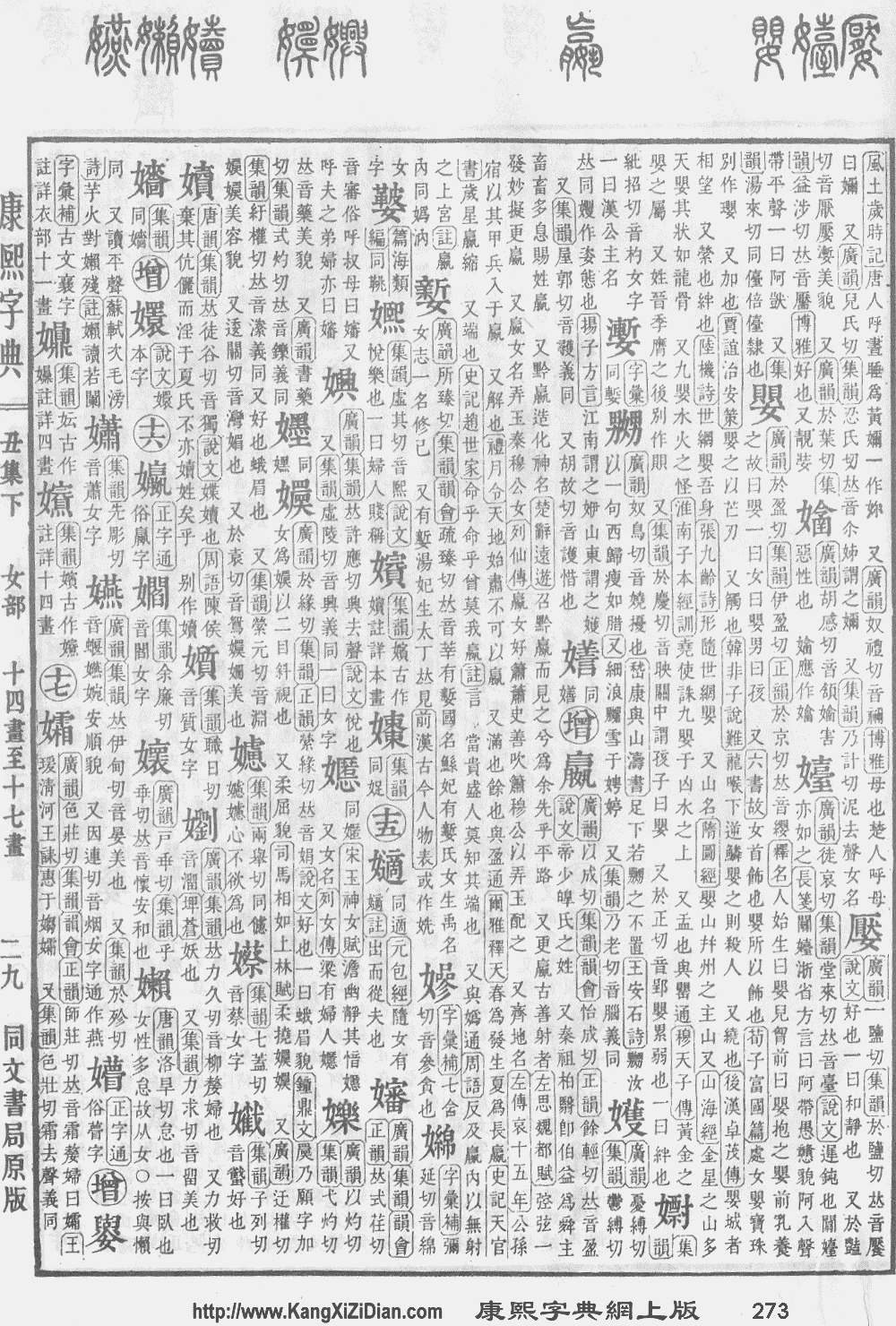
- Kangxi Dictionary: page 273, character 3
- Dai Kanwa Jiten: character 6827
- Dae Jaweon: page 541, character 9
- Hanyu Da Zidian (first edition): volume 2, page 1085, character 14
- Unihan data for U+5B2F
Chinese
| trad. | 嬯 | |
|---|---|---|
| simp. # | 嬯 | |

Etymology
Schuessler (2007) proposed an Austroasiatic origin by comparing 嬯 (OC tə̂) to Old Khmer tai (“female person, commoner woman”) (whence Khmer ម្តាយ (mtaay, “mother”)).
This is the same word as 臺 "the lowest kind of servant" (Zuo)
Pronunciation
Japanese
Kanji
嬯
- This term needs a translation to English. Please help out and add a translation, then remove the text
{{rfdef}}.
This article is issued from Wiktionary. The text is licensed under Creative Commons - Attribution - Sharealike. Additional terms may apply for the media files.