嬰
See also: 婴
| ||||||||
Translingual
| Traditional | 嬰 |
|---|---|
| Shinjitai (extended) |
𰋷 |
| Simplified | 婴 |
Han character
嬰 (Kangxi radical 38, 女+14, 17 strokes, cangjie input 月金女 (BCV), four-corner 66404, composition ⿱賏女)
References
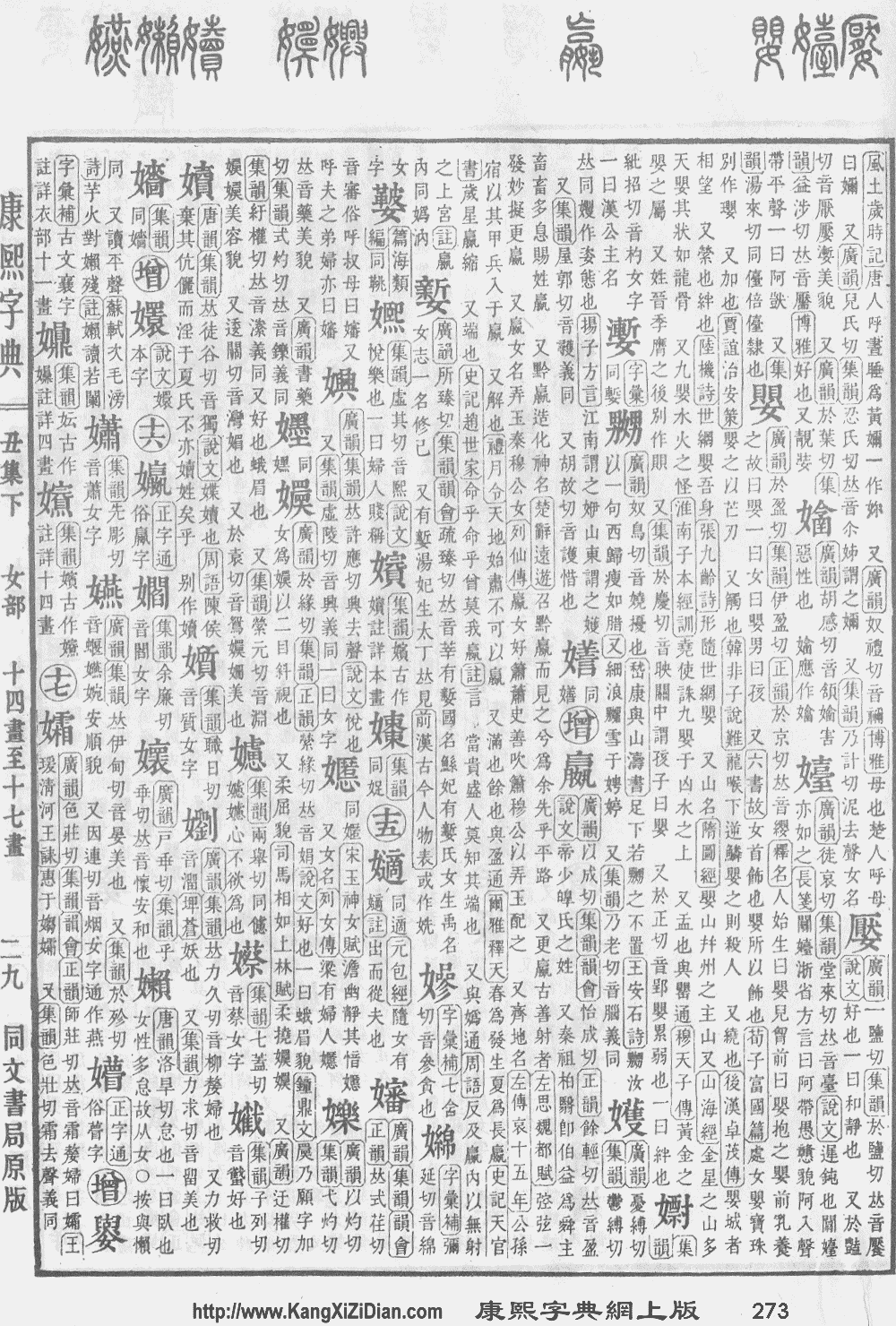
- Kangxi Dictionary: page 273, character 4
- Dai Kanwa Jiten: character 6828
- Dae Jaweon: page 541, character 10
- Hanyu Da Zidian (first edition): volume 2, page 1086, character 8
- Unihan data for U+5B30
Chinese
| trad. | 嬰 | |
|---|---|---|
| simp. | 婴 | |
| 2nd round simp. | 𰋷 | |
| alternative forms | 孆/𫝭 ancient 孾/𪧀 ancient | |
Glyph origin
| Historical forms of the character 嬰 | ||
|---|---|---|
| Western Zhou | Shuowen Jiezi (compiled in Han) | Liushutong (compiled in Ming) |
| Bronze inscriptions | Small seal script | Transcribed ancient scripts |
 |
 |
 |
Characters in the same phonetic series (賏) (Zhengzhang, 2003)
Ideogrammic compound (會意/会意) : 賏 (“a string of shells”) + 女 (“woman”).
Etymology
Probably related to 縈 (OC *qʷeŋ, “to entwine”) (Schuessler, 2007).
Pronunciation
Definitions
嬰
Synonyms
Dialectal synonyms of 嬰兒 (“baby; infant”) [map]
Compounds
- 九嬰/九婴
- 元嬰/元婴
- 句嬰/句婴
- 咳嬰/咳婴
- 女嬰/女婴 (nǚyīng)
- 嬰丁/婴丁
- 嬰人/婴人
- 嬰仔/婴仔 (eⁿ-á)
- 嬰兒/婴儿 (yīng'ér)
- 嬰兒子/婴儿子
- 嬰兒室/婴儿室
- 嬰兒車/婴儿车 (yīng'érchē)
- 嬰兒風/婴儿风
- 嬰冥/婴冥
- 嬰城/婴城
- 嬰嬰/婴婴
- 嬰子/婴子
- 嬰孩/婴孩 (yīnghái)
- 嬰孺/婴孺
- 嬰守/婴守
- 嬰年/婴年
- 嬰幼兒/婴幼儿 (yīngyòu'ér)
- 嬰弱/婴弱
- 嬰心/婴心
- 嬰忤/婴忤
- 嬰意/婴意
- 嬰懷/婴怀
- 嬰戮/婴戮
- 嬰提/婴提
- 嬰武/婴武
- 嬰母/婴母
- 嬰沉/婴沉
- 嬰物/婴物
- 嬰病/婴病
- 嬰疾/婴疾
- 嬰痾/婴疴
- 嬰石/婴石
- 嬰禦/婴御
- 嬰稚/婴稚
- 嬰累/婴累
- 嬰絹/婴绢
- 嬰綸/婴纶
- 嬰纏/婴缠
- 嬰罪/婴罪
- 嬰羅/婴罗
- 嬰耄/婴耄
- 嬰臼/婴臼
- 嬰薄/婴薄
- 嬰衿/婴衿
- 嬰觸/婴触
- 嬰遘/婴遘
- 嬰釁/婴衅
- 嬰鱗/婴鳞
- 孩嬰/孩婴
- 孺嬰/孺婴
- 孺子嬰/孺子婴
- 慅嬰/慅婴
- 晨嬰/晨婴
- 棄嬰/弃婴 (qìyīng)
- 棄璧負嬰/弃璧负婴
- 溺嬰/溺婴 (nìyīng)
- 玉嬰/玉婴
- 田嬰/田婴 (chhân-eⁿ) (Min Nan)
- 男嬰/男婴 (nányīng)
- 白玉嬰/白玉婴
- 聖嬰現象/圣婴现象 (shèngyīng xiànxiàng)
- 育嬰/育婴 (yùyīng)
- 育嬰堂/育婴堂
- 育嬰院/育婴院
- 脫桃嬰兒/脱桃婴儿
- 試管嬰兒/试管婴儿 (shìguǎn yīng'ér)
- 退嬰/退婴
- 連體嬰/连体婴 (liántǐyīng)
- 遺嬰/遗婴
- 還嬰/还婴
- 鉤嬰/钩婴
- 陶嬰/陶婴
- 香嬰/香婴
References
- “嬰”, in 漢語多功能字庫 (Multi-function Chinese Character Database), 香港中文大學 (the Chinese University of Hong Kong), 2014–
Japanese
| 𰋷 (𰋷) | |
| 嬰 |
Kanji
嬰
(uncommon “Hyōgai” kanji, kyūjitai kanji, shinjitai form 𰋷)
- young child, newborn child
- used as western symbol ♯ sharp to mark the accidentals of musical notes
- necklace
- put around one's neck
Readings
Compounds
Etymology
| Kanji in this term |
|---|
| 嬰 |
| えい Hyōgaiji |
| kan’on |
From Middle Chinese 嬰 (MC 'jieng).
The kan'on pronunciation, so likely a later borrowing.
References
- Matsumura, Akira, editor (2006), 大辞林 [Daijirin] (in Japanese), Third edition, Tōkyō: Sanseidō, →ISBN
Korean
Etymology
(This etymology is missing or incomplete. Please add to it, or discuss it at the Etymology scriptorium. Particularly: “Middle Korean readings, if any”)
Pronunciation
- (SK Standard/Seoul) IPA(key): [jʌ̹ŋ]
- Phonetic hangul: [영]
Hanja
Wikisource 嬰 • (yeong) (hangeul 영, revised yeong, McCune–Reischauer yŏng)
- This term needs a translation to English. Please help out and add a translation, then remove the text
{{rfdef}}.
Vietnamese
This article is issued from Wiktionary. The text is licensed under Creative Commons - Attribution - Sharealike. Additional terms may apply for the media files.