庢
| ||||||||
Translingual
Han character
庢 (Kangxi radical 53, 广+6, 9 strokes, cangjie input 戈一戈土 (IMIG), four-corner 00214, composition ⿸广至)
References
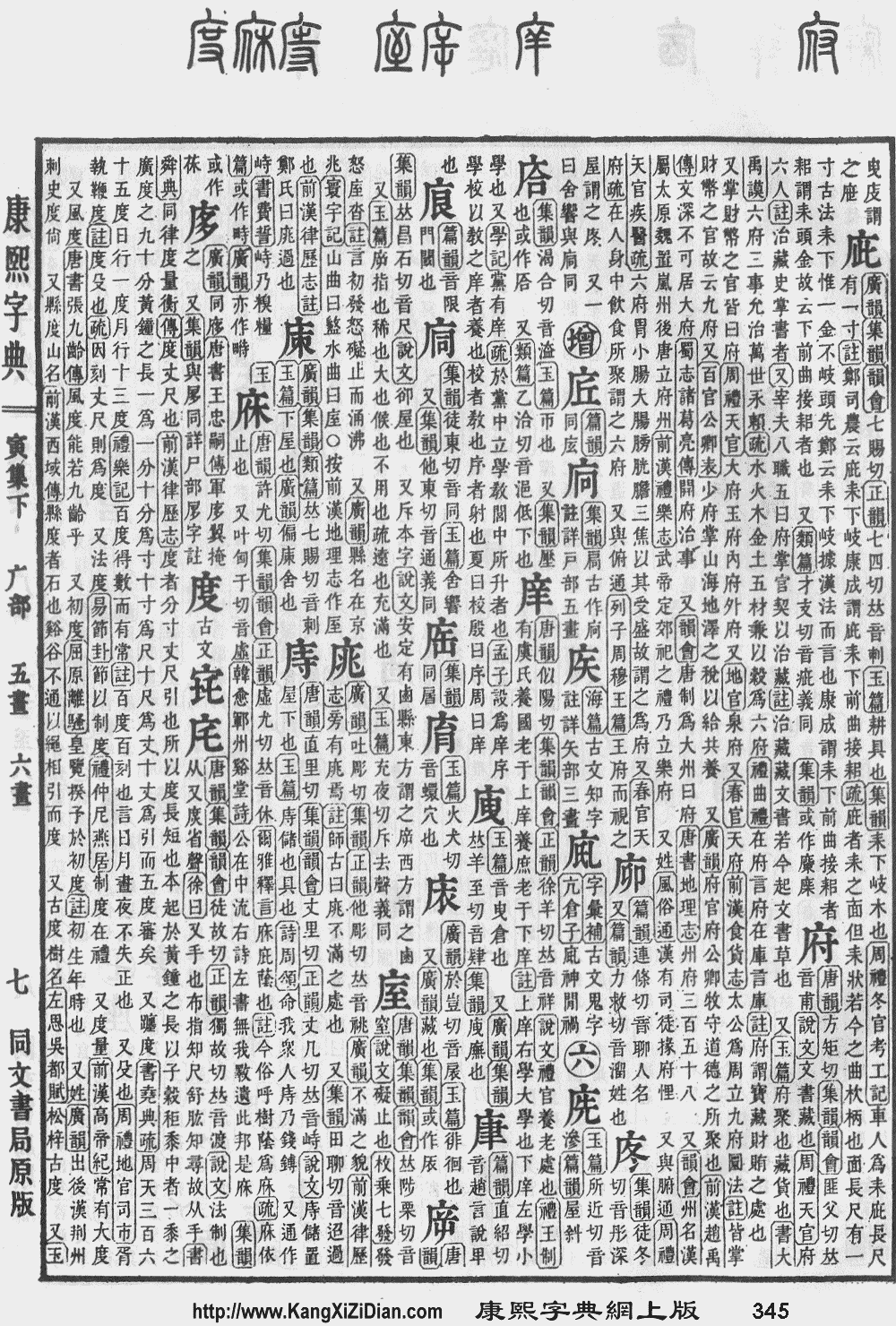
- Kangxi Dictionary: page 345, character 20
- Dai Kanwa Jiten: character 9307
- Dae Jaweon: page 655, character 9
- Hanyu Da Zidian (first edition): volume 2, page 882, character 3
- Unihan data for U+5EA2
Chinese
| simp. and trad. |
庢 | |
|---|---|---|
| alternative forms | 厔 | |
Glyph origin
Characters in the same phonetic series (至) (Zhengzhang, 2003)
| Old Chinese | |
|---|---|
| 致 | *tiɡs |
| 輊 | *tiɡs |
| 駤 | *tiɡs |
| 跮 | *tʰiɡs, *tʰiɡ |
| 荎 | *di, *diːɡ |
| 緻 | *diɡs |
| 至 | *tjiɡs |
| 鵄 | *tʰji |
| 胵 | *tʰji |
| 痓 | *tʰjiɡs |
| 咥 | *hriɡs, *tiːɡ, *diːɡ, *tʰiɡ |
| 窒 | *tiːɡ, *tiɡ |
| 蛭 | *tiːɡ, *tiɡ, *tjiɡ |
| 垤 | *diːɡ |
| 耋 | *diːɡ |
| 姪 | *diːɡ, *diɡ |
| 絰 | *diːɡ |
| 恎 | *diːɡ |
| 挃 | *tiɡ |
| 庢 | *tiɡ |
| 銍 | *tiɡ, *tjiɡ |
| 秷 | *tiɡ |
| 螲 | *tiɡ |
| 侄 | *diɡ, *tjiɡ |
| 桎 | *tjiɡ |
| 郅 | *tjiɡ |
| 晊 | *tjiɡ |
| 室 | *hliɡ |
Phono-semantic compound (形聲/形声, OC *tiɡ) : semantic 广 + phonetic 至 (OC *tjiɡs).
Pronunciation
Compounds
- 庢沓
- 盩庢 (Zhōuzhì)
References
- “庢”, in 漢語多功能字庫 (Multi-function Chinese Character Database), 香港中文大學 (the Chinese University of Hong Kong), 2014–
Japanese
Kanji
庢
- This term needs a translation to English. Please help out and add a translation, then remove the text
{{rfdef}}.
This article is issued from Wiktionary. The text is licensed under Creative Commons - Attribution - Sharealike. Additional terms may apply for the media files.