彈
| ||||||||
Translingual
| Traditional | 彈 |
|---|---|
| Shinjitai | 弾 |
| Simplified | 弹 |
Han character
彈 (Kangxi radical 57, 弓+12, 15 strokes, cangjie input 弓口口十 (NRRJ), four-corner 16256, composition ⿰弓單)
Derived characters
- 𤻾
Related characters
- 弾 (Japanese shinjitai)
- 弹 (Simplified Chinese)
References
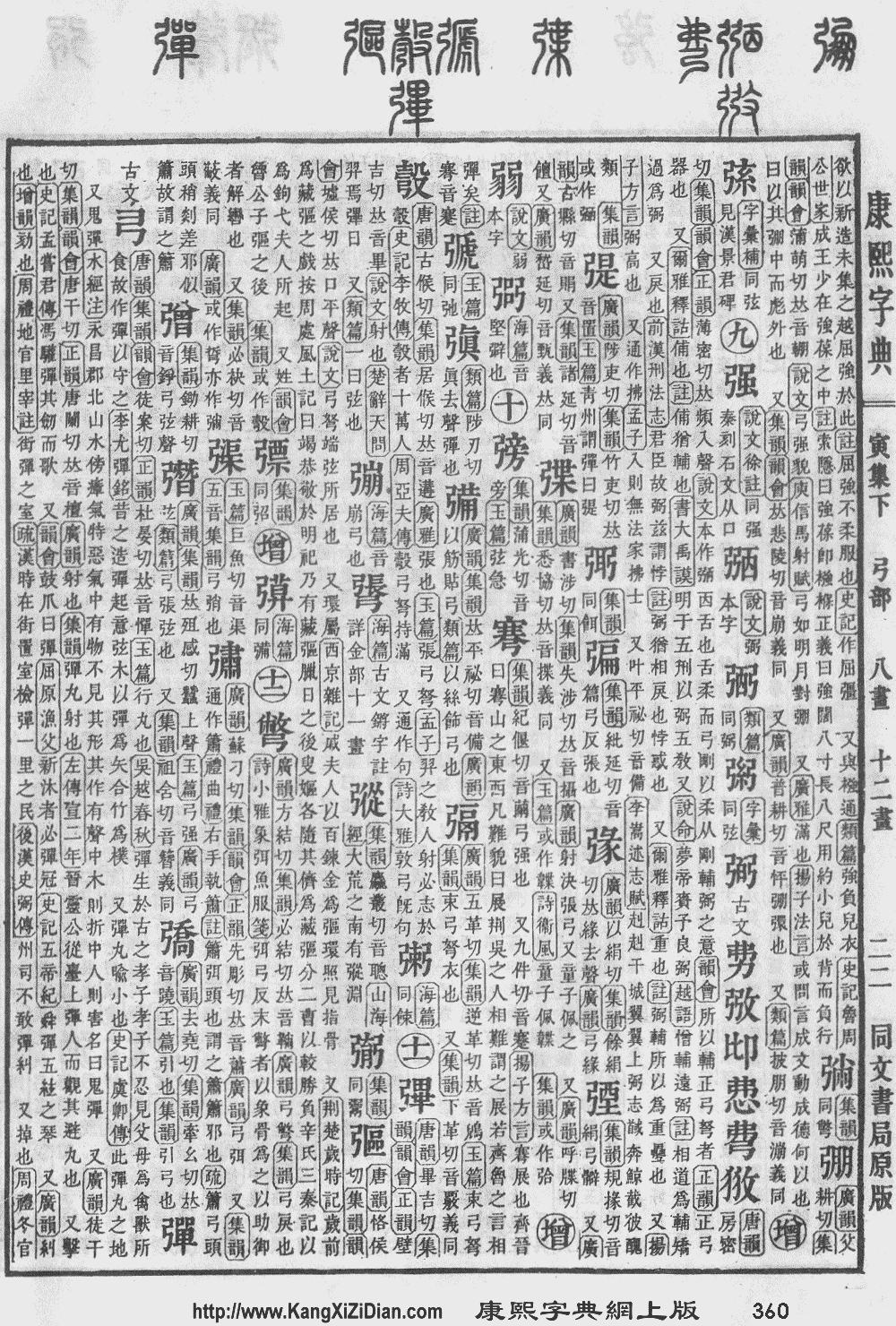
- Kangxi Dictionary: page 360, character 45
- Dai Kanwa Jiten: character 9865
- Dae Jaweon: page 678, character 33
- Hanyu Da Zidian (first edition): volume 2, page 1002, character 8
- Unihan data for U+5F48
Chinese
| trad. | 彈 | |
|---|---|---|
| simp. | 弹 | |
| 2nd round simp. | 𰐔 | |
| alternative forms | 𢎫 | |
Glyph origin
| Historical forms of the character 彈 | ||
|---|---|---|
| Shang | Shuowen Jiezi (compiled in Han) | Liushutong (compiled in Ming) |
| Oracle bone script | Small seal script | Transcribed ancient scripts |
 |
 |
 |
Characters in the same phonetic series (單) (Zhengzhang, 2003)
| Old Chinese | |
|---|---|
| 嚲 | *taːlʔ |
| 癉 | *taːlʔ, *taːls, *taːn, *daːn |
| 奲 | *taːlʔ, *tʰjaːlʔ |
| 驒 | *daːl, *daːn, *teːn |
| 鼉 | *daːl |
| 磾 | *teːl |
| 鷤 | *deːl, *deːls, *daːn |
| 觶 | *tjal, *tjals |
| 單 | *taːn, *djan, *djanʔ, *djans |
| 鄲 | *taːn |
| 殫 | *taːn |
| 簞 | *taːn |
| 匰 | *taːn |
| 襌 | *taːn |
| 彈 | *daːn, *daːns |
| 貚 | *daːn, *deːn |
| 撣 | *daːn, *daːnʔ, *daːns, *djan, *taːnʔ |
| 潬 | *daːnʔ |
| 僤 | *daːnʔ, *daːns, *djan |
| 憚 | *daːns |
| 樿 | *tjanʔ |
| 燀 | *tjanʔ, *tʰjan, *tʰjanʔ |
| 戰 | *tjans |
| 闡 | *tʰjanʔ |
| 繟 | *tʰjanʔ |
| 幝 | *tʰjanʔ |
| 嘽 | *tʰaːn, *tʰjanʔ |
| 灛 | *tʰjanʔ |
| 蟬 | *djan |
| 禪 | *djan, *djans |
| 嬋 | *djan |
| 墠 | *djanʔ |
| 鱓 | *djanʔ |
| 蕇 | *teːnʔ |
Phono-semantic compound (形聲/形声, OC *daːn, *daːns) : semantic 弓 + phonetic 單 (OC *taːn, *djan, *djanʔ, *djans).
Pronunciation 1
Definitions
彈
- to shoot (with a slingshot); to catapult; to eject
- to flick; to fluff; to strike
- (music) to play (a stringed musical instrument)
- to spring; to leap; to be elastic
- to accuse; to criticise; to expose
- (traditional Chinese medicine) to puncture
- (of tear) to fall
- † to weigh
- (Eastern Min) to shine
- (Eastern Min) to look at oneself in the mirror)
- (Southern Min) to blather; to speak nonsense
Compounds
- 一彈指/一弹指
- 丈夫有淚不輕彈/丈夫有泪不轻弹 (zhàngfū yǒu lèi bù qīng tán)
- 亂彈/乱弹 (luàntán)
- 以珠彈雀/以珠弹雀
- 偷彈珠淚/偷弹珠泪
- 光陰彈指/光阴弹指
- 冇得彈/冇得弹
- 動彈/动弹 (dòngtán)
- 動彈不得/动弹不得
- 包彈/包弹
- 反彈/反弹 (fǎntán)
- 反彈琵琶/反弹琵琶
- 古調獨彈/古调独弹
- 吹彈/吹弹
- 品竹彈絲/品竹弹丝
- 宓子賤彈鳴琴/宓子贱弹鸣琴
- 對牛彈琴/对牛弹琴 (duìniútánqín)
- 彈冠/弹冠 (tánguān)
- 彈冠振衣/弹冠振衣
- 彈冠相慶/弹冠相庆 (tánguānxiāngqìng)
- 彈冠結綬/弹冠结绶
- 彈剝/弹剥
- 彈力/弹力 (tánlì)
- 彈劾/弹劾 (tánhé)
- 彈劾權/弹劾权
- 彈劾無私/弹劾无私
- 彈包/弹包
- 彈唱/弹唱 (tánchàng)
- 彈塗魚/弹涂鱼 (tántúyú)
- 彈壓/弹压 (tányā)
- 彈奏/弹奏 (tánzòu)
- 彈子/弹子
- 彈射/弹射
- 彈布爾/弹布尔
- 彈弄/弹弄
- 彈性/弹性 (tánxìng)
- 彈性上班/弹性上班
- 彈性勢能/弹性势能 (tánxìng shìnéng)
- 彈性工時/弹性工时
- 彈性放假/弹性放假 (tánxìng fàngjià)
- 彈性模數/弹性模数
- 彈性疲乏/弹性疲乏
- 彈性纖維/弹性纤维
- 彈性製造系統/弹性制造系统
- 彈性限度/弹性限度
- 彈指/弹指 (tánzhǐ)
- 彈指之間/弹指之间
- 彈指神功/弹指神功
- 彈掙/弹挣
- 彈斤估兩/弹斤估两
- 彈棋/弹棋
- 彈治/弹治
- 彈牙/弹牙 (tányá)
- 彈琴/弹琴 (tánqín)
- 彈琵琶/弹琵琶
- 彈票/弹票 (tánpiào)
- 彈空說嘴/弹空说嘴
- 彈簧/弹簧 (tánhuáng)
- 彈簧刀/弹簧刀 (tánhuángdāo)
- 彈簧床/弹簧床 (tánhuángchuáng)
- 彈簧秤/弹簧秤 (tánhuángchèng)
- 彈簧鋼/弹簧钢 (tánhuánggāng)
- 彈簧門/弹簧门 (tánhuángmén)
- 彈絲品竹/弹丝品竹
- 彈腿/弹腿
- 彈觔估兩/弹斤估两
- 彈詞/弹词 (táncí)
- 彈跳/弹跳 (tántiào)
- 彈針/弹针
- 彈鋏/弹铗
- 彈鋏無魚/弹铗无鱼
- 彈音/弹音 (tányīn)
- 彈章/弹章
- 彈駁/弹驳
- 彈黃調/弹黄调
- 所得彈性/所得弹性
- 抨彈/抨弹
- 揚州彈詞/扬州弹词
- 搊彈詞/𫼝弹词
- 新沐者必彈冠,新浴者必振衣/新沐者必弹冠,新浴者必振衣
- 明珠彈雀/明珠弹雀
- 星點彈塗/星点弹涂
- 沒包彈/没包弹
- 沒彈剝/没弹剥
- 濯纓彈冠/濯缨弹冠
- 王貢彈冠/王贡弹冠
- 珠淚偷彈/珠泪偷弹
- 男兒有淚不輕彈/男儿有泪不轻弹 (nán'ér yǒu lèi bù qīng tán)
- 百彈齋主/百弹斋主
- 糾彈/纠弹
- 老調重彈/老调重弹 (lǎodiàochóngtán)
- 聯彈/联弹
- 舊調重彈/旧调重弹 (jiùdiàochóngtán)
- 蘇州彈詞/苏州弹词
- 蘇州評彈/苏州评弹
- 褒彈/褒弹
- 評彈/评弹 (píngtán)
- 貢禹彈冠/贡禹弹冠
- 間繞式彈簧/间绕式弹簧
- 隨珠彈雀/随珠弹雀
- 馮諼彈鋏/冯谖弹铗
- 高空彈跳/高空弹跳 (gāokōng tántiào)
- 鳴彈/鸣弹
- 黃連樹下彈琴/黄连树下弹琴
Pronunciation 2
Definitions
彈
Compounds
- 中子彈/中子弹 (zhōngzǐdàn)
- 中彈/中弹 (zhòngdàn)
- 信號彈/信号弹 (xìnhàodàn)
- 催淚彈/催泪弹 (cuīlèidàn)
- 光纖飛彈/光纤飞弹
- 北極星飛彈/北极星飞弹
- 原子彈/原子弹 (yuánzǐdàn)
- 反飛彈/反飞弹
- 塑膠炸彈/塑胶炸弹
- 子彈/子弹 (zǐdàn)
- 定時炸彈/定时炸弹 (dìngshí zhàdàn)
- 宣傳彈/宣传弹
- 實彈射擊/实弹射击
- 實心彈/实心弹
- 導向飛彈/导向飞弹 (dǎoxiàng fēidàn)
- 導彈/导弹 (dǎodàn)
- 彈丸/弹丸
- 彈丸之地/弹丸之地 (dànwánzhīdì)
- 彈坑/弹坑 (dànkēng)
- 彈子/弹子
- 彈子房/弹子房
- 彈子檯/弹子台
- 彈弓/弹弓 (dàngōng)
- 彈殼/弹壳 (dànké)
- 彈無虛發/弹无虚发
- 彈片/弹片 (dànpiàn)
- 彈珠/弹珠 (dànzhū)
- 彈珠檯/弹珠台
- 彈痕分析/弹痕分析
- 彈盡援絕/弹尽援绝 (dànjìnyuánjué)
- 彈盡糧絕/弹尽粮绝 (dànjìnliángjué)
- 彈著點/弹著点
- 彈藥/弹药 (dànyào)
- 彈道/弹道 (dàndào)
- 彈道飛彈/弹道飞弹 (dàndào fēidàn)
- 彈雨/弹雨
- 彈頭/弹头 (dàntóu)
- 愛國者飛彈/爱国者飞弹
- 手榴彈/手榴弹 (shǒuliúdàn)
- 打彈/打弹
- 打彈子/打弹子 (dǎdànzi)
- 打彈珠/打弹珠
- 投彈/投弹 (tóudàn)
- 挖地彈/挖地弹
- 擲彈筒/掷弹筒
- 斑鳩跌彈/斑鸠跌弹
- 曳光彈/曳光弹 (yèguāngdàn)
- 核彈頭/核弹头 (hédàntóu)
- 械彈/械弹
- 槍彈/枪弹 (qiāngdàn)
- 榴彈/榴弹 (liúdàn)
- 榴彈炮/榴弹炮 (liúdànpào)
- 槍林彈雨/枪林弹雨 (qiānglíndànyǔ)
- 榴霰彈/榴霰弹
- 氣爆彈/气爆弹
- 氫彈/氢弹 (qīngdàn)
- 汽油彈/汽油弹 (qìyóudàn)
- 油氣彈/油气弹
- 流彈/流弹 (liúdàn)
- 洲際飛彈/洲际飞弹
- 深水炸彈/深水炸弹 (shēnshuǐ zhàdàn)
- 潛水炸彈/潜水炸弹
- 火山彈/火山弹 (huǒshāndàn)
- 火箭彈/火箭弹 (huǒjiàndàn)
- 炸彈/炸弹 (zhàdàn)
- 炮彈/炮弹 (pàodàn)
- 煙幕彈/烟幕弹 (yānmùdàn)
- 照明彈/照明弹
- 燒夷彈/烧夷弹
- 燃燒彈/燃烧弹 (ránshāodàn)
- 班鳩跌彈/班鸠跌弹
- 瓦斯彈/瓦斯弹
- 硝煙彈雨/硝烟弹雨
- 空包彈/空包弹 (kōngbāodàn)
- 穿甲彈/穿甲弹
- 糖衣炮彈/糖衣炮弹 (tángyī pàodàn)
- 紙彈/纸弹
- 義勇兵飛彈/义勇兵飞弹
- 肉彈/肉弹 (ròudàn)
- 色彈/色弹
- 荷槍實彈/荷枪实弹 (hèqiāngshídàn)
- 葡萄炸彈/葡萄炸弹
- 蠟彈/蜡弹
- 見彈求鴞/见弹求鸮
- 見彈而求鴞炙/见弹而求鸮炙
- 跌了彈的斑鳩/跌了弹的斑鸠
- 跳彈/跳弹
- 巡弋飛彈/巡弋飞弹 (xúnyì fēidàn)
- 達姆達姆彈/达姆达姆弹
- 郵寄炸彈/邮寄炸弹
- 鈽彈/钸弹
- 銀彈/银弹 (yíndàn)
- 鋼彈/钢弹
- 鎗彈/枪弹
- 鎗榴彈/枪榴弹
- 防彈衣/防弹衣 (fángdànyī)
- 防空飛彈/防空飞弹
- 震撼彈/震撼弹 (zhènhàndàn)
- 霰彈/霰弹 (xiàndàn)
- 響尾蛇飛彈/响尾蛇飞弹
- 飛彈/飞弹 (fēidàn)
- 飛彈快艇/飞弹快艇
- 飛毛腿飛彈/飞毛腿飞弹
- 飛魚飛彈/飞鱼飞弹
- 飲彈/饮弹 (yǐndàn)
- 高爆彈/高爆弹
- 鷹式飛彈/鹰式飞弹
Descendants
Japanese
| 弾 | |
| 彈 |
Kanji
彈
(“Jinmeiyō” kanji used for names, kyūjitai kanji, shinjitai form 弾)
- This term needs a translation to English. Please help out and add a translation, then remove the text
{{rfdef}}.
Korean
Hanja
彈 • (tan) (hangeul 탄, McCune–Reischauer t'an, Yale than)
- This term needs a translation to English. Please help out and add a translation, then remove the text
{{rfdef}}.
Vietnamese
This article is issued from Wiktionary. The text is licensed under Creative Commons - Attribution - Sharealike. Additional terms may apply for the media files.