戰
| ||||||||
Translingual
| Traditional | 戰 |
|---|---|
| Shinjitai | 戦 |
| Simplified | 战 |
Han character
戰 (Kangxi radical 62, 戈+12, 16 strokes, cangjie input 口十戈 (RJI), four-corner 63550, composition ⿰單戈)
Derived characters
- 𡃹 𡓥 𢥇 𥗜 𧟀 𧂁 𬉢 𭌓 𭬪
References
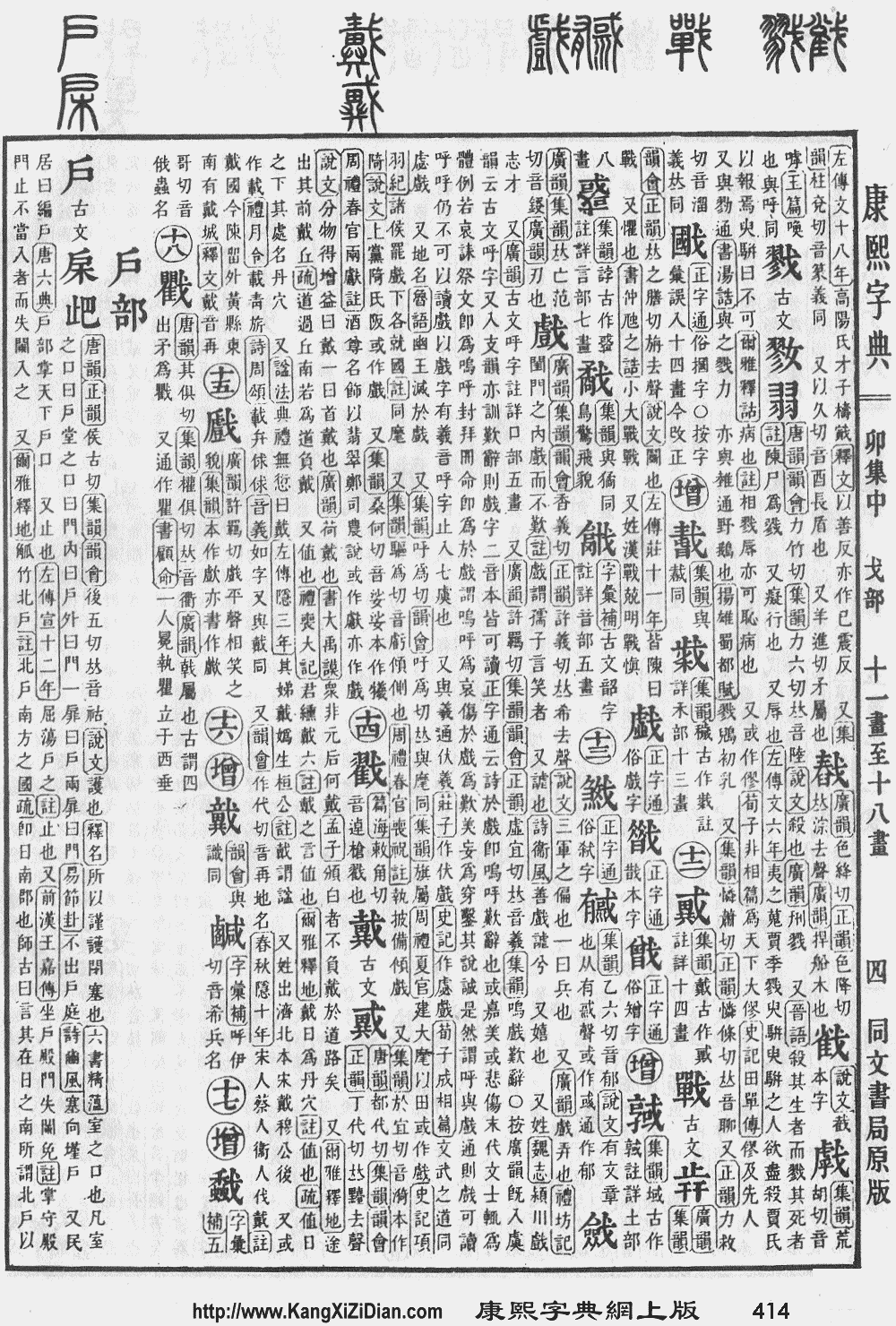
- Kangxi Dictionary: page 414, character 11
- Dai Kanwa Jiten: character 11667
- Dae Jaweon: page 757, character 12
- Hanyu Da Zidian (first edition): volume 2, page 1412, character 12
- Unihan data for U+6230
Chinese
| trad. | 戰 | |
|---|---|---|
| simp. | 战 | |
| nonstandard simp. | 𢧐 | |
| alternative forms | 戦 | |
Glyph origin
| Historical forms of the character 戰 | ||||
|---|---|---|---|---|
| Warring States | Shuowen Jiezi (compiled in Han) | Liushutong (compiled in Ming) | ||
| Bronze inscriptions | Chu slip and silk script | Qin slip script | Small seal script | Transcribed ancient scripts |
 |
 |
 |
 |
 |
| Old Chinese | |
|---|---|
| 嚲 | *taːlʔ |
| 癉 | *taːlʔ, *taːls, *taːn, *daːn |
| 奲 | *taːlʔ, *tʰjaːlʔ |
| 驒 | *daːl, *daːn, *teːn |
| 鼉 | *daːl |
| 磾 | *teːl |
| 鷤 | *deːl, *deːls, *daːn |
| 觶 | *tjal, *tjals |
| 單 | *taːn, *djan, *djanʔ, *djans |
| 鄲 | *taːn |
| 殫 | *taːn |
| 簞 | *taːn |
| 匰 | *taːn |
| 襌 | *taːn |
| 彈 | *daːn, *daːns |
| 貚 | *daːn, *deːn |
| 撣 | *daːn, *daːnʔ, *daːns, *djan, *taːnʔ |
| 潬 | *daːnʔ |
| 僤 | *daːnʔ, *daːns, *djan |
| 憚 | *daːns |
| 樿 | *tjanʔ |
| 燀 | *tjanʔ, *tʰjan, *tʰjanʔ |
| 戰 | *tjans |
| 闡 | *tʰjanʔ |
| 繟 | *tʰjanʔ |
| 幝 | *tʰjanʔ |
| 嘽 | *tʰaːn, *tʰjanʔ |
| 灛 | *tʰjanʔ |
| 蟬 | *djan |
| 禪 | *djan, *djans |
| 嬋 | *djan |
| 墠 | *djanʔ |
| 鱓 | *djanʔ |
| 蕇 | *teːnʔ |
Phono-semantic compound (形聲/形声, OC *tjans) : phonetic 單 (OC *taːn, *djan, *djanʔ, *djans) + semantic 戈 (“halberd”) – battling with a halberd.
Etymology
Benedict (1972) thinks it a cognate to Tibetan རལ་གྲི (ral gri, “sword”), Mizo râl (“enemy”), both from Proto-Tibeto-Burman *g-raːl ~ *g-ran ~ *ray (“enemy, quarrel, strife, fight, war, sword”), yet Schuessler (2007) thinks it unlikely that Old Chinese *t- corresponds to Tibeto-Burman *r-.
Instead he proposes that "war, battle" is semantically extended from "tremble, fear" and so 戰 (OC *tjans) is cognate with 憚 (OC *daːns) (ibid.); STEDT in turn derives them both from Proto-Sino-Tibetan *dar ~ d(u/i)r (“tremble, shiver”).
Pronunciation
Definitions
戰
- to fight a battle; to go to war
- 知可以戰與不可以戰者勝。 [Classical Chinese, trad.]
- From: The Art of War, circa 5th century BCE, translated based on Lionel Giles's version
- Zhī kěyǐ zhàn yǔ bùkěyǐ zhàn zhě shèng. [Pinyin]
- He will win who knows when to fight and when not to fight.
知可以战与不可以战者胜。 [Classical Chinese, simp.]
- war; battle; fight
- 《春秋》無義戰。 [Classical Chinese, trad.]
- From: Mencius, c. 4th century BCE
- “Chūnqiū” wú yìzhàn. [Pinyin]
- In the Spring and Autumn there was no just war.
《春秋》无义战。 [Classical Chinese, simp.]
- 永戰/永战 ― yǒng zhàn ― eternal war
- 永戰/永战 [Guangzhou Cantonese] ― wing5 zin3 [Jyutping] ― eternal war
- to tremble; to shiver
- 哀公問社於宰我。宰我對曰:「夏后氏以松,殷人以柏,周人以栗,曰使民戰慄。」 [Classical Chinese, trad.]
- From: The Analects of Confucius, c. 475 – 221 BCE
- Āigōng wèn shè yú Zǎi Wǒ. Zǎi Wǒ duìyuē: “Xiàhòushì yǐ sōng, yīnrén yǐ bǎi, zhōurén yǐ lì, yuē shǐ mín zhànlì.” [Pinyin]
- Duke Ai asked Zai Wo about the altars of the spirits of the land. Zai Wo replied, "The Xia sovereign's clan planted the pine tree about them; the men of the Yin planted the cypress; and the men of the Zhou planted the chestnut tree, meaning thereby to cause the people to tremble in awe."
哀公问社于宰我。宰我对曰:「夏后氏以松,殷人以柏,周人以栗,曰使民战栗。」 [Classical Chinese, simp.]- 曰:「羊質而虎皮,見草而說,見豺而戰,忘其皮之虎矣。」 [Classical Chinese, trad.]
- From: Yang Xiong, Fa Yan (Exemplary Sayings), 9 CE, translated based on Jeffrey S. Bullock's version
- Yuē: “Yángzhì ér hǔpí, jiàn cǎo ér yuè, jiàn chái ér zhàn, wàng qí pí zhī hǔ yǐ.” [Pinyin]
- (Master Yang) said: One who has a sheep's essence and a tiger's skin sees grass and is happy, sees a dhole and shivers; he forgets he is wearing a tiger's skin.
曰:「羊质而虎皮,见草而说,见豺而战,忘其皮之虎矣。」 [Classical Chinese, simp.]
- a surname: Zhan
Synonyms
- (to fight a battle):
- (war):
- (to tremble):
- 交懍恂/交懔恂 (Hokkien)
- 呞呞顫/呞呞颤 (Xiamen Hokkien, Zhangzhou Hokkien, Taiwanese Hokkien)
- 哆嗦 (duōsuo)
- 圪觫 (geh5 sueh4) (Jin)
- 慄慄掣/栗栗掣 (Hokkien)
- 戰慄/战栗 (zhànlì) (literary)
- 戰抖/战抖 (zhàndǒu)
- 打抖 (da3 deu3) (Gan)
- 抖 (dǒu)
- 抖動/抖动 (dǒudòng)
- 抖抖絲/抖抖丝 (Longyan Min)
- 掣 (Hokkien, Teochew)
- 掉 (Hokkien, Teochew)
- 搦搦掣 (Hokkien)
- 發抖/发抖 (fādǒu)
- 蟯蟯掣/蛲蛲掣 (Hokkien)
- 起掉 (Xiamen Hokkien, Zhangzhou Hokkien)
- 顫/颤
- 顫動/颤动 (chàndòng)
- 顫抖/颤抖 (chàndǒu)
Compounds
- 一戰而霸/一战而霸
- 三戰三北/三战三北
- 下戰書/下战书
- 不戰而勝/不战而胜 (bùzhàn'érshèng)
- 不戰而屈人之兵/不战而屈人之兵 (bù zhàn ér qū rén zhī bīng)
- 不戰而潰/不战而溃
- 不戰而破/不战而破
- 且戰且走/且战且走
- 世界大戰/世界大战 (shìjiè dàzhàn)
- 並肩作戰/并肩作战 (bìngjiānzuòzhàn)
- 中法戰爭/中法战争
- 主戰/主战 (zhǔzhàn)
- 亂戰/乱战
- 二次大戰/二次大战
- 交戰/交战 (jiāozhàn)
- 交戰國/交战国 (jiāozhànguó)
- 交戰團體/交战团体
- 人民戰爭/人民战争 (rénmín zhànzhēng)
- 人海戰術/人海战术 (rénhǎi zhànshù)
- 人自為戰/人自为战
- 以戰去戰/以战去战
- 以戰止戰/以战止战
- 以戰養戰/以战养战 (yǐzhànyǎngzhàn)
- 代理戰爭/代理战争
- 以阿戰爭/以阿战争
- 休戰/休战 (xiūzhàn)
- 伊科戰爭/伊科战争
- 作戰/作战 (zuòzhàn)
- 侏儒觀戰/侏儒观战
- 停戰/停战 (tíngzhàn)
- 停戰協定/停战协定
- 備戰/备战 (bèizhàn)
- 傳統戰爭/传统战争
- 價格戰/价格战 (jiàgézhàn)
- 充員戰士/充员战士
- 先遣作戰/先遣作战
- 免戰牌/免战牌
- 兢兢戰戰/兢兢战战
- 內戰/内战 (nèizhàn)
- 全民作戰/全民作战
- 全面戰爭/全面战争
- 兩伊戰爭/两伊战争 (Liǎngyī Zhànzhēng)
- 兩棲作戰/两栖作战
- 八年抗戰/八年抗战
- 冷戰/冷战
- 出戰/出战 (chūzhàn)
- 初戰/初战 (chūzhàn)
- 前哨戰/前哨战
- 力戰/力战 (lìzhàn)
- 助戰/助战 (zhùzhàn)
- 化學戰/化学战 (huàxuézhàn)
- 化學戰劑/化学战剂
- 北方戰爭/北方战争
- 南北戰爭/南北战争 (Nánběi Zhànzhēng)
- 南征北戰 (nánzhēngběizhàn)
- 即墨之戰/即墨之战
- 原子戰爭/原子战争
- 厭戰/厌战 (yànzhàn)
- 參戰/参战 (cānzhàn)
- 反戰/反战 (fǎnzhàn)
- 合戰/合战
- 各自為戰/各自为战 (gèzìwéizhàn)
- 咳歌打戰/咳歌打战
- 商戰/商战
- 善戰/善战 (shànzhàn)
- 噤戰/噤战
- 四戰之國/四战之国
- 四戰之地/四战之地
- 回教聖戰/回教圣战
- 多空交戰/多空交战
- 夜戰/夜战 (yèzhàn)
- 大戰/大战 (dàzhàn)
- 大戰略/大战略
- 大戰詩/大战诗
- 天人交戰/天人交战
- 奮戰/奋战 (fènzhàn)
- 好戰/好战 (hàozhàn)
- 孤軍作戰/孤军作战 (gūjūnzuòzhàn)
- 孤軍奮戰/孤军奋战 (gūjūnfènzhàn)
- 宗教戰爭/宗教战争 (zōngjiào zhànzhēng)
- 官渡之戰/官渡之战
- 宣戰/宣战 (xuānzhàn)
- 宣戰書/宣战书
- 寒戰/寒战 (hánzhàn)
- 實戰/实战 (shízhàn)
- 屢戰屢勝/屡战屡胜 (lǚzhànlǚshèng)
- 屢戰屢敗/屡战屡败 (lǚzhànlǚbài)
- 屢敗屢戰/屡败屡战 (lǚbàilǚzhàn)
- 巷戰/巷战 (xiàngzhàn)
- 布匿戰爭/布匿战争
- 常規戰爭/常规战争 (chángguī zhànzhēng)
- 序戰/序战 (xùzhàn)
- 征戰 (zhēngzhàn)
- 心寒膽戰/心寒胆战
- 心慌膽戰/心慌胆战
- 心戰/心战
- 心理戰/心理战 (xīnlǐzhàn)
- 心驚肉戰/心惊肉战
- 心驚膽戰/心惊胆战 (xīnjīngdǎnzhàn)
- 忘戰必危/忘战必危
- 忘戰者危/忘战者危
- 思想戰/思想战
- 急戰/急战
- 惡戰/恶战 (èzhàn)
- 愈戰愈勇/愈战愈勇
- 應戰/应战 (yìngzhàn)
- 戀戰/恋战 (liànzhàn)
- 戰不旋踵/战不旋踵
- 戰亂/战乱 (zhànluàn)
- 戰事/战事 (zhànshì)
- 戰例/战例 (zhànlì)
- 戰俘/战俘 (zhànfú)
- 戰備/战备 (zhànbèi)
- 戰備跑道/战备跑道
- 戰兢/战兢
- 戰兢兢/战兢兢
- 戰具/战具 (zhànjù)
- 戰刀/战刀 (zhàndāo)
- 戰列艦/战列舰 (zhànlièjiàn)
- 戰利品/战利品 (zhànlìpǐn)
- 戰前/战前 (zhànqián)
- 戰力/战力 (zhànlì)
- 戰功/战功 (zhàngōng)
- 戰功彪炳/战功彪炳
- 戰勝/战胜 (zhànshèng)
- 戰勝國/战胜国 (zhànshèngguó)
- 戰區/战区 (zhànqū)
- 戰友/战友 (zhànyǒu)
- 戰史/战史 (zhànshǐ)
- 戰國/战国 (Zhànguó)
- 戰國七雄/战国七雄 (Zhànguó Qīxióng)
- 戰國時代/战国时代 (Zhànguó Shídài)
- 戰國策/战国策 (Zhànguócè)
- 戰地/战地 (zhàndì)
- 戰地政務/战地政务
- 戰地春夢/战地春梦
- 戰地通訊/战地通讯
- 戰地鐘聲/战地钟声
- 戰場/战场 (zhànchǎng)
- 戰報/战报
- 戰塵/战尘
- 戰壕/战壕 (zhànháo)
- 戰士/战士 (zhànshì)
- 戰天無勝/战天无胜
- 戰天鬥地/战天斗地
- 戰守/战守
- 戰將/战将
- 戰局/战局 (zhànjú)
- 戰幕/战幕 (zhànmù)
- 戰役/战役 (zhànyì)
- 戰後/战后 (zhànhòu)
- 戰心/战心 (zhànxīn)
- 戰情/战情
- 戰惶/战惶
- 戰慄/战栗 (zhànlì)
- 戰戰/战战
- 戰戰兢兢/战战兢兢 (zhànzhànjīngjīng)
- 戰戰惶惶/战战惶惶
- 戰戰慄慄/战战栗栗
- 戰戰搖搖/战战摇摇
- 戰抖/战抖 (zhàndǒu)
- 戰敗/战败 (zhànbài)
- 戰敗國/战败国 (zhànbàiguó)
- 戰時/战时 (zhànshí)
- 戰書/战书 (zhànshū)
- 戰果/战果 (zhànguǒ)
- 戰格/战格
- 戰機/战机 (zhànjī)
- 戰歌/战歌 (zhàngē)
- 戰況/战况 (zhànkuàng)
- 戰法/战法 (zhànfǎ)
- 戰火/战火 (zhànhuǒ)
- 戰無不克/战无不克
- 戰無不勝/战无不胜 (zhànwúbùshèng)
- 戰爭/战争 (zhànzhēng)
- 戰爭片/战争片
- 戰爭販子/战争贩子 (zhànzhēng fànzi)
- 戰犯/战犯 (zhànfàn)
- 戰犯法庭/战犯法庭
- 戰狼/战狼 (zhànláng)
- 戰略/战略 (zhànlüè)
- 戰略思想/战略思想
- 戰略物資/战略物资
- 戰略計畫/战略计画
- 戰略轟炸/战略轰炸
- 戰神/战神 (Zhànshén)
- 戰禍/战祸 (zhànhuò)
- 戰禍連年/战祸连年
- 戰端/战端
- 戰糧/战粮
- 戰索索/战索索
- 戰線/战线 (zhànxiàn)
- 戰績/战绩 (zhànjì)
- 戰船/战船 (zhànchuán)
- 戰艦/战舰 (zhànjiàn)
- 戰色/战色
- 戰術/战术 (zhànshù)
- 戰表/战表 (zhànbiǎo)
- 戰袍/战袍 (zhànpáo)
- 戰裙/战裙
- 戰評/战评
- 戰車/战车 (zhànchē)
- 戰陣/战阵 (zhànzhèn)
- 戰雲/战云
- 戰雲密布/战云密布
- 戰雲濃密/战云浓密
- 戰馬/战马 (zhànmǎ)
- 戰鬥/战斗 (zhàndòu)
- 戰鬥人員/战斗人员
- 戰鬥力/战斗力 (zhàndòulì)
- 戰鬥員/战斗员 (zhàndǒuyuán)
- 戰鬥機/战斗机 (zhàndòujī)
- 戰鬥片/战斗片
- 戰鬥艦/战斗舰
- 戰鷹/战鹰
- 戰鼓/战鼓 (zhàngǔ)
- 打冷戰/打冷战
- 打寒戰/打寒战 (dǎhánzhàn)
- 打戰/打战 (dǎzhàn)
- 打牙戰/打牙战
- 打雪戰/打雪战
- 抗戰/抗战 (kàngzhàn)
- 抗戰勝利/抗战胜利
- 抗戰夫人/抗战夫人
- 抗戰歌曲/抗战歌曲
- 抗日戰爭/抗日战争 (Kàngrì Zhànzhēng)
- 拇戰/拇战
- 拉鋸戰/拉锯战 (lājùzhàn)
- 持久戰/持久战 (chíjiǔzhàn)
- 挑戰/挑战 (tiǎozhàn)
- 挑戰書/挑战书
- 挑戰者深淵/挑战者深渊 (Tiǎozhànzhě Shēnyuān)
- 挑燈夜戰/挑灯夜战 (tiǎodēngyèzhàn)
- 接戰/接战 (jiēzhàn)
- 掿戰/掿战
- 搖戰/摇战
- 搏戰/搏战 (bózhàn)
- 搦戰/搦战 (nuòzhàn)
- 擴張戰果/扩张战果
- 攻勢作戰/攻势作战
- 攻城野戰/攻城野战
- 攻堅戰/攻坚战 (gōngjiānzhàn)
- 攻戰/攻战 (gōngzhàn)
- 政治作戰/政治作战
- 政治戰/政治战
- 教戰守策/教战守策
- 敵後作戰/敌后作战
- 方城之戰/方城之战
- 日俄戰爭/日俄战争
- 明恥教戰/明耻教战
- 星戰計畫/星战计画
- 星際大戰/星际大战
- 普奧戰爭/普奥战争
- 普法戰爭/普法战争
- 曹劌論戰/曹刿论战
- 會戰/会战 (huìzhàn)
- 有形戰力/有形战力
- 有征無戰/有征无战
- 有限戰爭/有限战争
- 核子戰爭/核子战争 (hézǐ zhànzhēng)
- 核子戰略/核子战略
- 棋戰/棋战
- 槍戰/枪战 (qiāngzhàn)
- 歐戰/欧战
- 止戰/止战
- 死戰/死战 (sǐzhàn)
- 殊死戰/殊死战
- 殲滅戰/歼灭战 (jiānmièzhàn)
- 每戰必勝/每战必胜
- 每戰皆北/每战皆北
- 水戰/水战 (shuǐzhàn)
- 求戰/求战
- 決一死戰/决一死战 (juéyīsǐzhàn)
- 決戰/决战 (juézhàn)
- 汴水之戰/汴水之战
- 波希戰爭/波希战争
- 泓水之戰/泓水之战
- 海戰/海战 (hǎizhàn)
- 消耗戰/消耗战 (xiāohàozhàn)
- 浴血奮戰/浴血奋战
- 混戰/混战 (hùnzhàn)
- 淝水之戰/淝水之战
- 淞滬之戰/淞沪之战
- 涿鹿之戰/涿鹿之战
- 游擊戰/游击战 (yóujīzhàn)
- 激戰/激战 (jīzhàn)
- 炮戰/炮战 (pàozhàn)
- 無血戰爭/无血战争
- 無限戰爭/无限战争
- 熱戰/热战
- 爭戰/争战
- 爭霸戰/争霸战
- 牧野之戰/牧野之战
- 特種作戰/特种作战
- 班美之戰/班美之战
- 生物戰/生物战
- 甲午戰爭/甲午战争 (Jiǎwǔ Zhànzhēng)
- 甲級戰犯/甲级战犯 (jiǎjí zhànfàn)
- 登陸作戰/登陆作战
- 白刃戰/白刃战 (báirènzhàn)
- 白戰/白战
- 百年戰爭/百年战争 (Bǎinián Zhànzhēng)
- 百戰不殆/百战不殆 (bǎizhànbùdài)
- 百戰功高/百战功高
- 百戰百勝/百战百胜 (bǎizhànbǎishèng)
- 百戰雄師/百战雄师
- 直奉戰爭/直奉战争
- 直皖戰爭/直皖战争
- 督戰/督战 (dūzhàn)
- 短兵接戰/短兵接战
- 神經戰/神经战 (shénjīngzhàn)
- 空戰/空战 (kōngzhàn)
- 空降作戰/空降作战
- 筆戰/笔战 (bǐzhàn)
- 累戰/累战
- 統一戰線/统一战线 (tǒngyī zhànxiàn)
- 統戰/统战 (tǒngzhàn)
- 緒戰/绪战
- 總體戰/总体战 (zǒngtǐzhàn)
- 罷戰/罢战 (bàzhàn)
- 罵戰/骂战
- 義戰/义战 (yìzhàn)
- 聖戰/圣战 (shèngzhàn)
- 聯合作戰/联合作战
- 聯合戰線/联合战线 (liánhé zhànxiàn)
- 肉搏戰/肉搏战 (ròubózhàn)
- 股戰/股战
- 背城一戰/背城一战 (bèichéng-yīzhàn)
- 背水一戰/背水一战 (bèishuǐ-yīzhàn)
- 脣槍舌戰/唇枪舌战
- 膽戰/胆战
- 膽戰心寒/胆战心寒
- 膽戰心搖/胆战心摇
- 膽戰心驚/胆战心惊 (dǎnzhànxīnjīng)
- 舌戰/舌战 (shézhàn)
- 英勇善戰/英勇善战
- 苦戰/苦战 (kǔzhàn)
- 茗戰/茗战
- 薔薇戰爭/蔷薇战争
- 血戰/血战 (xuèzhàn)
- 觀戰/观战 (guānzhàn)
- 諒山之戰/谅山之战
- 論戰/论战 (lùnzhàn)
- 護法戰爭/护法战争
- 賭戰/赌战
- 赤壁之戰/赤壁之战
- 越戰/越战 (Yuèzhàn)
- 身經百戰/身经百战 (shēnjīngbǎizhàn)
- 車輪大戰/车轮大战
- 車輪戰/车轮战 (chēlúnzhàn)
- 軍事戰略/军事战略
- 軟戰/软战
- 轉戰/转战 (zhuǎnzhàn)
- 轉戰千里/转战千里
- 轉進作戰/转进作战
- 農戰/农战
- 迎戰/迎战 (yíngzhàn)
- 連戰皆捷/连战皆捷 (liánzhànjiējié)
- 速戰速決/速战速决 (sùzhànsùjué)
- 遭遇戰/遭遇战 (zāoyùzhàn)
- 選戰/选战 (xuǎnzhàn)
- 選舉戰/选举战
- 邲之戰/邲之战
- 郾城之戰/郾城之战
- 酣戰/酣战 (hānzhàn)
- 野戰/野战 (yězhàn)
- 野戰射擊/野战射击
- 野戰裝備/野战装备
- 野戰軍/野战军 (yězhànjūn)
- 野戰醫院/野战医院 (yězhàn yīyuàn)
- 金門炮戰/金门炮战
- 鉅鹿之戰/巨鹿之战
- 鏖戰/鏖战 (áozhàn)
- 長平之戰/长平之战
- 長沙會戰/长沙会战
- 閃電戰/闪电战 (shǎndiànzhàn)
- 開戰/开战 (kāizhàn)
- 間諜戰/间谍战
- 防禦戰/防御战 (fángyùzhàn)
- 陸戰/陆战
- 陸戰隊/陆战队
- 雀戰/雀战
- 霹靂戰/霹雳战
- 非戰公約/非战公约
- 革命戰爭/革命战争
- 韓戰/韩战 (Hánzhàn)
- 首戰/首战
- 馬掙力戰/马挣力战
- 馬面戰棚/马面战棚
- 驕戰/骄战
- 鴉片戰爭/鸦片战争 (Yāpiàn Zhànzhēng)
- 龍戰/龙战
- 龍戰虎爭/龙战虎争
- 龍爭虎戰/龙争虎战
Descendants
References
- “戰”, in 漢語多功能字庫 (Multi-function Chinese Character Database), 香港中文大學 (the Chinese University of Hong Kong), 2014–
Japanese
| 戦 | |
| 戰 |
Readings
- Go-on: せん (sen)
- Kan-on: せん (sen)
- Kun: いくさ (ikusa, 戰); たたかい (tatakai, 戰い)←たたかひ (tatakafi, 戰ひ, historical); たたかう (tatakau, 戰う)←たたかふ (tatakafu, 戰ふ, historical); おののき (ononoki, 戰き)←をののき (wononoki, 戰き, historical); おののく (ononoku, 戰く)←をののく (wononoku, 戰く, historical); そよぎ (soyogi, 戰ぎ); そよぐ (soyogu, 戰ぐ); そよがす (soyogasu, 戰がす); わななく (wananaku, 戰く)
Korean
Etymology
(This etymology is missing or incomplete. Please add to it, or discuss it at the Etymology scriptorium. Particularly: “Middle Korean readings, if any”)
Pronunciation
- (SK Standard/Seoul) IPA(key): [t͡ɕʌ̹n]
- Phonetic hangul: [전]
Vietnamese
Han character
戰: Hán Việt readings: chiến[1][2][3][4][5]
戰: Nôm readings: chiến[1][2], chén[1], chuyến[2]
References
- Nguyễn (2014).
- Trần (2004).
- Trần (1999).
- Nguyễn (1974).
- Thiều Chửu (1942).