戜

戜 U+621C, 戜
CJK UNIFIED IDEOGRAPH-621C
← 戛
[U+621B]
CJK Unified Ideographs 戝 →
[U+621D]

Translingual

Han character

戜 (Kangxi radical 62, 戈+7, 11 strokes, cangjie input 戈口一土 (IRMG), composition ⿹戈呈)

Derived characters

  • 𧽮, 𨫓, 𩥳, 𬩰, 𦸴

References

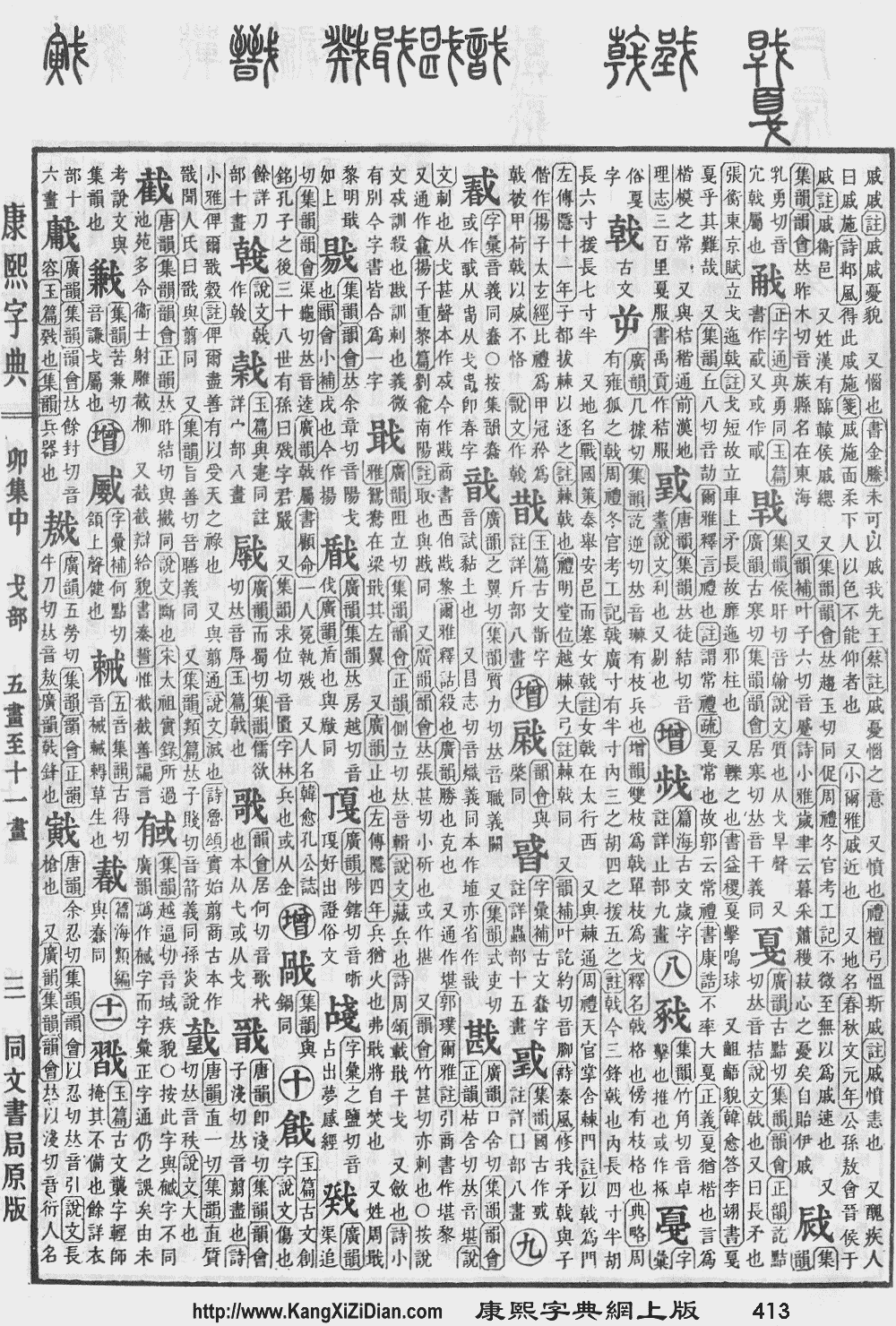
  • Kangxi Dictionary: page 413, character 5
  • Dai Kanwa Jiten: character 11599
  • Dae Jaweon: page 755, character 31
  • Hanyu Da Zidian (first edition): volume 2, page 1406, character 11
  • Unihan data for U+621C

Chinese

Glyph origin

Phono-semantic compound (形聲/形声, OC *l'iːɡ) : phonetic 呈 (OC *rleŋ, *l'eŋs) + semantic 戈.

Etymology 1

trad. 戜
simp. # 戜
alternative forms 𢧄

Pronunciation


Rime
Character 戜
Reading # 1/1
Initial (聲) 定 (7)
Final (韻) 屑 (87)
Tone (調) Checked (Ø)
Openness (開合) Open
Division (等) IV
Fanqie 徒結切
Baxter det
Reconstructions
Zhengzhang
Shangfang
/det̚/
Pan
Wuyun
/det̚/
Shao
Rongfen
/dɛt̚/
Edwin
Pulleyblank
/dɛt̚/
Li
Rong
/det̚/
Wang
Li
/diet̚/
Bernard
Karlgren
/dʱiet̚/
Expected
Mandarin
Reflex
dié
Expected
Cantonese
Reflex
dit6
Zhengzhang system (2003)
Character 戜
Reading # 1/1
No. 1450
Phonetic
component
呈
Rime
group
質
Rime
subdivision
2
Corresponding
MC rime
姪
Old
Chinese
/*l'iːɡ/

Definitions

戜

  1. † sharp
  2. † to scrape

Etymology 2

For pronunciation and definitions of 戜 – see 國 (“country; nation; nation-state; kingdom; capital; etc.”).
(This character is recorded in one or more historical dictionaries as an ancient form of 國).

References

Japanese

Kanji

戜

(uncommon “Hyōgai” kanji)

  1. This term needs a translation to English. Please help out and add a translation, then remove the text {{rfdef}}.

Readings

  • Go-on: でち (dechi)
  • Kan-on: てつ (tetsu)
  • Kun: するどい (surudoi, 戜い); きる (kiru, 戜る)
This article is issued from Wiktionary. The text is licensed under Creative Commons - Attribution - Sharealike. Additional terms may apply for the media files.