結
| ||||||||
Translingual
Han character
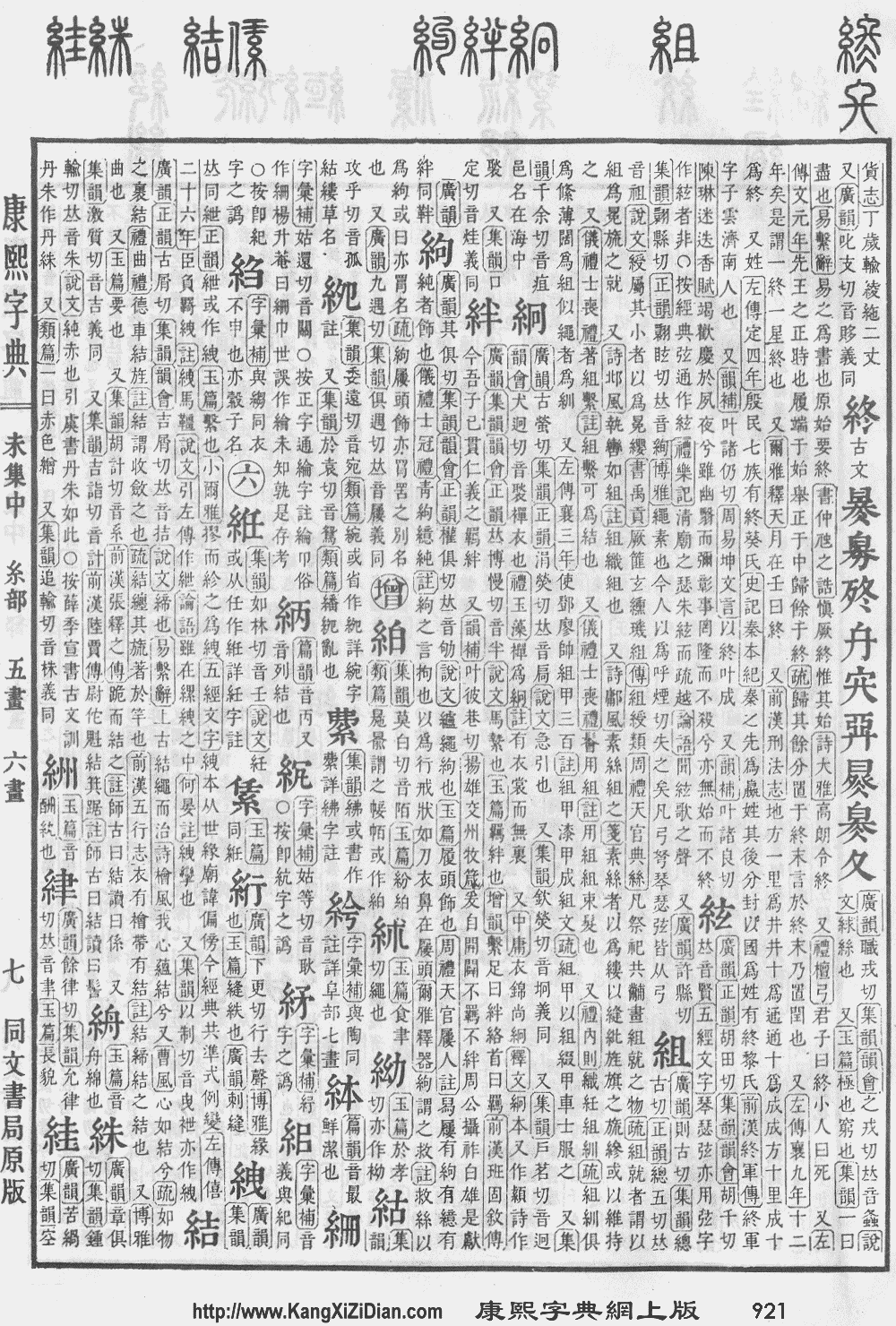
結 (Kangxi radical 120, 糸+6, 12 strokes, cangjie input 女火土口 (VFGR), four-corner 24961, composition ⿰糹吉)
Derived characters
- 𢢂, 鐑
References
- Kangxi Dictionary: page 921, character 34
- Dai Kanwa Jiten: character 27398
- Dae Jaweon: page 1354, character 21
- Hanyu Da Zidian (first edition): volume 5, page 3390, character 3
- Unihan data for U+7D50
Chinese
| trad. | 結 | |
|---|---|---|
| simp. | 结 | |
Glyph origin
| Old Chinese | |
|---|---|
| 秸 | *kriːl, *kriːd |
| 髻 | *kiːds |
| 夡 | *kʰids |
| 鴶 | *kriːd |
| 袺 | *kriːd, *kiːd |
| 頡 | *kriːd, *ɡiːd |
| 劼 | *kʰriːd |
| 硈 | *kʰriːd |
| 咭 | *kʰriːd, *ɡlid, *qʰlid |
| 黠 | *ɡriːd |
| 聐 | *ŋreːd |
| 趌 | *ked, *klid, *kʰid, *ɡrid |
| 結 | *kiːd |
| 拮 | *kiːd, *klid |
| 桔 | *kiːd |
| 狤 | *kiːd, *klid, *ɡrid |
| 擷 | *qʰiːd, *ɡiːd |
| 襭 | *ɡiːd |
| 翓 | *ɡiːd |
| 纈 | *ɡiːd |
| 吉 | *klid |
| 郆 | *kid |
| 詰 | *kʰid |
| 蛣 | *kʰid |
| 佶 | *ɡlid, *ɡrid |
| 鮚 | *ɡrid |
| 姞 | *ɡrid |
| 欯 | *qʰlid |
| 恄 | *qʰlid |
Phono-semantic compound (形聲/形声, OC *kiːd) : semantic 糸 + phonetic 吉 (OC *klid).
Etymology
From Proto-Sino-Tibetan *(g/k)(j)i(t/k) (“to tie; to bind”); cognate with Tibetan ཁྱིག (khyig, “to bind”), Burmese ကျစ် (kyac, “to twist”) (Schuessler, 2007; STEDT).
Pronunciation
Definitions
結
- to tie; to bind; to join; to connect
- to solidify; to form; to combine; to fuse
- to form; to forge (a relationship)
- to sum up; to end; to finish; to settle
- knot; tie
- (electronics) junction
- (anatomy) node
- emotional knot
- written agreement; undertaking; bond; guarantee of responsibility; commitment; affidavit
- to bear (fruit)
- (dialectal) to stammer; to stutter
- (Hokkien) loud and clear; sonorous
- (Xiamen, Quanzhou and Taiwanese Hokkien) fine and firm (not loose); well-bound; thick and sturdy
- (Mainland China Hokkien, figurative) hangup; problem; preoccupation; knot (in one's heart)
- (Taiwanese Hokkien) to be in a knot; to be entangled with
- (Xiamen and Quanzhou Hokkien) Classifier for bundles of thread-like objects.
Synonyms
- (to end):
- (to stammer):
- (hangup): 疙瘩 (gēda)
Compounds
- 丁香結/丁香结
- 不結實/不结实
- 不結盟/不结盟
- 中國結/中国结 (zhōngguójié)
- 乾結/干结 (gānjié)
- 了結/了结 (liǎojié)
- 五結/五结 (Wǔjié)
- 交朋結義/交朋结义
- 交結/交结
- 人口結構/人口结构 (rénkǒu jiégòu)
- 保結/保结 (bǎojié)
- 保結制度/保结制度
- 偵查終結/侦查终结
- 價格凍結/价格冻结
- 公證結婚/公证结婚
- 兵連禍結/兵连祸结
- 具結/具结 (jùjié)
- 冤家宜解不宜結/冤家宜解不宜结 (yuānjiā yí jiě bùyí jié)
- 凍結/冻结 (dòngjié)
- 凍結資金/冻结资金
- 凝結/凝结 (níngjié)
- 凝結作用/凝结作用
- 凝結反應/凝结反应
- 出結/出结
- 分子結構/分子结构 (fēnzǐ jiégòu)
- 切結/切结
- 切結書/切结书
- 勞結/劳结
- 勾結/勾结 (gōujié)
- 印結/印结
- 另結新歡/另结新欢
- 同心結/同心结 (tóngxīnjié)
- 合歡結/合欢结
- 哽結/哽结
- 問結/问结
- 喉結/喉结 (hóujié)
- 單衫百結/单衫百结
- 固結/固结
- 團結/团结 (tuánjié)
- 團結一心/团结一心
- 土洋結合/土洋结合
- 執結/执结
- 大團結/大团结 (dàtuánjié)
- 委結/委结
- 子路結纓/子路结缨
- 完結/完结 (wánjié)
- 完結篇/完结篇
- 官商勾結/官商勾结 (guānshānggōujié)
- 小結/小结 (xiǎojié)
- 巴巴結結/巴巴结结 (bāba-jiējiē)
- 巴結/巴结 (bājie)
- 干結
- 廣結善緣/广结善缘
- 廣結良緣/广结良缘
- 張口結舌/张口结舌 (zhāngkǒujiéshé)
- 張燈結彩/张灯结彩
- 張燈結綵/张灯结彩
- 彈冠結綬/弹冠结绶
- 心結/心结 (xīnjié)
- 怨結/怨结
- 情結/情结 (qíngjié)
- 愁腸百結/愁肠百结
- 慉結/慉结
- 懸燈結彩/悬灯结彩
- 懸鶉百結/悬鹑百结
- 戀母情結/恋母情结 (liànmǔ qíngjié)
- 戀父情結/恋父情结
- 成群結夥/成群结伙
- 成群結隊/成群结队 (chéngqúnjiéduì)
- 成群結黨/成群结党
- 房室結/房室结 (fángshìjié)
- 打結/打结 (dǎjié)
- 扭結/扭结
- 拍結/拍结 (phah-kat) (Min Nan)
- 拍結毬/拍结球 (phah-kat-kiû) (Min Nan)
- 挂燈結綵/挂灯结彩
- 掛燈結彩/挂灯结彩
- 攀高結貴/攀高结贵
- 收因結果/收因结果
- 斷結/断结
- 施衿結褵/施衿结褵
- 暗結珠胎/暗结珠胎
- 杜口結舌/杜口结舌
- 板結/板结 (bǎnjié)
- 枉結/枉结
- 柔腸百結/柔肠百结
- 桃園結義/桃园结义 (táoyuán-jiéyì)
- 樛結/樛结
- 權力結構/权力结构 (quánlì jiégòu)
- 歸根結柢/归根结柢 (guīgēnjiédǐ)
- 歸結/归结 (guījié)
- 死結/死结 (sǐjié)
- 氣結/气结
- 永結同心/永结同心
- 沒了結處/没了结处
- 活結/活结 (huójié)
- 洞見癥結/洞见症结
- 淋巴結/淋巴结 (línbājié)
- 煙霏露結/烟霏露结
- 燒結/烧结
- 熾結/炽结
- 牙結石/牙结石
- 珠胎暗結/珠胎暗结
- 理紛解結/理纷解结
- 理結/理结
- 甘結/甘结 (gānjié)
- 生態結構/生态结构 (shēngtài jiégòu)
- 生產結構/生产结构 (shēngchǎn jiégòu)
- 癥結/症结 (zhēngjié)
- 百結/百结
- 百結衣/百结衣
- 盤結/盘结
- 眉尾相結/眉尾相结
- 相結/相结 (xiāngjié)
- 瞠目結舌/瞠目结舌 (chēngmùjiéshé)
- 硬結/硬结
- 祕密結社/秘密结社 (mìmì jiéshè)
- 禍結兵連/祸结兵连
- 禍結釁深/祸结衅深
- 穿結/穿结
- 竇房結/窦房结 (dòufángjié)
- 箝口結舌/箝口结舌
- 簽結/签结
- 精誠團結/精诚团结
- 糾結/纠结 (jiūjié)
- 終結/终结 (zhōngjié)
- 終結者/终结者
- 結不解/结不解
- 結了/结了 (jiéle)
- 結交/结交 (jiéjiāo)
- 結交延譽/结交延誉
- 結仇/结仇 (jiéchóu)
- 結他/结他
- 結伴/结伴 (jiébàn)
- 結伴兒/结伴儿
- 結使/结使
- 結冤/结冤
- 結冰/结冰 (jiébīng)
- 結制/结制
- 結匯/结汇 (jiéhuì)
- 結印/结印
- 結友/结友
- 結口/结口
- 結合/结合 (jiéhé)
- 結合律/结合律 (jiéhélǜ)
- 結合線/结合线
- 結合能/结合能 (jiéhénéng)
- 結合膜/结合膜
- 結合韻/结合韵
- 結合韻母/结合韵母
- 結喉/结喉 (jiéhóu)
- 結壯/结壮
- 結壽緣/结寿缘
- 結夏/结夏
- 結夏安居/结夏安居
- 結夥/结伙 (jiéhuǒ)
- 結大義/结大义
- 結契/结契
- 結好/结好 (jiéhǎo)
- 結婚/结婚 (jiéhūn)
- 結婚戒指/结婚戒指
- 結婚證書/结婚证书 (jiéhūn zhèngshū)
- 結媛/结媛
- 結子/结子
- 結存/结存 (jiécún)
- 結定/结定
- 結宗會社/结宗会社
- 結客/结客
- 結實/结实
- 結尾/结尾 (jiéwěi)
- 結局/结局 (jiéjú)
- 結巴/结巴 (jiēba)
- 結巴子/结巴子
- 結帨/结帨
- 結帳/结帐 (jiézhàng)
- 結帳日/结帐日
- 結幕/结幕 (jiémù)
- 結廬/结庐
- 結彩/结彩 (jiécǎi)
- 結念/结念
- 結怨/结怨 (jiéyuàn)
- 結成/结成 (jiéchéng)
- 結托/结托 (jiétuō)
- 結扭/结扭
- 結押/结押
- 結拜/结拜 (jiébài)
- 結拜兄弟/结拜兄弟 (jiébài xiōngdì)
- 結援/结援
- 結撰
- 結攬/结揽
- 結斷/结断
- 結日/结日
- 結晶/结晶 (jiéjīng)
- 結晶岩/结晶岩
- 結晶玻璃/结晶玻璃
- 結晶體/结晶体 (jiéjīngtǐ)
- 結會/结会
- 結末/结末 (jiémò)
- 結束/结束 (jiéshù)
- 結束語/结束语 (jiéshùyǔ)
- 結果/结果
- 結果收因/结果收因
- 結果補語/结果补语
- 結果論/结果论
- 結核/结核 (jiéhé)
- 結根/结根
- 結案/结案 (jié'àn)
- 結核病/结核病 (jiéhébìng)
- 結核菌/结核菌
- 結核菌素/结核菌素
- 結梁子
- 結業/结业 (jiéyè)
- 結構/结构 (jiégòu)
- 結構主義/结构主义 (jiégòuzhǔyì)
- 結構助詞/结构助词
- 結構式/结构式 (jiégòushì)
- 結欠/结欠
- 結歡/结欢 (jiéhuān)
- 結正/结正
- 結清/结清 (jiéqīng)
- 結焦/结焦
- 結煞/结煞 (jiéshà)
- 結營/结营 (jiéyíng)
- 結狀/结状
- 結球甘藍/结球甘蓝 (jiéqiú gānlán)
- 結璘/结璘
- 結症/结症
- 結盟/结盟 (jiéméng)
- 結石/结石 (jiéshí)
- 結磨/结磨
- 結社/结社 (jiéshè)
- 結穴/结穴
- 結筆/结笔
- 結節/结节 (jiéjié)
- 結算/结算 (jiésuàn)
- 結約/结约
- 結納/结纳 (jiénà)
- 結素/结素
- 結紮/结扎
- 結絕/结绝 (jiéjué)
- 結結/结结
- 絮結/絮结 (xùjié)
- 結結實實/结结实实
- 結結巴巴/结结巴巴 (jiējiebābā)
- 結絲蘿/结丝萝
- 結綵/结彩 (jiécǎi)
- 結綬/结绶
- 結緣/结缘 (jiéyuán)
- 結締組織/结缔组织 (jiédì zǔzhī)
- 結線頭/结线头
- 結縭/结缡 (jiélí)
- 結縷草/结缕草
- 結繩/结绳 (jiéshéng)
- 結繩而治/结绳而治
- 結繩記事/结绳记事
- 結纏/结缠
- 結義/结义 (jiéyì)
- 結習/结习
- 結聚/结聚
- 結脈/结脉
- 結腸/结肠 (jiécháng)
- 結膜/结膜 (jiémó)
- 結膜炎/结膜炎 (jiémóyán)
- 結舌/结舌 (jiéshé)
- 結舌杜口/结舌杜口
- 結茅/结茅
- 結草/结草 (jiécǎo)
- 結草啣環/结草衔环
- 結草銜環/结草衔环 (jiécǎo xiánhuán)
- 結親/结亲 (jiéqīn)
- 結言/结言
- 結訓/结训
- 結記/结记
- 結語/结语 (jiéyǔ)
- 結論/结论 (jiélùn)
- 結識/结识 (jiéshí)
- 結賬/结账 (jiézhàng)
- 結跏/结跏
- 結辯/结辩
- 結連/结连 (jiélián)
- 結連理/结连理
- 結采
- 結金蘭/结金兰 (jiéjīnlán)
- 結關/结关 (jiéguān)
- 結集/结集 (jiéjí)
- 結頭/结头 (jiétóu)
- 結風/结风
- 結餘/结余 (jiéyú)
- 結駟連騎/结驷连骑
- 結體/结体 (jiétǐ)
- 結髮/结发
- 結髮事師/结发事师
- 結髮人/结发人
- 結髮夫妻/结发夫妻 (jiéfà fūqī)
- 結鱗/结鳞
- 結黨/结党 (jiédǎng)
- 結黨營私/结党营私 (jiédǎngyíngsī)
- 結黨聚群/结党聚群
- 結黨連群/结党连群
- 綰結/绾结
- 緘口結舌/缄口结舌
- 締結/缔结 (dìjié)
- 編結/编结 (biānjié)
- 總結/总结 (zǒngjié)
- 繩結/绳结 (shéngjié)
- 纍瓦結繩/累瓦结绳
- 纏結/缠结
- 義結金蘭/义结金兰 (yìjiéjīnlán)
- 聲帶小結/声带小结
- 聯結/联结 (liánjié)
- 聯結車/联结车
- 肺結核/肺结核 (fèijiéhé)
- 腎結核/肾结核
- 腎結石/肾结石 (shènjiéshí)
- 腸結核/肠结核
- 膠結/胶结
- 膽結石/胆结石 (dǎnjiéshí)
- 臨淵結網/临渊结网
- 苑結/苑结
- 蘊結/蕴结
- 蝴蝶結/蝴蝶结 (húdiéjié)
- 蟻結/蚁结
- 要結/要结
- 解疑釋結/解疑释结
- 計結/计结
- 輸服甘結/输服甘结
- 連結/连结 (liánjié)
- 連結線/连结线
- 鉗口結舌/钳口结舌
- 銜環結草/衔环结草
- 銜結/衔结
- 鋪結/铺结
- 閉結/闭结
- 開花結實/开花结实
- 開花結果/开花结果
- 集團結婚/集团结婚
- 集會結社/集会结社
- 集結/集结 (jíjié)
- 領結/领结 (lǐngjié)
- 題結/题结
- 骨結核/骨结核
- 鬱結/郁结 (yùjié)
- 魏顆結草/魏颗结草
- 鶉結/鹑结
- 鶉衣百結/鹑衣百结
- 黏結/黏结
References
- “Entry #8853”, in 臺灣閩南語常用詞辭典 [Dictionary of Frequently-Used Taiwan Minnan] (overall work in Mandarin and Hokkien), Ministry of Education, R.O.C., 2023.
- “結”, in 漢語多功能字庫 (Multi-function Chinese Character Database), 香港中文大學 (the Chinese University of Hong Kong), 2014–
Japanese
Readings
- Go-on: けち (kechi)
- Kan-on: けつ (ketsu, Jōyō)
- On: けい (kei)
- Kun: むすぶ (musubu, 結ぶ, Jōyō); ゆう (yuu, 結う, Jōyō)←ゆふ (yufu, 結ふ, historical); ゆわう (yuwau, 結わう)←ゆはふ (yufafu, 結はふ, historical); ゆわえる (yuwaeru, 結わえる, Jōyō)←ゆはへる (yufaferu, 結はへる, historical); いわえる (iwaeru, 結える)←いはへる (ifaferu, 結へる, historical); いわく (iwaku, 結く)←いはく (ifaku, 結く, historical); かたなす (katanasu, 結なす); かたぬ (katanu, 結ぬ); かためる (katameru, 結める); すく (suku, 結く)
- Nanori: ゆい (yui)
Compounds
Korean
Etymology
(This etymology is missing or incomplete. Please add to it, or discuss it at the Etymology scriptorium. Particularly: “Middle Korean readings, if any”)
Pronunciation
- (SK Standard/Seoul) IPA(key): [kjʌ̹ɭ]
- Phonetic hangul: [결]
Compounds
團結 (단결) unity; solidarity
集結 (집결) gathering
連結 (연결) connection; linking
結合 (결합) union cohesion
結付 (결부) linking; involving
結婚 (결혼) marriage; wedding
姉妹結緣 (자매결연) sisterhood relationship
結果 (결과) result
結局 (결국) eventually
結論 (결론) conclusion
結末 (결말) conclusion; an end
結實 (결실) bearing fruit; fruition
結核 (결핵) tuberculosis