杳
See also: 杲
| ||||||||
Translingual
Han character
杳 (Kangxi radical 75, 木+4, 8 strokes, cangjie input 木日 (DA), four-corner 40609, composition ⿱木日)
References
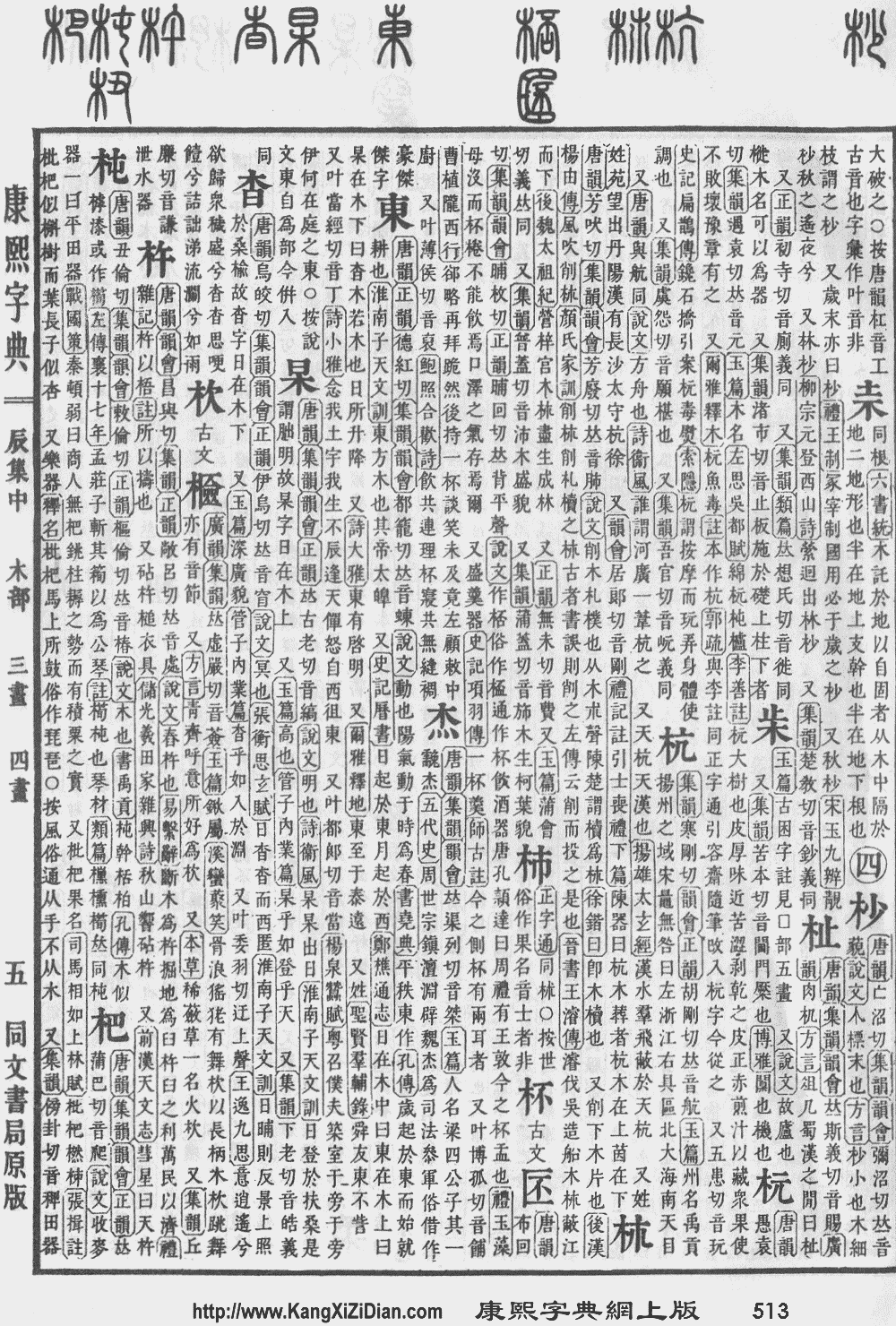
- Kangxi Dictionary: page 513, character 14
- Dai Kanwa Jiten: character 14501
- Dae Jaweon: page 901, character 2
- Hanyu Da Zidian (first edition): volume 2, page 1169, character 1
- Unihan data for U+6773
Chinese
| trad. | 杳 | |
|---|---|---|
| simp. # | 杳 | |
| alternative forms | 窅 | |
Glyph origin
Ideogrammic compound (會意/会意) : 木 (“tree”) + 日 (“sun”) - dark. Compare 杲 (gǎo, “bright”).
Pronunciation
Compounds
References
- “杳”, in 漢語多功能字庫 (Multi-function Chinese Character Database), 香港中文大學 (the Chinese University of Hong Kong), 2014–
Japanese
Kanji
杳
- This term needs a translation to English. Please help out and add a translation, then remove the text
{{rfdef}}.
Readings
Adjective
杳 • (yō) ←えう (eu)?†-tari (adnominal 杳とした (yō to shita) or 杳たる (yō taru), adverbial 杳と (yō to) or 杳として (yō to shite))
- dark and indistinct; unclear
- 杳として知れない
- yō to shite shirenai
- unknown
- 杳として知れない
Inflection
Classical conjugation of "杳たり" (タリ活用, see Appendix:Japanese verbs.)
| Stem forms | ||||
|---|---|---|---|---|
| Irrealis (未然形) | 杳たら | えうたら | eutara | |
| Continuative (連用形) | 杳と[1] 杳たり[2] | えうと えうたり | euto eutari | |
| Terminal (終止形) | 杳たり | えうたり | eutari | |
| Attributive (連体形) | 杳たる | えうたる | eutaru | |
| Realis (已然形) | 杳たれ | えうたれ | eutare | |
| Imperative (命令形) | 杳たれ | えうたれ | eutare | |
| Key constructions | ||||
| Negative | 杳たらず | えうたらず | eutarazu | |
| Contrasting conjunction | 杳たれど | えうたれど | eutaredo | |
| Causal conjunction | 杳たれば | えうたれば | eutareba | |
| Conditional conjunction | 杳たらば | えうたらば | eutaraba | |
| Past tense (firsthand knowledge) | 杳たりき | えうたりき | eutariki | |
| Past tense (secondhand knowledge) | 杳たりけり | えうたりけり | eutarikeri | |
| Adverbial | 杳と | えうと | euto | |
| [1]Without auxiliary verb. [2]With auxiliary verb. | ||||
References
- Matsumura, Akira, editor (2006), 大辞林 [Daijirin] (in Japanese), Third edition, Tōkyō: Sanseidō, →ISBN
Korean
Vietnamese
This article is issued from Wiktionary. The text is licensed under Creative Commons - Attribution - Sharealike. Additional terms may apply for the media files.