横
| ||||||||
Translingual
| Stroke order | |||
|---|---|---|---|
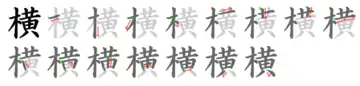 | |||
| Japanese | 横 |
|---|---|
| Simplified | 横 |
| Traditional | 橫 |
Han character
横 (Kangxi radical 75, 木+11, 15 strokes, cangjie input 木廿中金 (DTLC), composition ⿰木黄)
Derived characters
References
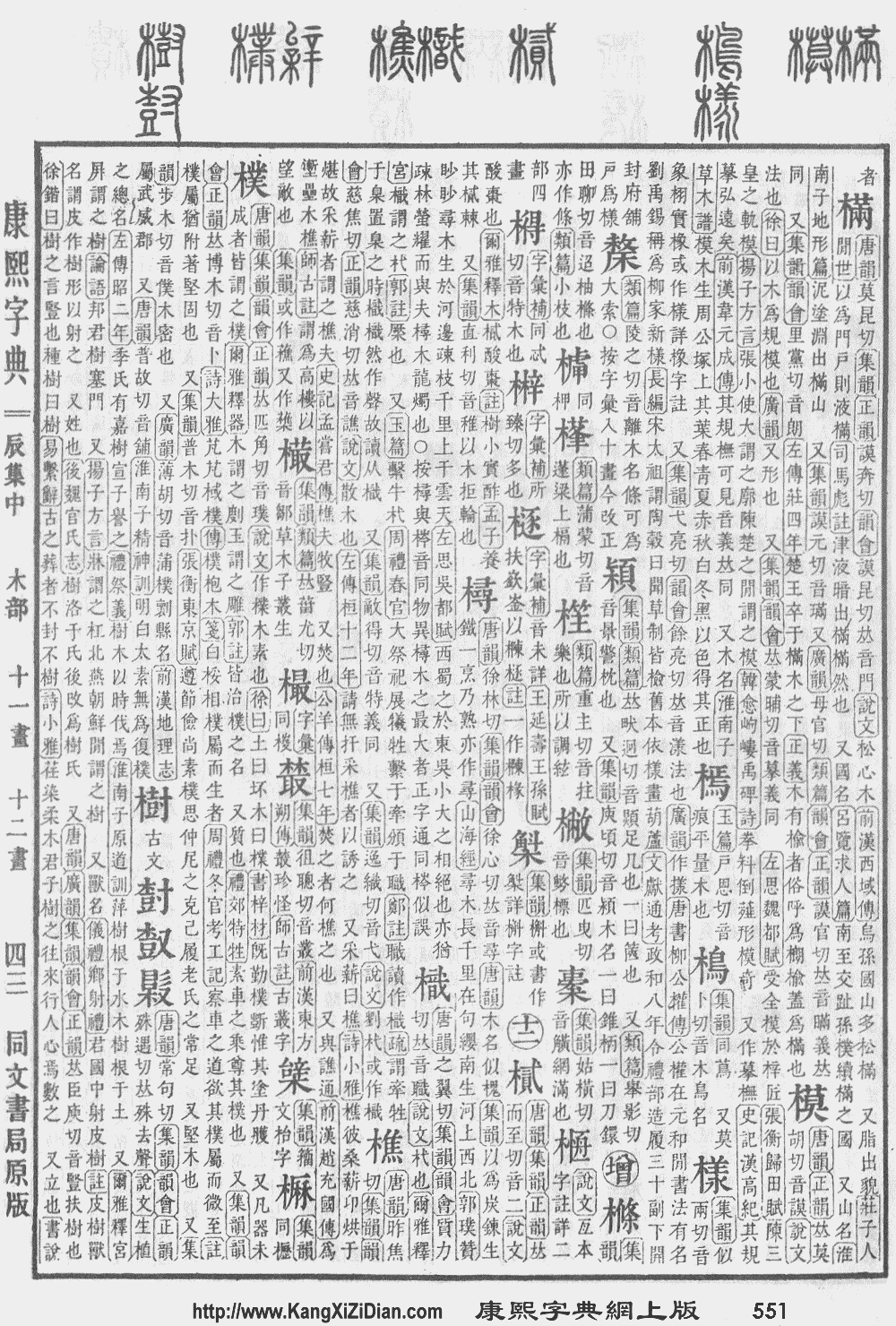
- Kangxi Dictionary: not present, would follow page 551, character 18
- Dai Kanwa Jiten: character 15484
- Hanyu Da Zidian (first edition): volume 2, page 1273, character 7
- Unihan data for U+6A2A
Chinese
Glyph origin
| Historical forms of the character 横 |
|---|
| Liushutong (compiled in Ming) |
| Transcribed ancient scripts |
 |
Phono-semantic compound (形聲/形声) : semantic 木 + phonetic 黄 ().
Definitions
| For pronunciation and definitions of 横 – see 橫 (“middle rail of a wooden door; crosspiece; to lie crossways; to be situated crosswise; to be horizontal; etc.”). (This character is the simplified and variant form of 橫). |
Notes:
|
Japanese
| 横 | |
| 橫 |
Readings
Etymology 1
| Kanji in this term |
|---|
| 横 |
| よこ Grade: 3 |
| kun’yomi |
| Alternative spelling |
|---|
| 橫 (kyūjitai) |
From Old Japanese, from Proto-Japonic *yəkə. Cognate with Kunigami 横 (ゆく゚ー, yukū), Miyako 横 (ゆく, yuku), Northern Amami-Oshima 横 (ゆく゚, yuxu), Okinawan 横 (ゆく, yuku), Yaeyama 横 (ゆく, yuku), Yonaguni 横 (どぅぐ, dugu).
Etymology 2
| Kanji in this term |
|---|
| 横 |
| おう Grade: 3 |
| goon |
| Alternative spelling |
|---|
| 橫 (kyūjitai) |
From Middle Chinese 橫 (MC hwaeng, “horizontal”) and 橫 (MC hwaengH, “violent; unexpected”).
Pronunciation
- IPA(key): [o̞ː]
Affix
References
- Matsumura, Akira, editor (2006), 大辞林 [Daijirin] (in Japanese), Third edition, Tōkyō: Sanseidō, →ISBN
This article is issued from Wiktionary. The text is licensed under Creative Commons - Attribution - Sharealike. Additional terms may apply for the media files.