躾
| ||||||||
Translingual
Han character
躾 (Kangxi radical 158, 身+9, 16 strokes, cangjie input 竹竹廿土大 (HHTGK), composition ⿰身美)
References
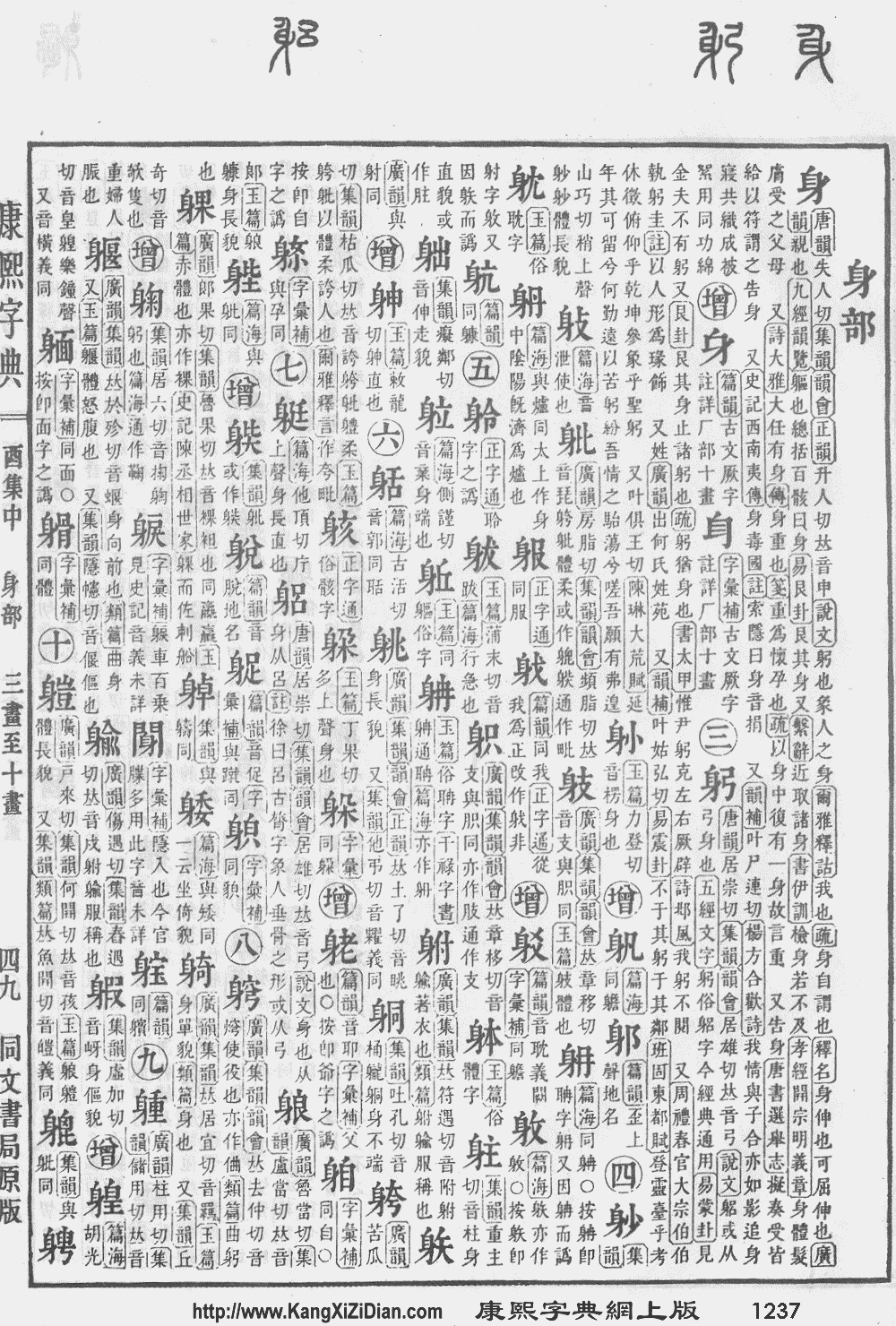
- Kangxi Dictionary: not present, would follow page 1237, character 65
- Dai Kanwa Jiten: character 38123
- Dae Jaweon: page 1711, character 47
- Hanyu Da Zidian (first edition): not present, would follow volume 6, page 3812, character 7
- Unihan data for U+8EBE
Japanese
Glyph origin
A 国字 (kokuji, “Japanese-coined character”) composed of an ideogrammic compound (會意/会意) : 身 (“body”) + 美 (“beauty”). (Can this(+) etymology be sourced?)
Etymology
| Kanji in this term |
|---|
| 躾 |
| しつけ Hyōgaiji |
| kun’yomi |
Nominalization of 仕付け (shitsuke, literally “training”), the 連用形 (ren’yōkei, “stem or continuative form”) of verb 仕付ける (shitsukeru, “to train → discipline”). (Can this(+) etymology be sourced?)
Derived terms
- 隠し躾 (kakushijitsuke)
- 切り躾 (kirijitsuke)
- 不躾 (bushitsuke)
References
- Matsumura, Akira, editor (2006), 大辞林 [Daijirin] (in Japanese), Third edition, Tōkyō: Sanseidō, →ISBN
This article is issued from Wiktionary. The text is licensed under Creative Commons - Attribution - Sharealike. Additional terms may apply for the media files.