鰛
| ||||||||
Translingual
| Traditional | 鰮 |
|---|---|
| Shinjitai (extended) |
鰛 |
| Simplified | 鳁 |
Han character
鰛 (Kangxi radical 195, 魚+9, 20 strokes, cangjie input 弓火日月廿 (NFABT), composition ⿰魚昷)
References
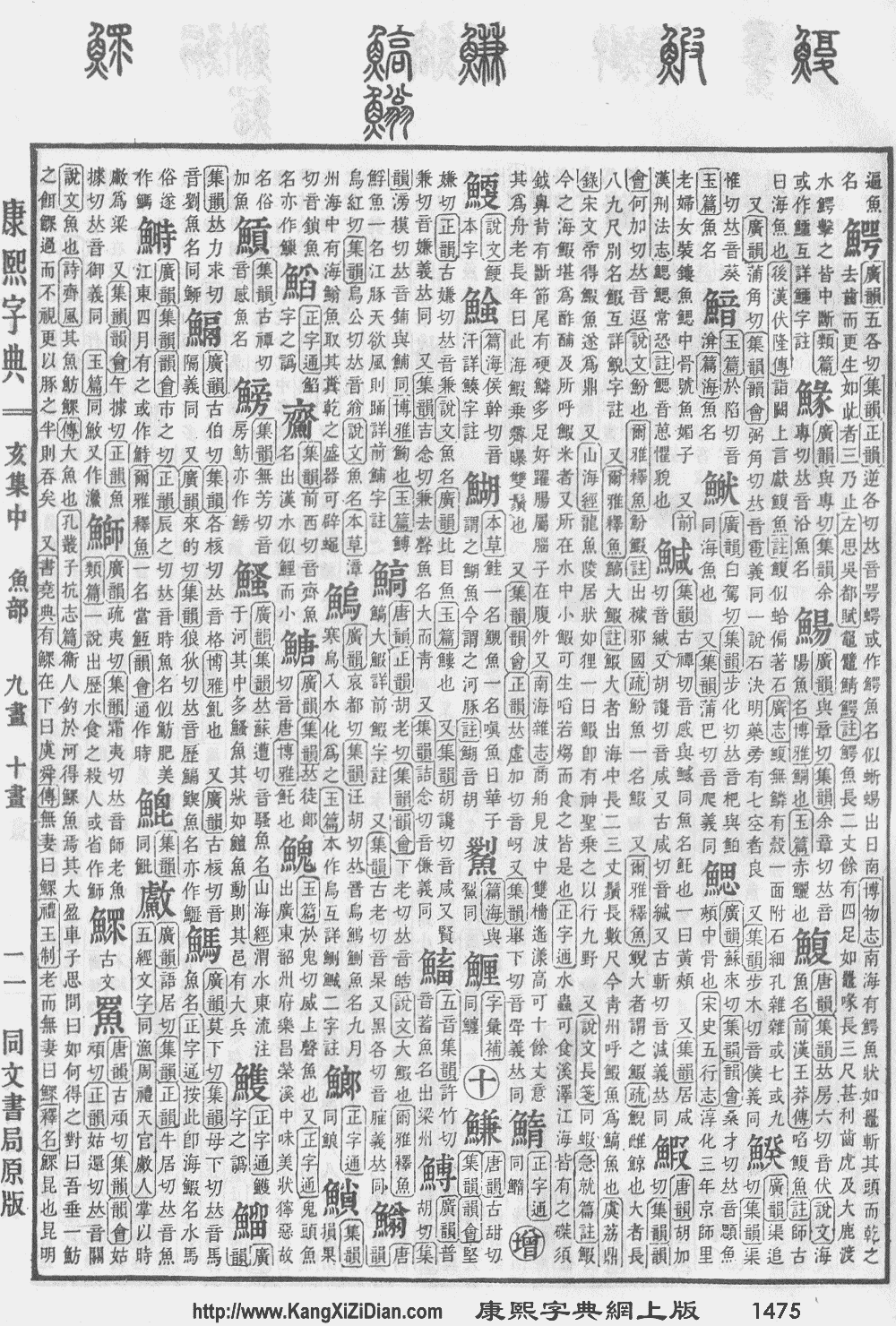
- Kangxi Dictionary: not present, would follow page 1475, character 16
- Hanyu Da Zidian (first edition): volume 7, page 4701, character 7
- Unihan data for U+9C1B
Chinese
| For pronunciation and definitions of 鰛 – see 鰮 (“sardine”). (This character is a variant form of 鰮). |
Japanese
| 鰛 | |
| 鰮 |
Readings
Etymology
| Kanji in this term |
|---|
| 鰛 |
| いわし Hyōgaiji |
| kun’yomi |
| For pronunciation and definitions of 鰛 – see the following entry. | ||
| ||
| (This term, 鰛, is an alternative spelling of the above term.) |
This article is issued from Wiktionary. The text is licensed under Creative Commons - Attribution - Sharealike. Additional terms may apply for the media files.