柊
| ||||||||
Translingual
Han character
柊 (Kangxi radical 75, 木+5, 9 strokes, cangjie input 木竹水卜 (DHEY), four-corner 47933, composition ⿰木冬)
References
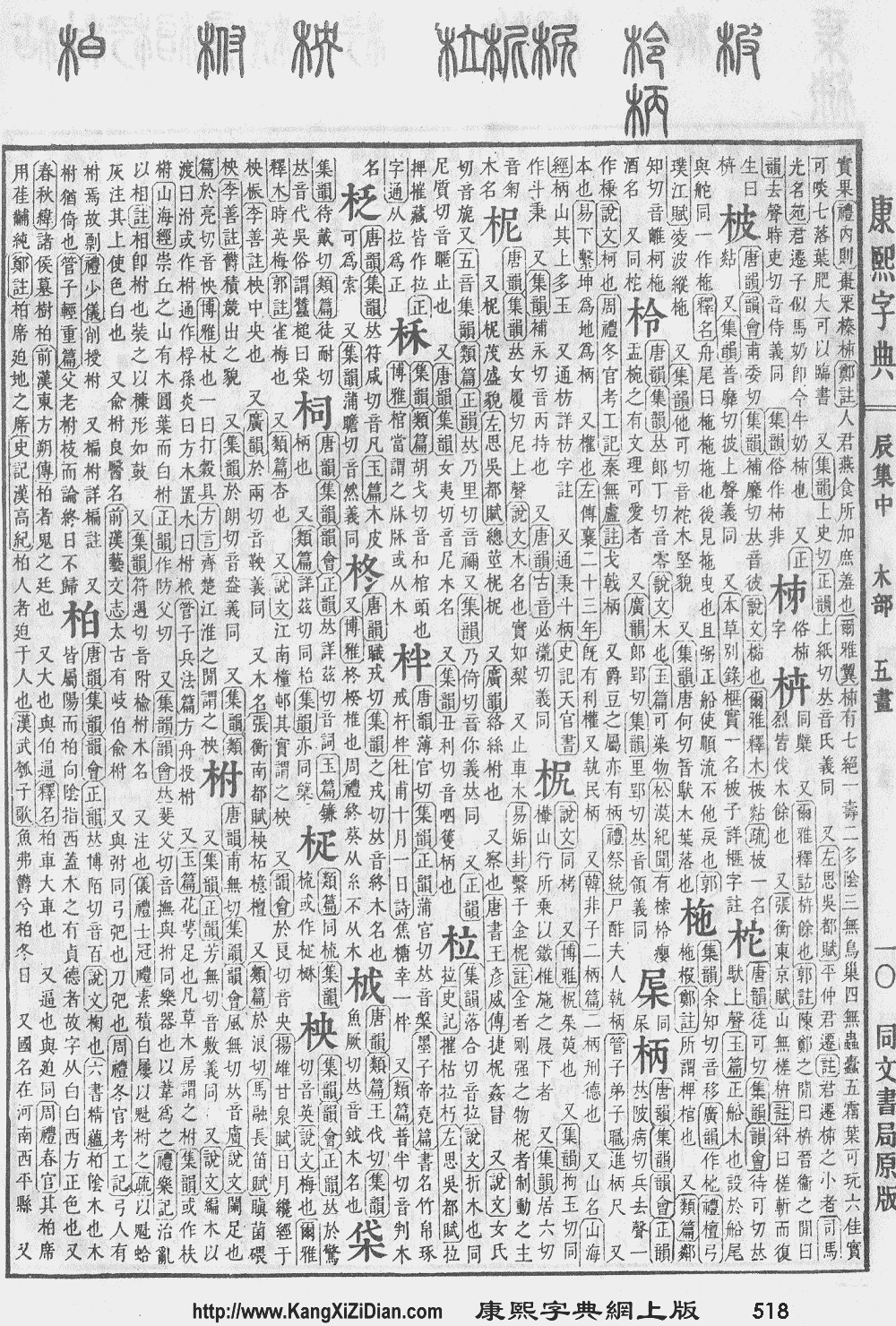
- Kangxi Dictionary: page 518, character 15
- Dai Kanwa Jiten: character 14610
- Dae Jaweon: page 906, character 16
- Hanyu Da Zidian (first edition): volume 2, page 1187, character 3
- Unihan data for U+67CA
Chinese
| simp. and trad. |
柊 | |
|---|---|---|
Glyph origin
Pronunciation
References
- Dictionary of Chinese Character Variants (教育部異體字字典), C05078
- “柊”, in 漢語多功能字庫 (Multi-function Chinese Character Database), 香港中文大學 (the Chinese University of Hong Kong), 2014–
Japanese
| Shinjitai | 柊 | |
| Kyūjitai [1] |
柊󠄁 柊+ 󠄁?(Adobe-Japan1) |
 |
| 柊󠄃 柊+ 󠄃?(Hanyo-Denshi) (Moji_Joho) | ||
| The displayed kanji may be different from the image due to your environment. See here for details. | ||
Readings
Etymology 1
| Kanji in this term |
|---|
| 柊 |
| ひいらぎ Jinmeiyō |
| kun’yomi |
| Alternative spellings |
|---|
| 疼木 鮗 |
⟨pi1pi1ra ki2⟩ → */pʲipʲiraɡʷi/ → /fifiraɡi/ → /hiwiraɡi/ → /hiːraɡi/
From Old Japanese, first attested in the Kojiki (712 CE).
Appears to derive as the 連用形 (ren'yōkei, “continuative or stem form”) of now-obsolete verb 疼ぐ (hīragu, “to hurt with a stinging pain”), in reference to the sharp thorns on the leaves.[2]
(This etymology is missing or incomplete. Please add to it, or discuss it at the Etymology scriptorium. Particularly: “extend for "spotnape ponyfish" sense”)
Noun
柊 or 柊 • (hīragi) ←ひひらぎ (fifiragi) or ヒヒラギ (fifiragi)?
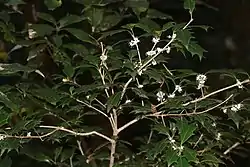
- 疼木: Osmanthus heterophyllus, a species of flowering plants known as the holly olive, holly osmanthus, or false holly
- Hypernym: 木犀 (mokusei)
- a style of 家紋 (kamon, “family crest”) with designs of hīragi leaves
- 鮗: Nuchequula nuchalis, the spotnape ponyfish
- Hypernym: 鱸 (suzuki)
Usage notes
- As with many terms that name organisms, this term is often spelled in katakana, especially in biological contexts (where katakana is customary), as ヒイラギ.
Derived terms
- 柊鰯 (hiiragi-iwashi, “sardine and holly charm”)
- 柊樫 (hiiragigashi)
- 柊崎 (Hiiragisaki)
- 柊挿す (hiiragi sasu)
- 柊沢, 柊澤 (Hiiragisawa)
- 柊澤 (Hiiragizawa)
- 柊草 (hiiragisō, “Ajuga incisa”)
- 柊冬青 (hiiragi soyogo)
- 柊連朶 (hiiragi denda)
- 柊菜 (hiiragina, “mizuna”)
- 柊南天 (hiiragi nanten, “Mahonia japonica”)
- 柊野 (Hiiragino)
- 柊原 (Hiiragihara)
- 柊木犀 (hiiragi mokusei)
- 柊本 (Hiiragimoto)
- 柊黐 (hiiragimochi)
- 柊山 (Hiiragiyama)
- 支那柊 (Shina hiiragi)
- 西洋柊 (seiyō hiiragi)
- 斑入柊 (fuiri hiiragi)
Noun
柊 or 柊 • (hiragi)
- Same as ひいらぎ (hīragi) above
Etymology 3
| Kanji in this term |
|---|
| 柊 |
| しゅう Jinmeiyō |
| kan’on |
/t͡ɕɨu/ → /ɕʲuː/ → /ɕuː/
From Middle Chinese 柊 (MC tsyuwng).
References
- Haga, Gōtarō (1914) 漢和大辞書 [The Great Kanji-Japanese Dictionary] (in Japanese), Fourth edition, Tōkyō: Kōbunsha, , page 1118 (paper), page 610 (digital)
- Shōgaku Tosho (1988) 国語大辞典(新装版) [Unabridged Dictionary of Japanese (Revised Edition)] (in Japanese), Tōkyō: Shogakukan, →ISBN
- Matsumura, Akira, editor (2006), 大辞林 [Daijirin] (in Japanese), Third edition, Tōkyō: Sanseidō, →ISBN
- Matsumura, Akira (1995) 大辞泉 [Daijisen] (in Japanese), First edition, Tōkyō: Shogakukan, →ISBN
Korean
Hanja
柊 • (jong) (hangeul 종, revised jong, McCune–Reischauer chong, Yale cong)
- This term needs a translation to English. Please help out and add a translation, then remove the text
{{rfdef}}.