𢭮
See also: 𫼿
| ||||||||
Translingual
Han character
𢭮 (Kangxi radical 64, 手+7, 10 strokes, cangjie input 手尸山大 (QSUK), composition ⿰扌改)
References
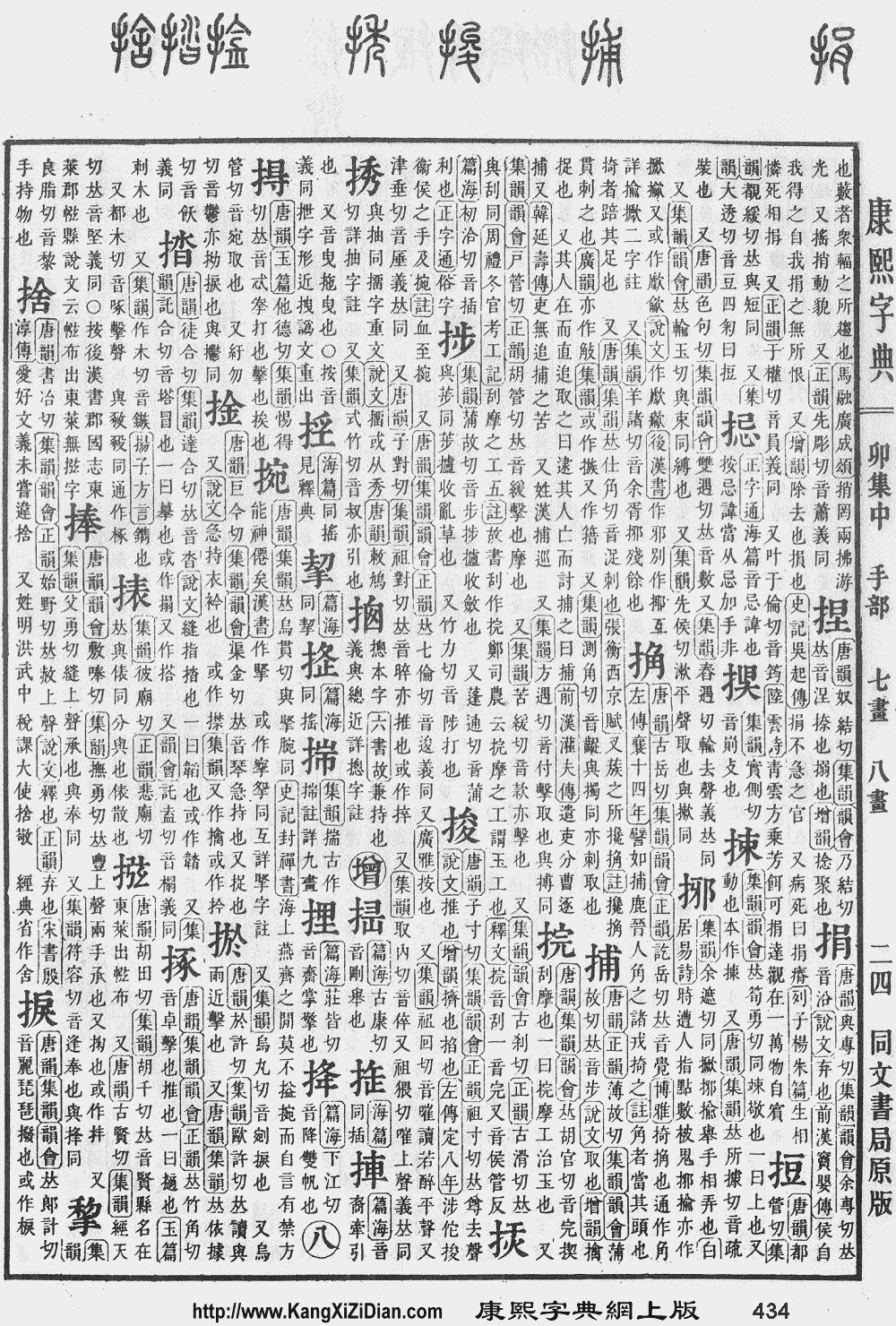
- Kangxi Dictionary: not present, would follow page 434, character 24
- Unihan data for U+22B6E
Vietnamese
Han character
𢭮: Nôm readings: gảy[1][2][3][4][5][6][7], gãy[2][3][4][5][6][7], gợi[1][2][3][4], gãi[1][3][4][5], cởi[1][3], gửi[1][4], gởi[2][3], cài[1], khảy[1], cạy[3], cảy[3], gạy[3], gẩy[3], gẫy[3], gậy[3], khẩy[3]
Compounds
- gảy đờn (𢭮彈)
References
- Nguyễn (2014).
- Nguyễn et al. (2009).
- Trần (2004).
- Hồ (1976).
- Bonet (1899).
- Génibrel (1898).
- Taberd & Pigneau de Béhaine (1838).
This article is issued from Wiktionary. The text is licensed under Creative Commons - Attribution - Sharealike. Additional terms may apply for the media files.