𤈜
| ||||||||
Translingual
Han character
𤈜 (Kangxi radical 86, 火+6, 10 strokes, cangjie input 火一戈土 (FMIG), composition ⿰火至)
Derived characters
- 𩺧
References
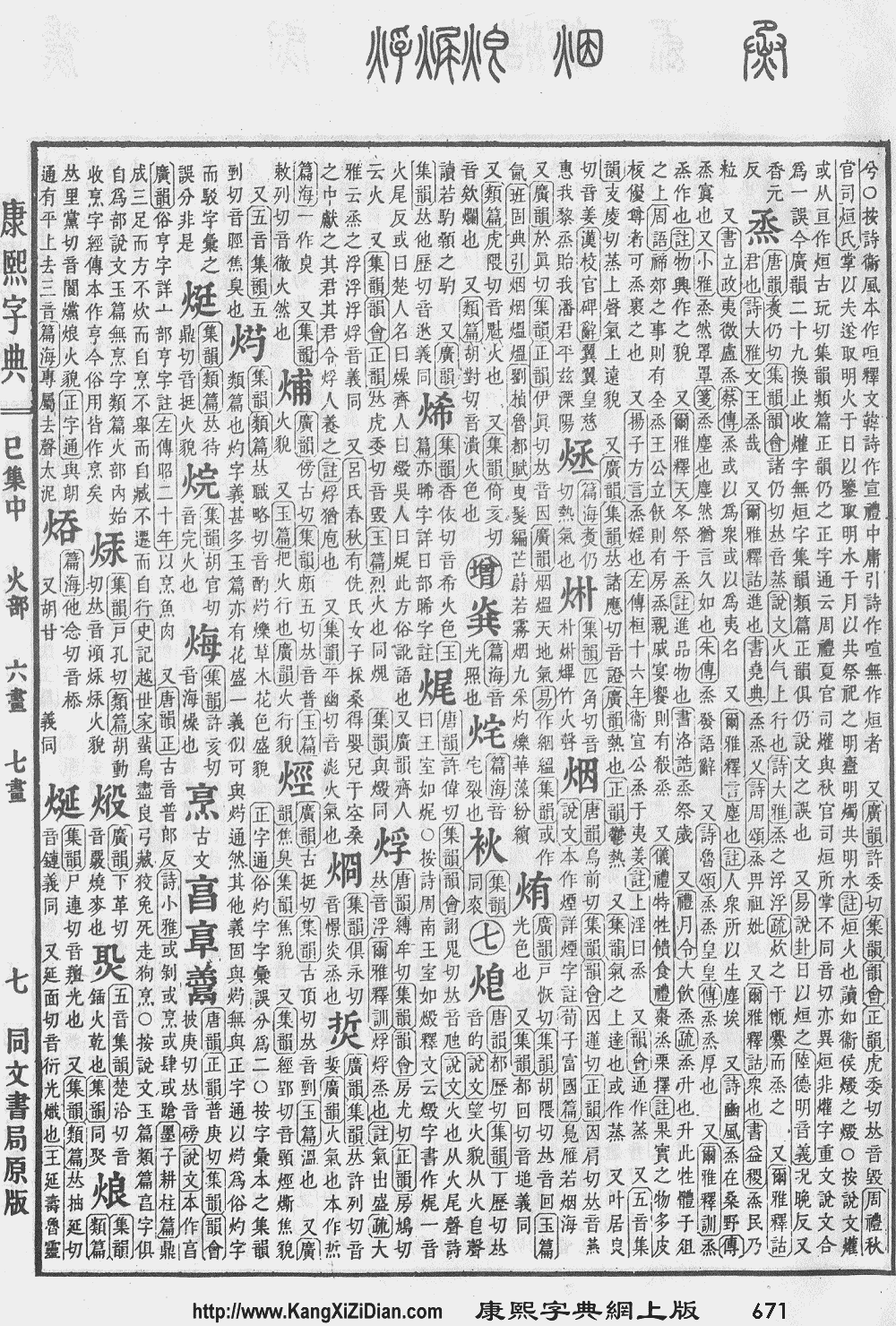
- Kangxi Dictionary: not present, would follow page 671, character 8
- Unihan data for U+2421C
Vietnamese
Han character
𤈜: Nôm readings: chói[1][2][3][4][5], cháy[1][2][3][5], giỏi[3][5], chấy[4][5], chới[1], đốt[3]
Verb
𤈜 • (cháy)
- Nôm form of cháy (“to burn”).
- 1820, Nguyễn Du, Truyện Kiều (傳翹), published 1870, lines 1675–1676:
唉 喂 呐 歇 事 緣 /絲 情 𠞹 䏾 焒 煩 𤈜 肝 - Alas! It told the whole story, / Love tore at his stomach, anguish burned his liver!
References
- Nguyễn (2014).
- Nguyễn et al. (2009).
- Trần (2004).
- Hồ (1976).
- Taberd & Pigneau de Béhaine (1838).
This article is issued from Wiktionary. The text is licensed under Creative Commons - Attribution - Sharealike. Additional terms may apply for the media files.