Reconstruction:Proto-Sino-Tibetan/s-la

Proto-Sino-Tibetan
Etymology
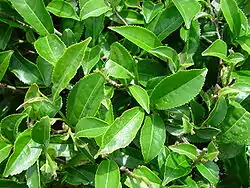
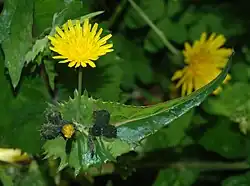
- Proto-Sino-Tibetan: ?
- Proto-Tibeto-Burman: *s-la (Matisoff, STEDT)
Cognate with *lap (“leaf”), *lep ~ ljap (“flat, thin, flat object”); see there for more cognates.
This root is the eventual source of the words for "tea" in most non-Sino-Tibetan languages of the world, mostly borrowed from Chinese 茶. Two Chinese sources of borrowing are usually distinguished:
- the affricativised varieties (e.g. Beijing Mandarin, Guangzhou Cantonese): which pronounce 茶 with an affricate initial /t͡sʰ, ʈ͡ʂʰ/.
- the plosive varieties (e.g. Min Nan) /t/.
The Chinese word might have originally been a loan from Loloish (Tibeto-Burman) *la ("leaf, tea"), as tea may have originated in Sichuan (historically Lolo-speaking area) (Sagart, 1999). Alternatively, Qiu (2000) suggests that it was a semantic extension from the root *la, which yielded 荼 (OC *rlaː, *ɦlja, *l'aː), the name of a bitter plant (Sonchus oleraceus).
Additionally, Schuessler (2007) also proposed an Austroasiatic origin for the Proto-Loloish word; as a similar-shaped etymon exists in Austroasiatic: *sla (ibid.) or *slaʔ (Sidwell & Rau, 2015); compare also Proto-Mon-Khmer *slaʔ (“leaf”) (Shorto, 2006: #230), (Modern Mon သၠ (hlaʔ, “leaf”), Khmer ស្លា (slaa, “areca palm”), ស្លឹក (slǝk, “leaf, sheet”), Vietnamese lá (“leaf”).
More at etymology of tea on Wikipedia.
Descendants
- Old Chinese: 荼 /*rlaː, laː, ɦlja/ (ZS), /*lˤra, lˤa, l̥a/ (B-S; unlisted, theoretical) (“bitter taste vegetable; weed; white flower; poison, harm; tea”)
- Middle Chinese: 荼 /ɖɣa, ʑia, duo/, 茶 (ɖˠa) /ɖɣa/
- Chinese:
- Mandarin:
- Beijing: /ʈ͡ʂʰa³⁵/
- Central Plains: /t͡sʰa²⁴/, /ʈ͡ʂʰa⁴²/
- Dungan: ца (ca) /t͡sʰaː²⁴/
- Jiaoliao: /ʈ͡ʂʰa⁴²/
- Jilu: /ʈ͡ʂʰa⁴²/, /t͡sʰɑ⁴⁵/
- Lanyin: /ʈ͡ʂʰa⁵³/, /t͡sʰa⁵¹/
- Lower Yangtze: /ʈ͡ʂʰa⁵⁵/, /ʈ͡ʂʰɑ²⁴/
- Northeastern: /ʈ͡ʂʰa²⁴/
- Southwestern:
- Chengdu: /t͡sʰa³¹/
- Guiyang: /t͡sʰa²¹/
- Kunming: /ʈ͡ʂʰa̠³¹/
- Wuhan: /t͡sʰa²¹³/
- Sichuanese: 茶 (ca2), /t͡sʰa²¹/
- Standard: 茶 (chá), /ʈ͡ʂʰa³⁵/
- Mandarin:
- Chinese:
- Middle Chinese: 荼 /ɖɣa, ʑia, duo/, 茶 (ɖˠa) /ɖɣa/
- → Arabic: شَاي (šāy), صَاي (ṣāy), صَا (ṣā)
- → Hindustani:
- → Kalasha: čay
- → Khalaj: čây
- → Konkani: चा (cā), च्या (cyā)
- → Malayalam: ചായ (cāya)
- → Marathi: चहा (cahā)
- → Mongolian: цай (caj) ᠴᠠᠢ (čai)
- → Odia: ଚା (ca)
- → Pashto: چای (čây)
- → Punjabi: ਚਾਹ (cāh) / چاہ (cāh)
- → Sindhi: چانھ (čānhi)
- → Ottoman Turkish: چای (çay), چا (ça)
- Turkish: çay
- → Adyghe: щай (śaj)
- → Albanian: çaj
- → Armenian: չայ (čʻay)
- → Azerbaijani: çay
- → Bashkir: сәй (səy)
- → Belarusian: чай (čaj)
- → Bulgarian: чай (čaj)
- → Crimean Tatar: şay, çay
- → Greek: τσάι (tsái) (possibly via a Slavic language)
- → Hijazi Arabic: چاي (čāy)
- → Karachay-Balkar: шай (şay)
- → Karakalpak: чай
- → Kazakh: шай (şai)
- → Northern Kurdish: çay
- → Lishana Deni: גׄאייה (čāye)
- → Kyrgyz: чай (cay)
- → Macedonian: чај (čaj)
- → Russian: чай (čaj)
- → Alutiiq: cayuq
- → Alutor: сайый (sajəj), саю (saju)
- → Abaza: чай (ćaj)
- → Abkhaz: ачаи (ačaj)
- → Avar: чай (čaj)
- → Bezhta: чай (čaj)
- → Chechen: чай (čaj)
- → Chuvash: чей (čej)
- → Erzya: чай (čaj)
- → Finnish: tsaiju, saikka
- → Georgian: ჩაი (čai)
- → Ingrian: caaju, caju, cääjy
- → Ingush: чай (čaj)
- → Kabardian: шай (šaj)
- → Kildin Sami: ча̄йй (čājj)
- → Lezgi: чай (čaj)
- ⇒ Livvi: čuaju
- → Moksha: чай (čaj)
- → Romanian: ceai
- → Slovak: čaj
- → Tabasaran: чай (čaj)
- → Ukrainian: чай (čaj)
- → Udmurt: чай (ćaj)
- → Upper Sorbian: čaj
- → Veps: čai
- → Yakut: чэй (cey)
- → Yup'ik: caayuq
- → Serbo-Croatian:
- → Slovene: čaj
- → Lower Sorbian: čaj (literary)
- → Southern Altai: чай (čay)
- → Tatar: чәй (çäy)
- → Turkmen: çay
- → Uyghur: چاي (chay)
- → Uzbek: choy
- → Zazaki: çay
- → Turkmen: çaý
- Cantonese:
- Gan:
- Nanchang: /t͡sʰɑ²⁴/
- Hakka:
- Sixian: 茶 (chhà), /t͡sʰa¹¹/
- Taoyuan: /t͡sʰɑ¹¹/
- Huizhou: /t͡sʰa⁴⁴/, /t͡sɔ⁴⁴/
- Jin: /t͡sʰa¹¹/, /t͡sɑ¹³/, /t͡sʰa³¹/
- Min:
- Northern Min:
- Jian'ou: 茶 (dâ), /ta³³/
- Eastern Min:
- Fuzhounese: 茶 (dà), /ta⁵³/
- Min Nan:
- Hainanese: /ʔdɛ³¹/
- Hokkien:
- Xiamen Hokkien: 茶 (tê), /te²⁴/
- → Malay: teh
- Indonesian: teh
- → Dutch: thee, (obsolete) tee
- Afrikaans: tee
- Berbice Creole Dutch: tei
- Negerhollands: thee, tee
- → Caribbean Javanese: teh
- → Dutch Low Saxon: thee
- → Danish: te, the
- → Faroese: te
- → English: tea
- Gullah: tea
- Jamaican Creole: tea
- → Abenaki: ti
- → Chickasaw: tii'
- → Cocopa: ṭi·
- → Cornish: té
- → Cree:
- Canadian syllabics script: ᑎᕀ (tiy)
- Latin script: tiy
- → Inuktitut: ᑏ (tii)
- → Irish: tae
- → Maori: tī
- → Malecite-Passamaquoddy: ti
- → Mikasuki: ti'g'tlo'q, ji'gitlo'q (“kettle”) (from "tea kettle")
- → Panamint: tii
- → Scottish Gaelic: tì, teatha
- → Tamil: டீ (ṭī)
- → Telugu: టీ (ṭī)
- → Unami: ti
- → Welsh: te
- → French: thé
- → Kari'na: te
- → German: Tee
- → Icelandic: te
- → New Latin: thea
- → Latvian: tēja
- → Norwegian: te
- → Sranan Tongo: te
- → Swedish: te, the, thé
- → Finnish: tee
- → West Frisian: tee
- → Malay: teh
- Quanzhou Hokkien: 茶 (tê), /te²⁴/
- Taiwanese: 茶 (tê), /te²⁴/
- Zhangzhou: 茶 (têe), /tɛ¹³/
- Xiamen Hokkien: 茶 (tê), /te²⁴/
- Teochew: 茶 (dê5), /te⁵⁵/
- Northern Min:
- Wu:
- Hangzhounese: /d͡zɑ²¹³/
- Shanghainese: 茶 (zo3), /z̻o²³/
- Suzhounese: /zo¹³/
- Wenzhounese: /d͡zo³¹/
- Xiang:
- Changsha: /t͡sa¹³/
- Xiangtan: /d͡zɒ¹²/
- → Japanese: 茶 (cha), [t͡ɕʲa̠]}
- → Korean: 차 (cha), [t͡ɕʰa]
- → Tibetan: ཇ (ja, “tea”)
- Lolo-Burmese:
External links
- Chapter Tea in the World Atlas of Language Structures