Venus
Translingual

The Birth of Venus
Hypernyms
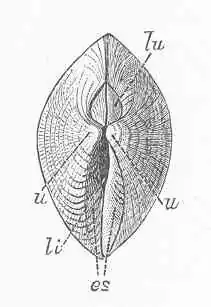
- (genus): Eukaryota – superkingdom; Animalia – kingdom; Bilateria – subkingdom; Protostomia – infrakingdom; Spiralia – superphylum; Mollusca – phylum; Bivalvia - class; Autobranchia - subclass; Heteroconchia - superorder; Venerida - order; Veneroidea - superfamily; Veneridae - family
Hyponyms
- (genus): Venus verrucosa (warty venus) - type species; for other species see
 Venus on Wikispecies.Wikispecies
References
 Venus (genus) on Wikipedia.Wikipedia
 - Venus on Wikispecies.Wikispecies
 Category:Venus (genus) on Wikimedia Commons.Wikimedia Commons
 - Venus at National Center for Biotechnology Information
- Venus at World Register of Marine Species
- Venus at Integrated Taxonomic Information System.
- Venus at Encyclopedia of Life
English
.svg.png.webp)
Venus's planetary symbol ⟨♀⟩
Etymology
From Middle English Venus, from Latin Venus.
Pronunciation
Proper noun
Venus (plural Venuses)
- (astronomy) The second planet in the Solar system, named for the goddess; represented in astronomy and astrology by ♀.
- The Illustrated London Almanack 1867, London, page 45:
- Venus rises on the 1st day 1/4 to 5 a.m., and 4h. 25m. a.m. on the last day. [...] She is now beginning to move northward. [...]
- The Illustrated London Almanack 1867, London, page 45:
- (Roman mythology) The goddess of love, beauty, fertility, and sexuality; the Roman counterpart of Aphrodite.
- 1888 June 2, “Senoritas of Brazil. [Chicago Mail.]”, in The Cincinnati Enquirer, volume XLVI, number 154, page 13, column 3:
- Their figures are universally models for brunette Venuses, and their feet arch like rainbows, and are Cinderellian in size.
- A female given name
Synonyms
- (astronomy, astrology): ♀
Derived terms
- crocus of Venus
- mons Venus
- protoVenus
- salt of Venus
- venereal
- Venerial
- Venerian
- Venus' comb
- Venus comb, Venus' comb, Venus's comb
- Venus flytrap
- Venusian
- Venuslike
- Venus mound
- venusquake
- Venus's basin
- Venus's basket
- Venus's bath
- Venus's flower basket
- Venus's girdle
- Venus's hair
- Venus's hair stone
- Venus's looking-glass
- Venus's pride
- Venus's purse
- Venus's shell
- Venus zone
Translations
planet
|
goddess
|
See also
- (planets of the Solar System) planets of the Solar System; Mercury, Venus, Earth, Mars, Jupiter, Saturn, Uranus, Neptune
| Solar System in English · Solar System (layout · text) | ||||||||||||||||||
|---|---|---|---|---|---|---|---|---|---|---|---|---|---|---|---|---|---|---|
| Star | Sun | |||||||||||||||||
| IAU planets and notable dwarf planets |
Mercury | Venus | Earth | Mars | Ceres | Jupiter | Saturn | Uranus | Neptune | Pluto | Eris | |||||||
| Notable moons |
— | — | Moon | Phobos Deimos |
— | Io Europa Ganymede Callisto |
Mimas Enceladus Tethys Dione Rhea Titan Iapetus |
Miranda Ariel Umbriel Titania Oberon |
Triton | Charon | Dysnomia | |||||||
Noun

Venus (sense 2) of Willendorf
Venus (countable and uncountable, plural Venuses)
- (obsolete or poetry) Sexual activity or intercourse, sex; lust, love.
- 1624, Democritus Junior [pseudonym; Robert Burton], The Anatomy of Melancholy: […], 2nd edition, Oxford, Oxfordshire: Printed by John Lichfield and James Short, for Henry Cripps, →OCLC:, II.ii.2:
- Immoderate Venus in excess, as it is a cause, or in defect; so, moderately used, to some parties an only help, a present remedy.
- (obsolete, alchemy, chemistry) Copper (a reddish-brown, malleable, ductile metallic element).
- 1807, A New and Complete Encyclopaedia; or, Universal Dictionary of Arts and Sciences: Vol III, page 48:
- CRYSTALS of Venus or of copper, called also vitriol of Venus, is copper reduced into the form of vitriol by spirit of nitre, or by dissolving verdegris in good distilled vinegar, till the acid be saturated; it is very caustic and used to eat off proud flesh. It is also used by painters, and manufacturers, and sold under the name of distilled vinegar. See CHEMISTRY.
- 2004, Maurice P. Crosland, Historical Studies in the Language of Chemistry, page 89:
- Another pair of terms which caused some confusion were Spirit of Saturn and Spirit of Venus, names suggesting compounds of lead and copper respectively. Jean Beguin described the preparation from minium and distilled vinegar of a liquid he called burning spirit of Saturn, e cause it was inflammable and he thought it was a compound of lead. Actually the lead takes no part in the reaction and the product of distilling lead acetate is impure acetone. Beguin’s terminology did not go without comment however, for Christopher Glaser later referred to ‘A burning Spirit of Saturn (as it is called) but rather, a Spirit of the Volatile Salt of Vinegar’. Tachenius referred to the product of distillation of copper acetate as ‘pretended spirit of Venus’ because it was really only distilled vinegar - the meaning which Macquer gave to the expression. It is typical of the confusion of terminology in early chemistry that the London Pharmacopoeia of 1721 gave the name Spiritus Veneris to sulphuric acid obtained by the distillation of copper sulphate.
- 2013, John Read, From Alchemy to Chemistry:
- The association of the heavenly bodies with known metals and also with human organs and destinies goes back to ancient Chaldea, the land of astrologers. In Chaucer’s words: ‘The seven bodies eek, lo hear anon. Sol gold is, and Luna silver we declare; Mars yron, Mercurie is quyksilver; Saturnian leed; and Jubitur is tyn, and Venus coper, by my fathers kyn.’ […] Corresponding names were bestowed upon salts of these metals by the alchemists, and some of them have persisted down to the present day. Some examples are lunar caustic (silver nitrate); vitriol of Venus (copper sulphate); sugar of Saturn (lead acetate); and vitriol of Mars, or Martial vitriol (ferrous sulphate).
- Any Upper Palaeolithic statuette portraying a woman, usually carved in the round.
- 1986, Brian Hayden, “Old Europe: sacred matriarchy or complementary opposition?”, in Anthony Bonanno, editor, Archaeology and Fertility Cult in the Ancient Mediterranean: Papers Presented at the First International Conference on Archaeology of the Ancient Mediterranean, University of Malta, 2–5 September 1985, Amsterdam: B.R. Grüner Publishing Co., →ISBN, section I (Prehistory), page 23:
- While the goddess statues obviously did function in a very public, domestic context, there is no evidence that they were androgynyous or that they were the primary cult of importance. There are probably just as many phalli in the Paleolithic as there are Venuses.
- 1990, D. Bruce Dickson, “An Interpretation”, in The Dawn of Belief: Religion in the Upper Paleolithic of Southwestern Europe, Tucson, Ariz.: The University of Arizona Press, published 1996, →ISBN, page 211:
- However, a number of well-crafted studies in recent years have forcefully questioned—and perhaps refuted—the view that the Venuses were simply or solely goddesses.
- 2016, Jean Clottes, “Perceptions of the World, Functions of the Art, and the Artists”, in Oliver Y. Martin, Robert D. Martin, transl., What Is Paleolithic Art?: Cave Paintings and the Dawn of Human Creativity, Chicago, Ill., London: The University of Chicago Press, →ISBN, page 148:
- Her proportions, the stylistic elements, the choice of anatomical elements represented are characteristic of the Aurignacian or Gravettian Venuses, known especially from the statuary of Central and Eastern Europe.
Anagrams
Afrikaans
Pronunciation
- Hyphenation: Ve‧nus
Catalan
Cebuano
Pronunciation
- IPA(key): /biːn̪ʊs/
Proper noun
Venus
- the second planet in our solar system after Mercury
- (Roman mythology) the goddess of love, beauty, and natural productivity;
- a female given name from Latin
Danish
Estonian
Faroese
See also
| Solar System in Faroese · Sólskipanin (layout · text) | ||||||||||||||||||
|---|---|---|---|---|---|---|---|---|---|---|---|---|---|---|---|---|---|---|
| Star | Sólin | |||||||||||||||||
| IAU planets and notable dwarf planets |
Merkur | Venus | Jørðin | Mars | [Term?] | Jupiter | Saturn | Uranus | Neptun | Pluto | Eris | |||||||
| Notable moons |
— | — | Mánin | Phobos Deimos |
— | Io Europa Ganymedes Callisto |
[Term?] [Term?] [Term?] [Term?] [Term?] Titan [Term?] |
[Term?] [Term?] [Term?] [Term?] [Term?] |
Triton | Charon | Dysnomia | |||||||
Finnish
Pronunciation
- IPA(key): /ˈʋe(ː)nus/, [ˈʋe̞(ː)nus̠]
- Rhymes: -enus
- Syllabification(key): Ve‧nus
Declension
| Inflection of Venus (Kotus type 39/vastaus, no gradation) | ||||
|---|---|---|---|---|
| nominative | Venus | — | ||
| genitive | Venuksen | — | ||
| partitive | Venusta | — | ||
| illative | Venukseen | — | ||
| singular | plural | |||
| nominative | Venus | — | ||
| accusative | nom. | Venus | — | |
| gen. | Venuksen | |||
| genitive | Venuksen | — | ||
| partitive | Venusta | — | ||
| inessive | Venuksessa | — | ||
| elative | Venuksesta | — | ||
| illative | Venukseen | — | ||
| adessive | Venuksella | — | ||
| ablative | Venukselta | — | ||
| allative | Venukselle | — | ||
| essive | Venuksena | — | ||
| translative | Venukseksi | — | ||
| abessive | Venuksetta | — | ||
| instructive | — | — | ||
| comitative | See the possessive forms below. | |||
| Possessive forms of Venus (Kotus type 39/vastaus, no gradation) | ||||||||||||||||||||||||||||||||||||||||||||||||||||||||||||||||||||||||||||||||||||||||||||||||||||||||||||||||||||||||||||||||||||||||||||||||||||||||||||||||||||||||||||||||||||||||||||||||||||||||||||||||||||||||||||||||||||||||||||||||||||||||||||||||||||||||||||||||||||||||||||||||||||||||||||||||||||||||||||||||||||||||||||||||||||||||||||||
|---|---|---|---|---|---|---|---|---|---|---|---|---|---|---|---|---|---|---|---|---|---|---|---|---|---|---|---|---|---|---|---|---|---|---|---|---|---|---|---|---|---|---|---|---|---|---|---|---|---|---|---|---|---|---|---|---|---|---|---|---|---|---|---|---|---|---|---|---|---|---|---|---|---|---|---|---|---|---|---|---|---|---|---|---|---|---|---|---|---|---|---|---|---|---|---|---|---|---|---|---|---|---|---|---|---|---|---|---|---|---|---|---|---|---|---|---|---|---|---|---|---|---|---|---|---|---|---|---|---|---|---|---|---|---|---|---|---|---|---|---|---|---|---|---|---|---|---|---|---|---|---|---|---|---|---|---|---|---|---|---|---|---|---|---|---|---|---|---|---|---|---|---|---|---|---|---|---|---|---|---|---|---|---|---|---|---|---|---|---|---|---|---|---|---|---|---|---|---|---|---|---|---|---|---|---|---|---|---|---|---|---|---|---|---|---|---|---|---|---|---|---|---|---|---|---|---|---|---|---|---|---|---|---|---|---|---|---|---|---|---|---|---|---|---|---|---|---|---|---|---|---|---|---|---|---|---|---|---|---|---|---|---|---|---|---|---|---|---|---|---|---|---|---|---|---|---|---|---|---|---|---|---|---|---|---|---|---|---|---|---|---|---|---|---|---|---|---|---|---|---|---|---|---|---|---|---|---|---|---|---|---|---|---|---|---|---|---|---|---|---|---|---|---|---|---|---|---|---|---|---|---|---|---|---|---|---|---|---|---|---|---|---|---|---|---|---|---|---|---|---|
| ||||||||||||||||||||||||||||||||||||||||||||||||||||||||||||||||||||||||||||||||||||||||||||||||||||||||||||||||||||||||||||||||||||||||||||||||||||||||||||||||||||||||||||||||||||||||||||||||||||||||||||||||||||||||||||||||||||||||||||||||||||||||||||||||||||||||||||||||||||||||||||||||||||||||||||||||||||||||||||||||||||||||||||||||||||||||||||||
See also
| Solar System in Finnish · Aurinkokunta (layout · text) | ||||||||||||||||||
|---|---|---|---|---|---|---|---|---|---|---|---|---|---|---|---|---|---|---|
| Star | Aurinko | |||||||||||||||||
| IAU planets and notable dwarf planets |
Merkurius | Venus | Maa (Tellus) | Mars | Ceres | Jupiter | Saturnus | Uranus | Neptunus | Pluto | Eris | |||||||
| Notable moons |
— | — | Kuu | Phobos Deimos |
— | Io Europa Ganymedes Kallisto |
Mimas Enceladus Tethys Dione Rhea Titan Japetus |
Miranda Ariel Umbriel Titania Oberon |
Triton | Kharon | Dysnomia | |||||||
Anagrams
Galician
German
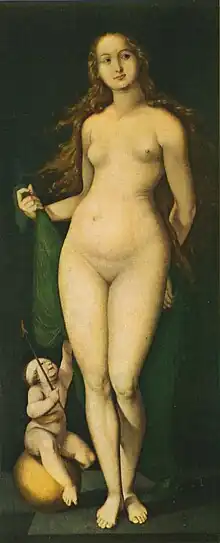
Venus [2] und Amor
Pronunciation
- IPA(key): /ˈveːnʊs/
Audio (file) Audio (file) - Hyphenation: Ve‧nus
Derived terms
(planet):
- Venusoberfläche
Declension
See also
References
- “Venus” in Digitales Wörterbuch der deutschen Sprache
- “Venus (Planet, Schönheit)” in Duden online
- “Venus (römische Göttin)” in Duden online
Icelandic
Pronunciation
- IPA(key): /ˈvɛːnʏs/
- Rhymes: -ɛːnʏs
See also
| Solar System in Icelandic · Sólkerfið (layout · text) | ||||||||||||||||||
|---|---|---|---|---|---|---|---|---|---|---|---|---|---|---|---|---|---|---|
| Star | Sólin | |||||||||||||||||
| IAU planets and notable dwarf planets |
Merkúr | Venus | Jörðin | Mars | Seres | Júpíter | Satúrnus | Úranus | Neptúnus | Plútó | Eris | |||||||
| Notable moons |
— | — | Tunglið | Fóbos Deimos |
— | Íó Evrópa Ganýmedes Kallistó |
Mímas Enkeladus Teþis Díóne Rea Títan Japetus |
Míranda Aríel Úmbríel Títanía Óberon |
Tríton | Karon | Dysnómía | |||||||
Latin
Etymology
From venus (“loveliness”), see there for more.
Pronunciation
- (Classical) IPA(key): /ˈu̯e.nus/, [ˈu̯ɛnʊs̠]
- (modern Italianate Ecclesiastical) IPA(key): /ˈve.nus/, [ˈvɛːnus]
Proper noun
Venus f (genitive Veneris); third declension
- (Roman mythology) Venus (goddess of love and beauty)
- 161 BCE, Publius Terentius Afer, Eunuchus 732:
- sine Cerere et Līberō frīget Venus
- without Ceres and Liber, Venus freezes
(without food and wine, love doesn't thrive)
- without Ceres and Liber, Venus freezes
- sine Cerere et Līberō frīget Venus
- (astronomy) Venus (planet)
- Synonym: Lūcifer
- (poetic) metaphor for the genus of animation, living matter
- c. 99 BCE – 55 BCE, Lucretius, De rerum natura 1.1–5:[1]
- Aeneadum genetrīx, hominum dīvomque voluptās,
alma Venus, caelī subter lābentia signa
quae mare nāvigerum, quae terrās frūgiferentīs
concelebrās, per tē quoniam genus omne animantum
concipitur- 1916 translation by William Ellery Leonard
- Mother of Rome, delight of Gods and men,
Dear Venus that beneath the gliding stars
Makest to teem the many-voyaged main
And fruitful lands - for all of living things
Through thee alone are evermore conceived
- Mother of Rome, delight of Gods and men,
- 1916 translation by William Ellery Leonard
- Aeneadum genetrīx, hominum dīvomque voluptās,
- (alchemy, chemistry) copper
- See venus.
Declension
Third-declension noun.
| Case | Singular | Plural |
|---|---|---|
| Nominative | Venus | Venerēs |
| Genitive | Veneris | Venerum |
| Dative | Venerī | Veneribus |
| Accusative | Venerem | Venerēs |
| Ablative | Venere | Veneribus |
| Vocative | Venus | Venerēs |
Descendants
References
- “Venus”, in Charlton T. Lewis and Charles Short (1879) A Latin Dictionary, Oxford: Clarendon Press
Middle English
Pronunciation
- IPA(key): /ˈvɛːnus/
Proper noun
Venus
Related terms
Descendants
- English: Venus
See also
References
- “Venus, n.”, in MED Online, Ann Arbor, Mich.: University of Michigan, 2007, retrieved 14 June 2018.
Northern Sami
Pronunciation
- (Kautokeino) IPA(key): /ˈvenuːs/
Inflection
| Odd, no gradation | ||||||||||||||||||||||
|---|---|---|---|---|---|---|---|---|---|---|---|---|---|---|---|---|---|---|---|---|---|---|
| Nominative | Venus | |||||||||||||||||||||
| Genitive | Venusa | |||||||||||||||||||||
| Singular | Plural | |||||||||||||||||||||
| Nominative | Venus | Venusat | ||||||||||||||||||||
| Accusative | Venusa | Venusiid | ||||||||||||||||||||
| Genitive | Venusa | Venusiid | ||||||||||||||||||||
| Illative | Venusii | Venusiidda | ||||||||||||||||||||
| Locative | Venusis | Venusiin | ||||||||||||||||||||
| Comitative | Venusiin | Venusiiguin | ||||||||||||||||||||
| Essive | Venusin | |||||||||||||||||||||
| ||||||||||||||||||||||
Norwegian
Romanian
Spanish
Pronunciation
- IPA(key): /ˈbenus/ [ˈbe.nus]
- Rhymes: -enus
- Syllabification: Ve‧nus
Swedish
Pronunciation
- IPA(key): /ˈveːnɵs/
Audio (file)
Anagrams
Tagalog
Pronunciation
- (Standard Tagalog) IPA(key): /ˈvinus/ [ˈvi.nʊs]
- IPA(key): (more native-sounding) /ˈbinus/ [ˈbi.nʊs]
- Rhymes: -inus
- Syllabification: Ve‧nus
This article is issued from Wiktionary. The text is licensed under Creative Commons - Attribution - Sharealike. Additional terms may apply for the media files.