dziedāt
Latvian

Etymology
From Proto-Baltic *geyd-, from Proto-Indo-European *gēy-, *goy-, *gī- (“to sing, to call, to shout”) with an extra -d. Originally, dziedāt was an iterative-intensive form of an earlier verb, either *gīst (< *gī-d-ti; cf, Lithuanian pra-gýsti), or *giet (< *gie- < *gēy-, from which also dziesma (“song”)).
Cognates include Lithuanian giedóti (“to sing”), pragýsti (“to begin to sing”), gáida, gaidà (“melody; singer”), Proto-Slavic *gajati (Old East Slavic гаяти (gajati, “to croak, to caw”), Russian dialectal га́ять (gájatʹ, “to yawn; to speak, to shout, to make noise; to swear, to yell at someone; to drive animals by shouting”)), Sanskrit गायति (gāyati), गाति (gā́jati, gā́ti, “to sing”), गीत (gī́ta, “having sung”), Tocharian A kāk (“he called”), Tocharian B kāka (“he called”).[1]
Pronunciation
- IPA(key): [dziɛ̂dâːt]
| (file) |
Verb
dziedāt (transitive or intransitive, 3rd conjugation, irregular, present dziedu, dziedi, dzied, past dziedāju)
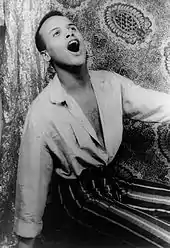
- to sing (to use one's voice to produce musical sounds)
- dziedāt klusā balsī ― to sing in a soft voice
- dziedāt divbalsīgi ― to sing in two voices
- meitene labi dzied ― the girl sings well
- mācīties dziedāt ― to learn to sing
- dziedot dzimu, dziedot augu, dziedot mūžu nodzīvoju ― singing I am born, singing I grow, singing I live (my) life
- to sing (to reproduce a song with one's voice)
- dziedāt tautas dziesmas ― to sing folk songs
- protams, Šūberta dziesmas jādzied vienkārši; melodijai jāplūst dabīgi ― of course, one must sing Schubert's songs in a simple way; the melody must flow naturally
- to sing (to practice a vocal art; to participate in a singing group, to play a singing role in a musical performance)
- dziedāt operas teātrī ― to sing an opera in the theater
- dziedāt pašdarbības kolektīvā ― to sing in an amateur group
- dziedāt koncertā, korī, izrādē ― to sing in a concert, choir, show
- dziedāt titullomu operas izrādē ― to sing the title role in an opera performance
- (in 3rd person; of certain birds, insects) to sing (to produce sounds, often melodious sounds, typical of its species)
- gailis dzied ― the rooster crows (lit. sings)
- viens putniņš zara galā dzied ― one little bird is singing at the end of a branch
- kur klusā naktī lakstīgalas dzied, tur klausīties man labprāt tīkas iet ― where in the silent night the nightingales sing, there I would love to go listen
- “circenis!” bērni sāka čukstēt: “circenis dzied!” ― “crickets!” the children began whispering: “the crickets are singing”
- (in 3rd person; of musical instruments, or other sources of sound) to sing (to produce a musical, melodious sound)
- maigi dzied vijole ― the violin sings softly
- vējš dzied skurstenī ― the wind sings in the chimney
- žžž... žžž... šujmašīnas dzied savu darba dziesmu ― žžž... žžž... the sewing machines are singing their work song
- (poetic) to sing (to write, to recite poetry)
- dzejnieks dzied par tām pašām vecām lietām: par dabu un mīlestību ― the poet sings about those same old things: nature and love
Conjugation
Derived terms
- prefixed verbs:
- aizdziedāt
- apdziedāt
- atdziedāt
- iedziedāt
- izdziedāt
- nodziedāt
- padziedāt
- pārdziedāt
- piedziedāt
- sadziedāt
- uzdziedāt
- other derived terms:
Related terms
References
- Karulis, Konstantīns (1992) “dziedāt”, in Latviešu Etimoloģijas Vārdnīca (in Latvian), Rīga: AVOTS, →ISBN