koks
Albanian
Alternative forms
References
- “koks”, in FGJSH: Fjalor i gjuhës shqipe [Dictionary of the Albanian language] (in Albanian), 2006
- “koks”, in FGJSSH: Fjalor i gjuhës së sotme shqipe [Dictionary of the modern Albanian language] (in Albanian), 1980
Czech
Pronunciation
- IPA(key): [ˈkoks]
Declension
Related terms
- koksárenský
- koksovací
- koksovatelný
- koksování n
- koksovna f
References
- "koks" in Jiří Rejzek, Český etymologický slovník, electronic version, Leda, 2007
Danish
Icelandic
Pronunciation
- IPA(key): /kʰɔxs/
Declension
References
- Oxford English Dictionary, 1884–1928, and First Supplement, 1933.
Latvian
| Picture dictionary | |||||||
|---|---|---|---|---|---|---|---|
| |||||||
|




Etymology
From Proto-Baltic *kuok-, from Proto-Indo-European *kewk-, from the stem *kew- (“to bend, to be bent”).
Meaning at first “bent wood, branch, stick,” it soon became “wood, tree.” It competed with mežs (< *medis), the original term for “wood, tree,” which soon acquired the meaning of “forest.” The original “branch, stick” meaning of koks can still be occasionally found (see below).
Cognates include Lithuanian kúoka (“stick with thick end, pounder, pestle”), kúokas (“stick with thick end; thick end of a stick; tuber; mace, club”), kukà (“stick”), Bulgarian кука (kuka, “spike, peg, wedge, hook, handle”).[1]
Pronunciation
- IPA(key): [kùoks]
| (file) |
Noun
koks m (1st declension)
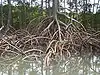
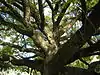
- tree (perennial plant with woody stem or trunk, foliage, and roots)
- augļu koki ― fruit trees
- koku lapotne ― tree foliage
- koku puduris ― clump of trees
- jauktu koku mežs ― mixed tree forest
- koki šalc vējā ― the trees rustle in the wind
- nokaltis koks ― withered tree
- kails koks ― naked, bald (= leafless) tree
- zaļš koks ― green tree (i.e., with leaves)
- apsūnojis koks ― mossy tree
- simtgadīgs koks ― centenarian tree
- lapu koks ― deciduous (lit. leaf) tree
- skuju koks ― connifer (lit. needle 'tree)
- zāģēt, cirst kokus ― to saw, to axe trees
- koku tārpi ― tree worms
- viens kā koks ― alone as a tree (= very lonely)
- timber (felled trees seen as a substance)
- Intas tēvs jau toreiz strādāja uz upes pie koku pludināšanas ― Inta's father at that time already worked at timber floating (log driving) on the river
- kalējs sāka vest kokus smēdei ― the blacksmith began to bring timber, wood to the forge
- koku dārzs ― timber corral (an enclosure for floating timber on a watercourse)
- logs, boards, planks
- grāvis uzplūdis, tiltiņam divi koki iznesti ― the ditch flooded, two logs (were) taken to the little bridge
- wood (timber seen as material for making things)
- koka ēka ― wooden building
- koka karote ― wooden spoon
- koka tupeles ― wooden shoes
- koka rotaļlietas ― wooden toys
- vecmodīga koka gulta ― old-fashioned wooden bed
- club, stick, rod (e.g., for hitting)
- skatos pēc kāda koka; kreisā roka man brīva, varētu šakāļus aizdzīt ― I look at some stick: (my) left arm is free, I could drive the shackals away
- viņš saņēmis par to kokus ― for this reason he took the sticks (= he was given corporal physical punishment)
Declension
Derived terms
References
- Karulis, Konstantīns (1992) “koks”, in Latviešu Etimoloģijas Vārdnīca (in Latvian), Rīga: AVOTS, →ISBN
Lithuanian
Etymology
From Proto-Indo-European *kʷeh₂-kʷo-, see also Proto-Slavic *kakъ (“what kind of”), Welsh pob.
Pronunciation
- IPA(key): [koks]
Declension
Declension
References
- G. Toner, M. Ní Mhaonaigh, S. Arbuthnot, D. Wodtko, M.-L. Theuerkauf, editors (2019), “cach, cech”, in eDIL: Electronic Dictionary of the Irish Language
Norwegian Nynorsk
Etymology 2
From Middle Low German kouwese.
Noun
koks f (definite singular koksa, indefinite plural kokser, definite plural koksene)
References
- “koks” in The Nynorsk Dictionary.
Anagrams
Polish
Pronunciation
- IPA(key): /kɔks/
Audio (file) - Rhymes: -ɔks
- Syllabification: koks
Noun
koks m inan
Declension
Noun
koks m pers
- (slang, derogatory) a bodybuilder, especially one who uses steroids
- Synonyms: paker, koksiarz
Declension
Swedish
Declension
| Declension of koks | ||||
|---|---|---|---|---|
| Uncountable | ||||
| Indefinite | Definite | |||
| Nominative | koks | koksen | — | — |
| Genitive | koks | koksens | — | — |