亯
| ||||||||
Translingual
Han character
亯 (Kangxi radical 8, 亠+7, 9 strokes, cangjie input 卜口日 (YRA), composition ⿳亠口日)
References
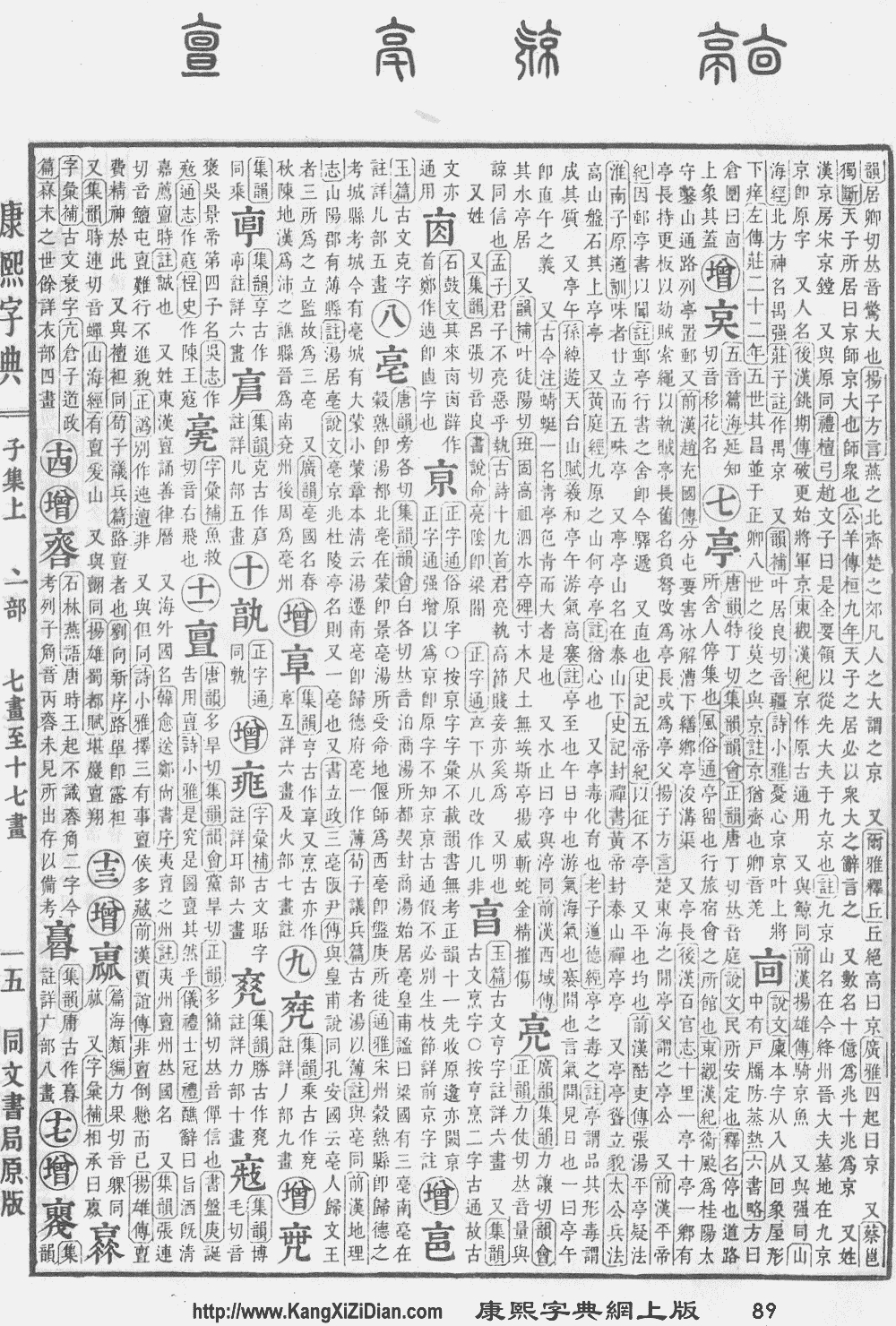
- Kangxi Dictionary: page 89, character 5
- Dai Kanwa Jiten: character 305
- Dae Jaweon: page 188, character 11
- Hanyu Da Zidian (first edition): volume 1, page 285, character 5
- Unihan data for U+4EAF
Chinese
Glyph origin
| Historical forms of the character 亯 | |||||||||||||||||||||||||||||||||||||||||||||||||||||||||||||||||||||||||||||||||||||||||||||||||||||||||||||||||||||||||||||||
|---|---|---|---|---|---|---|---|---|---|---|---|---|---|---|---|---|---|---|---|---|---|---|---|---|---|---|---|---|---|---|---|---|---|---|---|---|---|---|---|---|---|---|---|---|---|---|---|---|---|---|---|---|---|---|---|---|---|---|---|---|---|---|---|---|---|---|---|---|---|---|---|---|---|---|---|---|---|---|---|---|---|---|---|---|---|---|---|---|---|---|---|---|---|---|---|---|---|---|---|---|---|---|---|---|---|---|---|---|---|---|---|---|---|---|---|---|---|---|---|---|---|---|---|---|---|---|---|
| Shang | Western Zhou | Shuowen Jiezi (compiled in Han) | Liushutong (compiled in Ming) | ||||||||||||||||||||||||||||||||||||||||||||||||||||||||||||||||||||||||||||||||||||||||||||||||||||||||||||||||||||||||||||
| Oracle bone script | Bronze inscriptions | Small seal script | Transcribed ancient scripts | ||||||||||||||||||||||||||||||||||||||||||||||||||||||||||||||||||||||||||||||||||||||||||||||||||||||||||||||||||||||||||||
 |
 |
 |
 | ||||||||||||||||||||||||||||||||||||||||||||||||||||||||||||||||||||||||||||||||||||||||||||||||||||||||||||||||||||||||||||
|||
|
References: Mostly from Richard Sears' Chinese Etymology site (authorisation),
| |||||||||||||||||||||||||||||||||||||||||||||||||||||||||||||||||||||||||||||||||||||||||||||||||||||||||||||||||||||||||||||||


Pictogram (象形) . An ancestral shrine.
Etymology 1
| For pronunciation and definitions of 亯 – see 享 (“to enjoy; to offer; to present; to pay”). (This character is a variant form of 享). |
Etymology 2
| For pronunciation and definitions of 亯 – see 亨 (“smoothly progressing; prosperous; henry; etc.”). (This character is a variant form of 亨). |
Japanese
Kanji
- This term needs a translation to English. Please help out and add a translation, then remove the text
{{rfdef}}.