伃

伃 U+4F03, 伃
CJK UNIFIED IDEOGRAPH-4F03
← 伂
[U+4F02]
CJK Unified Ideographs 伄 →
[U+4F04]

Translingual

Han character

伃 (Kangxi radical 9, 人+4, 6 strokes, cangjie input 人弓戈弓 (ONIN) or 難人弓戈弓 (XONIN), composition ⿰亻予)

References

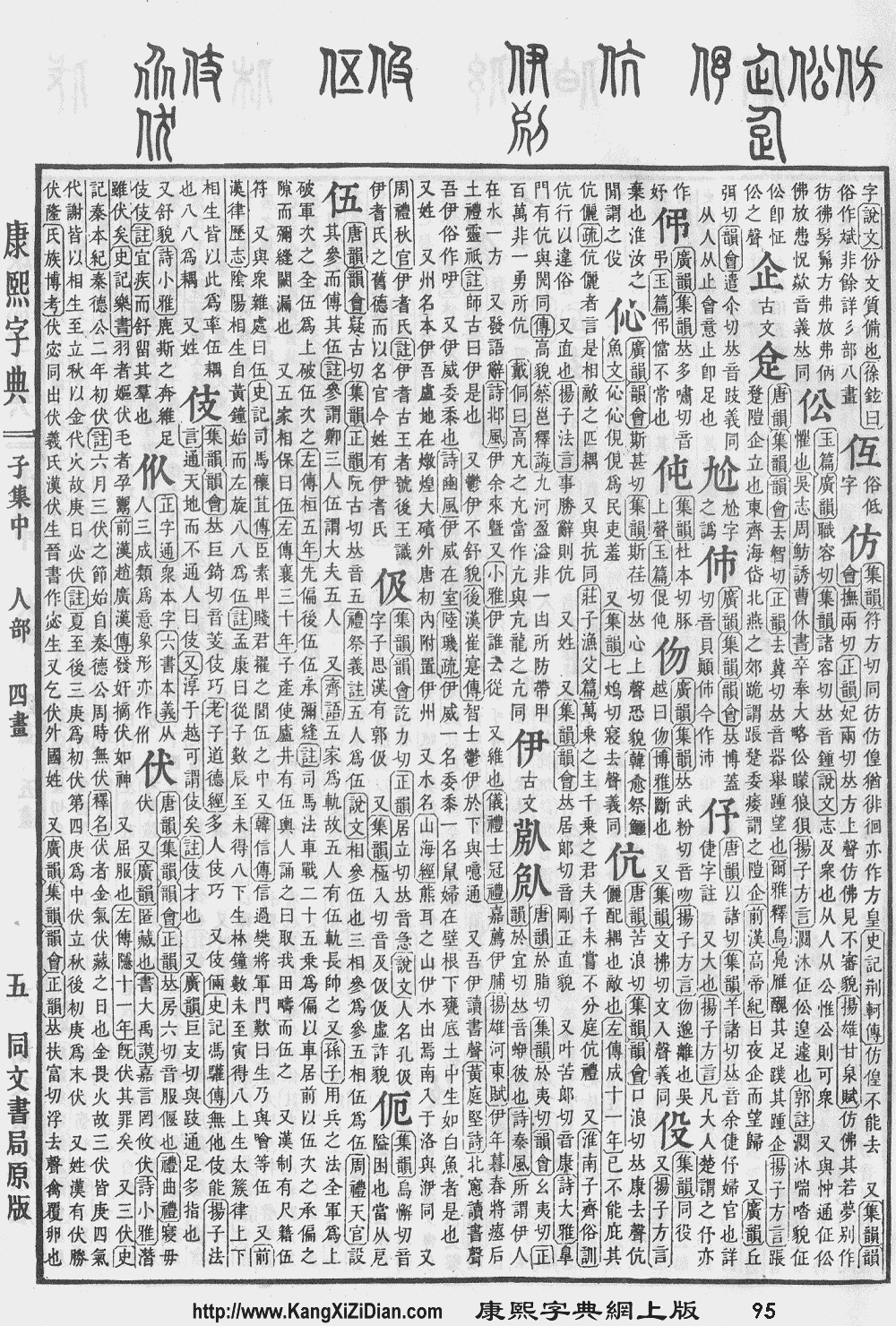
  • Kangxi Dictionary: page 95, character 8
  • Dai Kanwa Jiten: character 425
  • Dae Jaweon: page 201, character 9
  • Hanyu Da Zidian (first edition): volume 1, page 128, character 1
  • Unihan data for U+4F03

Chinese

Glyph origin

Phono-semantic compound (形聲/形声, OC *la) : semantic 人 (“person”) + phonetic 予 (OC *la, *laʔ)

Pronunciation 1

simp. and trad.
伃
alternative forms 妤


Rime
Character 伃
Reading # 1/1
Initial (聲) 以 (36)
Final (韻) 魚 (22)
Tone (調) Level (Ø)
Openness (開合) Open
Division (等) III
Fanqie 以諸切
Baxter yo
Reconstructions
Zhengzhang
Shangfang
/jɨʌ/
Pan
Wuyun
/jiɔ/
Shao
Rongfen
/iɔ/
Edwin
Pulleyblank
/jɨə̆/
Li
Rong
/iɔ/
Wang
Li
/jĭo/
Bernard
Karlgren
/i̯wo/
Expected
Mandarin
Reflex
yú
Expected
Cantonese
Reflex
jyu4
Zhengzhang system (2003)
Character 伃
Reading # 1/1
No. 15737
Phonetic
component
予
Rime
group
魚
Rime
subdivision
0
Corresponding
MC rime
余
Old
Chinese
/*la/
Notes 同妤

Definitions

伃

  1. Used in 倢伃 (jiéyú).
  2. † beautiful; handsome

Pronunciation 2

simp. and trad.
伃


Definitions

伃

  1. † This term needs a translation to English. Please help out and add a translation, then remove the text {{rfdef}}.

Pronunciation 3

simp. and trad.
伃


Definitions

伃

  1. † long(-headed)
    • 53 BC to 18 AD, Yang Xiong (editor), Fangyan
      燕記曰,豐人杼首。杼首,長首也,楚謂之伃。

Japanese

Kanji

伃

(uncommon “Hyōgai” kanji)

  1. handsome

Readings

Korean

Hanja

伃 • (yeo) (hangeul 여, revised yeo, McCune–Reischauer yŏ)

  1. beautiful
This article is issued from Wiktionary. The text is licensed under Creative Commons - Attribution - Sharealike. Additional terms may apply for the media files.