佌
| ||||||||
Translingual
Han character
佌 (Kangxi radical 9, 人+5, 7 strokes, cangjie input 人卜一心 (OYMP), four-corner 21210, composition ⿰亻此)
References
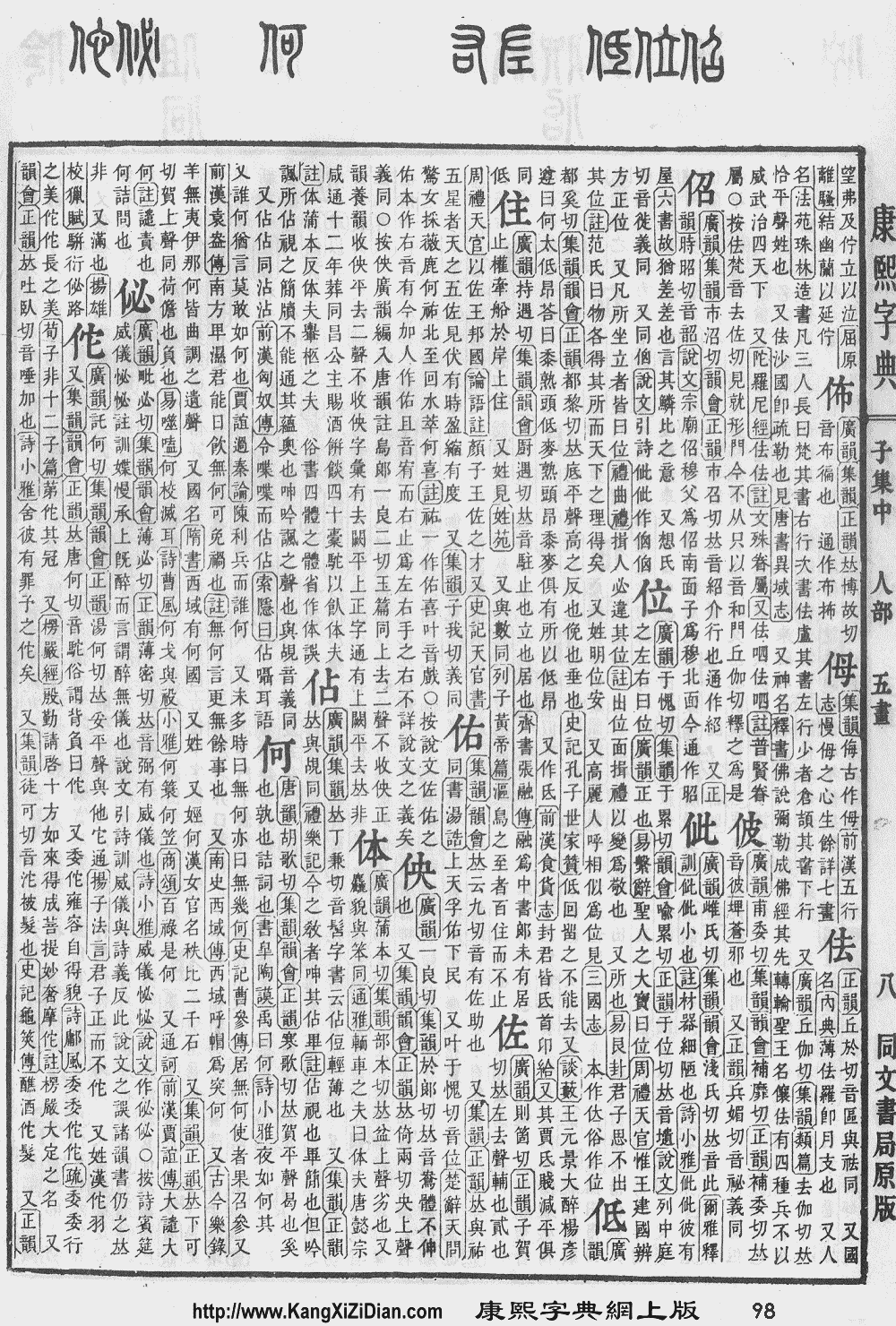
- Kangxi Dictionary: page 98, character 6
- Dai Kanwa Jiten: character 502
- Dae Jaweon: page 206, character 17
- Hanyu Da Zidian (first edition): volume 1, page 147, character 6
- Unihan data for U+4F4C
Chinese
| trad. | 佌 | |
|---|---|---|
| simp. # | 佌 | |
Glyph origin
| Historical forms of the character 佌 | |
|---|---|
| Liushutong (compiled in Ming) | |
| Transcribed ancient scripts | |
 | |
| |
|
References: Mostly from Richard Sears' Chinese Etymology site (authorisation),
|

Characters in the same phonetic series (此) (Zhengzhang, 2003)
| Old Chinese | |
|---|---|
| 些 | *saːls, *sjaːl, *seːs |
| 跐 | *ʔsreːʔ, *ʔseʔ, *sʰeʔ, *ʔsreʔ |
| 柴 | *zreː |
| 祡 | *zreː |
| 茈 | *zreː, *ʔseʔ, *ze |
| 眦 | *zreːs |
| 砦 | *zraːds |
| 寨 | *zraːds, *slɯːɡ |
| 啙 | *ʔseː, *zeːʔ, *ʔseʔ |
| 泚 | *sʰeːʔ, *sʰeʔ |
| 玼 | *sʰeːʔ, *sʰeʔ, *ze |
| 皉 | *sʰeːʔ |
| 鮆 | *zeːʔ, *ʔse |
| 眥 | *zeːs, *zes |
| 貲 | *ʔse |
| 髭 | *ʔse |
| 頾 | *ʔse |
| 訾 | *ʔse, *ʔseʔ |
| 鴜 | *ʔse, *ze |
| 鈭 | *ʔse, *sʰe |
| 姕 | *ʔse, *sʰe, *ze |
| 觜 | *ʔse, *ʔse, *ʔseʔ |
| 紫 | *ʔseʔ |
| 訿 | *ʔseʔ |
| 呰 | *ʔseʔ |
| 嘴 | *ʔseʔ |
| 雌 | *sʰe |
| 此 | *sʰeʔ |
| 佌 | *sʰeʔ, *seʔ |
| 庛 | *sʰes |
| 疵 | *ze |
| 骴 | *ze, *zes |
| 胔 | *ze, *zes |
| 飺 | *ze |
| 齜 | *ʔsre |
Pronunciation
Japanese
Kanji
佌
- This term needs a translation to English. Please help out and add a translation, then remove the text
{{rfdef}}.
This article is issued from Wiktionary. The text is licensed under Creative Commons - Attribution - Sharealike. Additional terms may apply for the media files.