位
| ||||||||
Translingual
| Stroke order | |||
|---|---|---|---|
 | |||
| Stroke order | |||
|---|---|---|---|
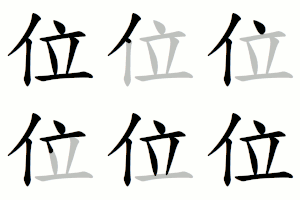 | |||
Han character
位 (Kangxi radical 9, 人+5, 7 strokes, cangjie input 人卜廿 (OYT), four-corner 20218, composition ⿰亻立)
References
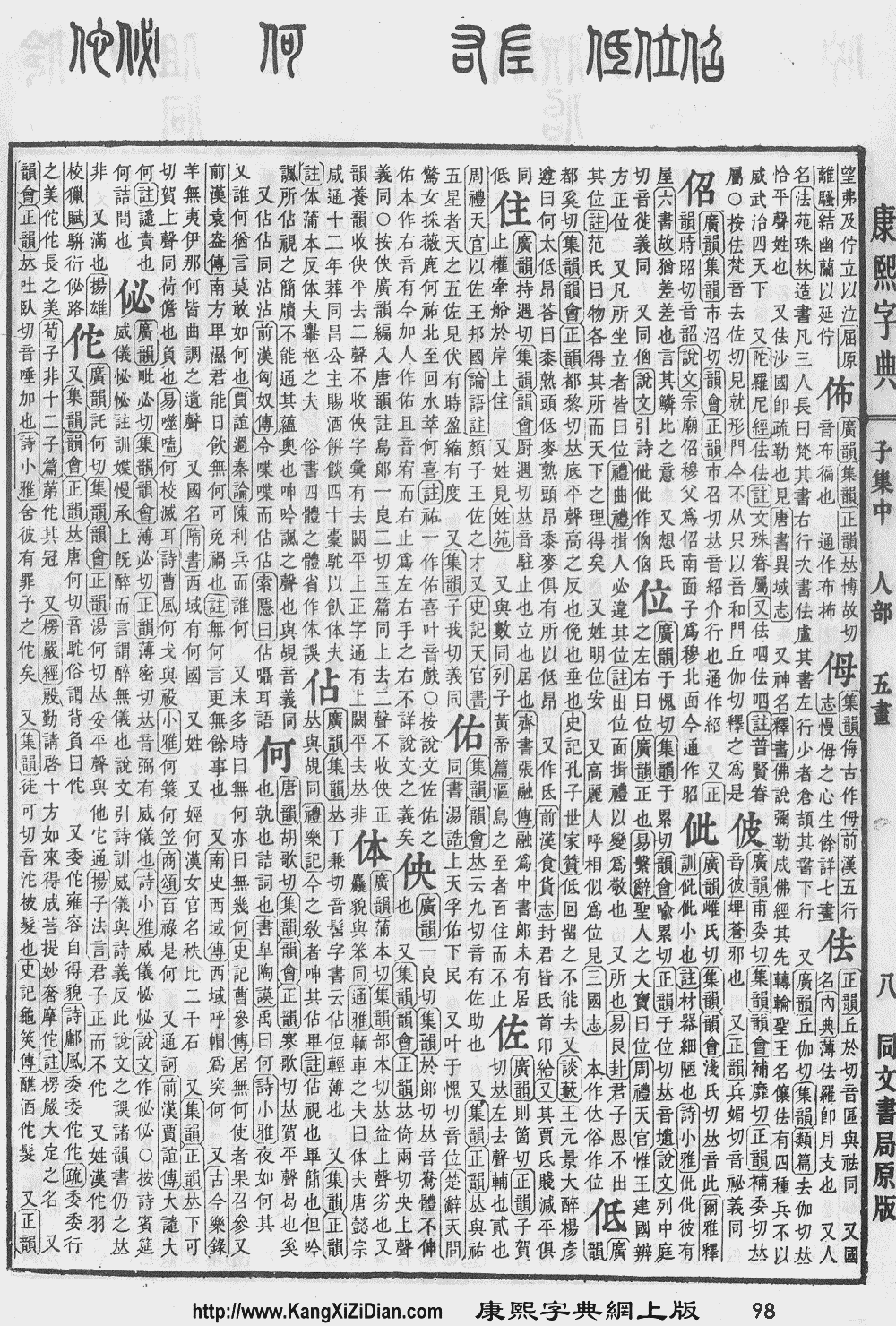
- Kangxi Dictionary: page 98, character 7
- Dai Kanwa Jiten: character 503
- Dae Jaweon: page 206, character 18
- Hanyu Da Zidian (first edition): volume 1, page 138, character 3
- Unihan data for U+4F4D

Chinese
| simp. and trad. |
位 | |
|---|---|---|
Glyph origin
| Historical forms of the character 位 | |||||||||||||||||
|---|---|---|---|---|---|---|---|---|---|---|---|---|---|---|---|---|---|
| Shang | Western Zhou | Warring States | Shuowen Jiezi (compiled in Han) | Liushutong (compiled in Ming) | Libian (compiled in Qing) | ||||||||||||
| Oracle bone script | Bronze inscriptions | Chu slip and silk script | Small seal script | Transcribed ancient scripts | Clerical script | ||||||||||||
 |
 |
 |
 |
 |
 | ||||||||||||
|||||
|
References: Mostly from Richard Sears' Chinese Etymology site (authorisation),
| |||||||||||||||||


Ideogrammic compound (會意/会意) and phono-semantic compound (形聲/形声, OC *ɢʷrɯbs) : semantic 亻 (“man”) + phonetic 立 (OC *rɯb, “stand”). Often simply written as 立 in idiomatic expressions such as 即位 (jíwèi) in Western Zhou inscriptions.
Etymology
From Proto-Sino-Tibetan *g-r(j)ap (“to stand”). Derived from 立 (OC *rɯb). Mei (2012) lists it among the possible nasal-prefixed verb forms (Old Chinese *N-k- > Middle Chinese *ɦ-, possibly forming a stative). Suffixed with a nominalizing *-s, it takes the sense "the place/rank/status one holds".
Pronunciation
Definitions
位
- position; location; spot
- title; official position
- seat; seating
- throne; royal seat
- rank; grade; status
- standard; rule
- (honorific) people
- (mathematics) digit; place
- (often polite) Classifier for persons.
- to be situated at; to be located at
- to arrange; to set out
- (Cantonese) space
- (information theory) bit (the smallest unit of storage in a digital computer)
- a surname: Wei
Synonyms
- (location):
- (throne):
Compounds
- 上位 (shàngwèi)
- 下位 (xiàwèi)
- 三位一體/三位一体 (sānwèiyītǐ, “Trinity”)
- 不安於位/不安于位
- 中位數/中位数 (zhōngwèishù)
- 主位 (zhǔwèi)
- 九五之位
- 五位君臣
- 五位百法
- 交易單位/交易单位
- 代位權/代位权
- 代位繼承/代位继承
- 伏位
- 佛位
- 位元 (wèiyuán)
- 位元組/位元组 (wèiyuánzǔ)
- 位分
- 位卑言高
- 位址 (wèizhǐ)
- 位子 (wèizi)
- 位尊勢重/位尊势重
- 位居要津
- 位於/位于 (wèiyú)
- 位極人臣/位极人臣 (wèijírénchén)
- 位次 (wèicì)
- 位移 (wèiyí)
- 位置 (wèizhì)
- 位能 (wèinéng)
- 位階/位阶
- 個人本位/个人本位
- 借位 (jièwèi)
- 個位/个位 (gèwèi)
- 倖位/幸位
- 停車位/停车位 (tíngchēwèi)
- 備位/备位
- 傳位/传位 (chuánwèi)
- 價位/价位 (jiàwèi)
- 儲存單位/储存单位
- 光位反應/光位反应
- 入廟登位/入庙登位
- 全方位 (quánfāngwèi)
- 六位
- 列位 (lièwèi)
- 劃座位/划座位
- 功位
- 勛位/勋位
- 卑位
- 博士學位/博士学位 (bóshì xuéwèi)
- 即位 (jíwèi)
- 即位登龍/即位登龙
- 叨位 (tó-ūi)
- 各位 (gèwèi)
- 名位 (míngwèi)
- 名位不彰
- 同位素 (tóngwèisù)
- 同位角 (tóngwèijiǎo)
- 呆水位
- 品位 (pǐnwèi)
- 品位分類/品位分类
- 單位/单位 (dānwèi)
- 單位價格/单位价格
- 單位詞/单位词
- 單位郵票/单位邮票
- 嗣位 (sìwèi)
- 噸位/吨位 (dūnwèi)
- 四分位數/四分位数 (sìfēnwèishù)
- 圍棋段位/围棋段位
- 地下水位
- 在位 (zàiwèi)
- 地位 (dìwèi)
- 地理位置 (dìlǐ wèizhì)
- 坐位 (zuòwèi)
- 大位 (dàwèi)
- 天位
- 天文單位/天文单位 (tiānwén dānwèi)
- 學位/学位 (xuéwèi)
- 學位制度/学位制度
- 學位論文/学位论文
- 定位 (dìngwèi)
- 官位 (guānwèi)
- 客位 (kèwèi)
- 寶位/宝位
- 對位/对位
- 就位 (jiùwèi)
- 尸位 (shīwèi)
- 尸位素餐 (shīwèisùcān)
- 履位
- 崗位/岗位 (gǎngwèi)
- 工業區位/工业区位
- 帝位 (dìwèi)
- 席位 (xíwèi)
- 幸位
- 幾位/几位 (jǐ wèi)
- 床位 (chuángwèi)
- 座位 (zuòwèi)
- 待機位置/待机位置
- 復位/复位 (fùwèi)
- 思不出位
- 懷寵尸位/怀宠尸位
- 把位 (bǎwèi)
- 持祿保位/持禄保位
- 接位
- 換位/换位 (huànwèi)
- 換位作用/换位作用
- 攝位/摄位 (shèwèi)
- 攤位/摊位 (tānwèi)
- 數位/数位 (shùwèi)
- 數位化/数位化 (shùwèihuà)
- 數位唱片/数位唱片
- 數位影像/数位影像
- 數位影碟/数位影碟
- 數位控制/数位控制
- 數位板/数位板 (shùwèibǎn)
- 數位照像/数位照像
- 數位相機/数位相机
- 數位藝術/数位艺术
- 數位詞/数位词
- 數位通信/数位通信
- 數位電視/数位电视 (shùwèi diànshì)
- 數位電腦/数位电脑
- 方位 (fāngwèi)
- 方位詞/方位词
- 易位 (yìwèi)
- 本位 (běnwèi)
- 末位 (mòwèi)
- 本位主義/本位主义 (běnwèi zhǔyì)
- 果位
- 榮譽學位/荣誉学位
- 機位/机位 (jīwèi)
- 權位/权位 (quánwèi)
- 正位 (zhèngwèi)
- 歸位/归位 (guīwèi)
- 每位
- 水位 (shuǐwèi)
- 泊位 (bówèi)
- 活化部位
- 淨噸位/净吨位
- 潮位 (cháowèi)
- 炮位
- 爭坐位帖/争坐位帖
- 爵位 (juéwèi)
- 牌位 (páiwèi)
- 王位 (wángwèi)
- 生態地位/生态地位
- 異位產式/异位产式
- 登位 (dēngwèi)
- 發音部位/发音部位
- 皇位 (huángwèi)
- 相位 (xiàngwèi)
- 眾位/众位 (zhòngwèi)
- 知位 (chai-ūi)
- 社會地位/社会地位 (shèhuì dìwèi)
- 神位 (shénwèi)
- 祿位/禄位 (lùwèi)
- 禪位/禅位 (shànwèi)
- 移位 (yíwèi)
- 穴位 (xuéwèi)
- 空位
- 竊位/窃位
- 竊位素餐/窃位素餐
- 第一順位/第一顺位
- 篡位 (cuànwèi)
- 紅位移/红位移
- 素餐尸位
- 網路訂位/网路订位
- 線上訂位/线上订位
- 繼位/继位 (jìwèi)
- 職位/职位 (zhíwèi)
- 職位分類/职位分类
- 胎位 (tāiwèi)
- 脫位/脱位 (tuōwèi)
- 船位
- 舶位
- 艙位/舱位 (cāngwèi)
- 虛位/虚位
- 虛位以待/虚位以待
- 補位/补位
- 襲位/袭位
- 訂位/订位 (dìngwèi)
- 設位/设位
- 諸位/诸位 (zhūwèi)
- 讓位/让位 (ràngwèi)
- 貪位取容/贪位取容
- 貪位慕祿/贪位慕禄
- 賓位/宾位
- 走位
- 越位 (yuèwèi)
- 車位/车位 (chēwèi)
- 退位 (tuìwèi)
- 進位/进位 (jìnwèi)
- 遜位/逊位
- 部位 (bùwèi)
- 重力位能
- 金本位 (jīnběnwèi)
- 鋪位/铺位 (pùwèi)
- 長生牌位/长生牌位
- 長生祿位/长生禄位
- 閏位/闰位
- 陪位
- 陰陽易位/阴阳易位
- 雙學位/双学位 (shuāngxuéwèi)
- 靈位/灵位 (língwèi)
- 音位 (yīnwèi)
- 音位學/音位学 (yīnwèixué)
- 順位/顺位 (shùnwèi)
- 領位員/领位员
- 頭位/头位
- 題位/题位
- 顯位/显位 (xiǎnwèi)
- 體位/体位 (tǐwèi)
- 高位 (gāowèi)
- 高位厚祿/高位厚禄 (gāowèihòulù)
- 高位重祿/高位重禄
- 高自位置
- 鼎位
- 龍位/龙位 (lóngwèi)
References
- “位”, in 漢語多功能字庫 (Multi-function Chinese Character Database), 香港中文大學 (the Chinese University of Hong Kong), 2014–
- “Entry #2873”, in 臺灣閩南語常用詞辭典 [Dictionary of Frequently-Used Taiwan Minnan] (overall work in Mandarin and Hokkien), Ministry of Education, R.O.C., 2023.
Japanese
Readings
Derived terms
- 位階 (ikai)
- 位冠 (ikan)
- 位官 (ikan)
- 位記 (iki)
- 位勲 (ikun)
- 位次 (iji)
- 位相 (isō)
- 位置 (ichi)
- 位牌 (ihai)
- 騎乗位 (kijōi, “cowgirl position”)
- 屈曲位 (kukkyokui, “Viennese oyster”)
- 交差位 (kōsai, “a sex position in which both partners' legs are interlocked”)
- 後背位 (kōhaī, “doggy style”)
- 座位 (zai), 坐位 (zai, “seat; posing of sitting; sitting sex position”)
- 伸長位 (shinchōi, “a variation of the missionary position in which a man spreads himself over the woman”)
- 側位 (sokui, “spoons position”)
- 立位 (ritsui, “standing sex position”)
Counter
Etymology 2
| Kanji in this term |
|---|
| 位 |
| くらい Grade: 4 |
| kun’yomi |
| For pronunciation and definitions of 位 – see the following entry. | ||
| ||
| (This term, 位, is an alternative spelling (obsolete for adverb) of the above term.) |
References
- NHK Broadcasting Culture Research Institute, editor (1998), NHK日本語発音アクセント辞典 [NHK Japanese Pronunciation Accent Dictionary] (in Japanese), Tōkyō: NHK Publishing, →ISBN
Korean
Etymology
From Middle Chinese 位 (MC hwijH).
| Historical Readings | ||
|---|---|---|
| Dongguk Jeongun Reading | ||
| Dongguk Jeongun, 1448 | 윙〮 (Yale: wúy) | |
| Middle Korean | ||
| Text | Eumhun | |
| Gloss (hun) | Reading | |
| Hunmong Jahoe, 1527 | 벼슬 (Yale: pyèsùl) | 위 (Yale: wùy) |
Pronunciation
- (SK Standard/Seoul) IPA(key): [ɥi] ~ [y]
- Phonetic hangul: [위]