佞

See also: 侫
佞 U+4F5E, 佞
CJK UNIFIED IDEOGRAPH-4F5E
← 佝
[U+4F5D]
CJK Unified Ideographs 佟 →
[U+4F5F]

Translingual

Han character

佞 (Kangxi radical 9, 人+5, 7 strokes, cangjie input 人一一女 (OMMV), four-corner 21244, composition ⿸仁女)

  1. flattery
  2. glib

References

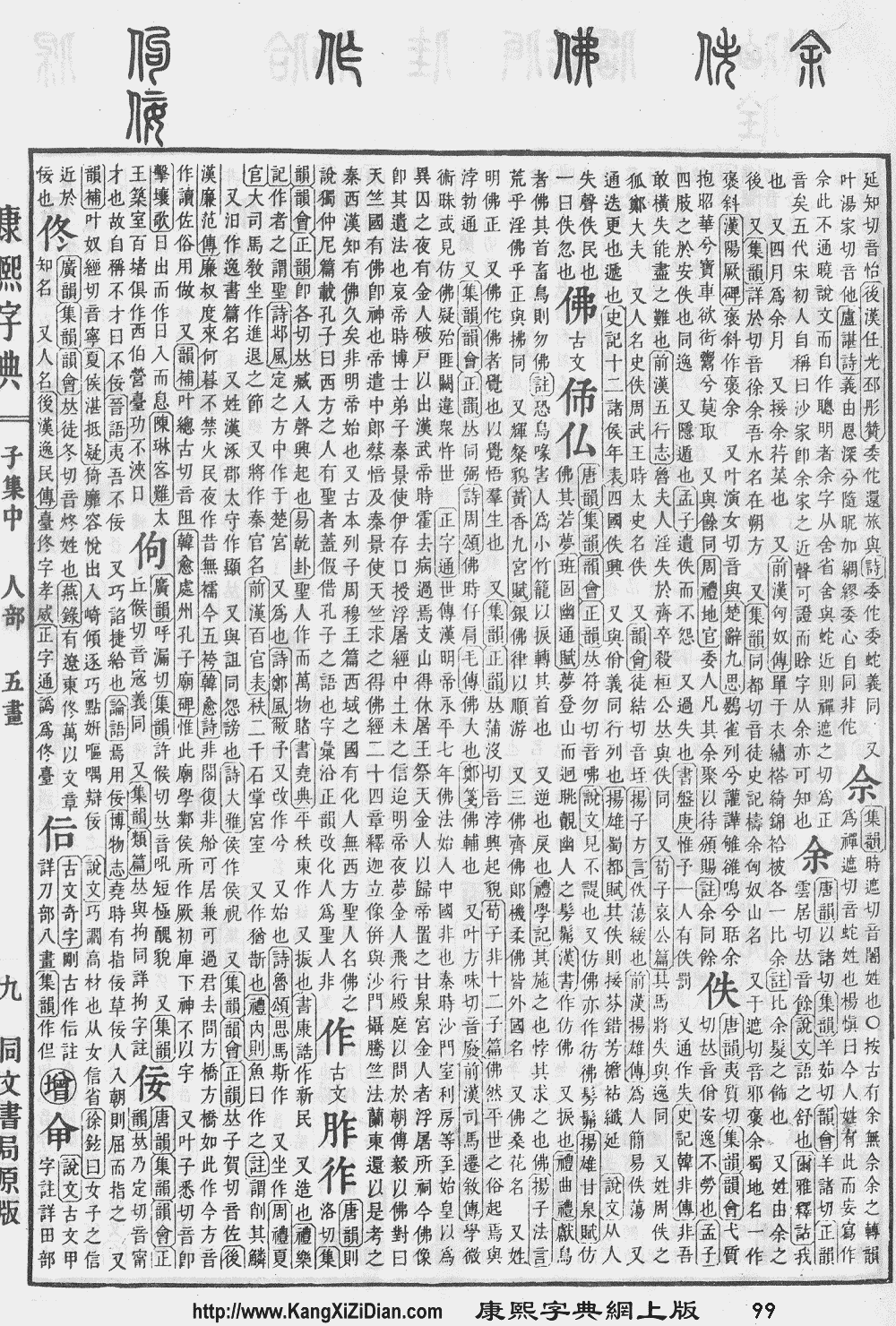
  • Kangxi Dictionary: page 99, character 11
  • Dai Kanwa Jiten: character 521
  • Dae Jaweon: page 211, character 2
  • Hanyu Da Zidian (first edition): volume 1, page 129, character 10
  • Unihan data for U+4F5E

Chinese

trad. 佞
simp. # 佞

Glyph origin

Historical forms of the character 佞
Shuowen Jiezi (compiled in Han) Liushutong (compiled in Ming)
Small seal script Transcribed ancient scripts


References:

Mostly from Richard Sears' Chinese Etymology site (authorisation),
which in turn draws data from various collections of ancient forms of Chinese characters, including:

  • Shuowen Jiezi (small seal),
  • Jinwen Bian (bronze inscriptions),
  • Liushutong (Liushutong characters) and
  • Yinxu Jiaguwen Bian (oracle bone script).

Phono-semantic compound (形聲/形声, OC *neːŋs) : phonetic 仁 (OC *njin) + semantic 女.

Pronunciation


Rime
Character 佞
Reading # 1/1
Initial (聲) 泥 (8)
Final (韻) 青 (125)
Tone (調) Departing (H)
Openness (開合) Open
Division (等) IV
Fanqie 乃定切
Baxter nengH
Reconstructions
Zhengzhang
Shangfang
/neŋH/
Pan
Wuyun
/neŋH/
Shao
Rongfen
/nɛŋH/
Edwin
Pulleyblank
/nɛjŋH/
Li
Rong
/neŋH/
Wang
Li
/nieŋH/
Bernard
Karlgren
/nieŋH/
Expected
Mandarin
Reflex
nìng
Expected
Cantonese
Reflex
ning6
Baxter–Sagart system 1.1 (2014)
Character 佞
Reading # 1/1
Modern
Beijing
(Pinyin)
nìng
Middle
Chinese
‹ nengH ›
Old
Chinese
/*nˁiŋ-s/
English clever

Notes for Old Chinese notations in the Baxter–Sagart system:

* Parentheses "()" indicate uncertain presence;
* Square brackets "[]" indicate uncertain identity, e.g. *[t] as coda may in fact be *-t or *-p;
* Angle brackets "<>" indicate infix;
* Hyphen "-" indicates morpheme boundary;

* Period "." indicates syllable boundary.
Zhengzhang system (2003)
Character 佞
Reading # 1/1
No. 10803
Phonetic
component
人
Rime
group
耕
Rime
subdivision
0
Corresponding
MC rime
寗
Old
Chinese
/*neːŋs/
Notes 小徐仁聲

Definitions

佞

  1. † eloquent
  2. † to flatter; to be good at flattery
  3. † flatterer
  4. † evil; wicked; crafty
  5. † hypocritical; hypocrisy
  6. † to feel dizzy
  7. † talent (usually in the humble expression 不佞 (bùnìng))

Compounds

  • 不佞 (bùnìng)
  • 佞人
  • 佞佛
  • 佞口
  • 佞史
  • 佞幸
  • 佞徒損友/佞徒损友
  • 佞祿/佞禄
  • 佞臣 (nìngchén)
  • 佞舌
  • 佞言
  • 便佞
  • 儈佞/侩佞
  • 唼佞
  • 善巧便佞
  • 奸佞 (jiānnìng)
  • 姦佞/奸佞 (jiānnìng)
  • 嬖佞
  • 嬛佞
  • 巧佞
  • 憸佞/𪫺佞
  • 權佞/权佞
  • 禮賢遠佞/礼贤远佞
  • 諂佞/谄佞
  • 讒佞/谗佞 (chánnìng)
  • 讒言佞語/谗言佞语
  • 邪佞

Japanese

Kanji

佞

(uncommon “Hyōgai” kanji)

  1. flattery
  2. insincerity

Readings

Korean

Hanja

佞 (eum 녕 (nyeong))

  1. flattery
  2. glib

Vietnamese

Han character

佞: Hán Nôm readings: nịnh, nạnh, nến, nính

  1. This term needs a translation to English. Please help out and add a translation, then remove the text {{rfdef}}.

References

This article is issued from Wiktionary. The text is licensed under Creative Commons - Attribution - Sharealike. Additional terms may apply for the media files.