僣
See also: 僭
| ||||||||
Translingual
Han character
僣 (Kangxi radical 9, 人+12, 14 strokes, cangjie input 人手人日 (OQOA), four-corner 25263, composition ⿰亻替)
References
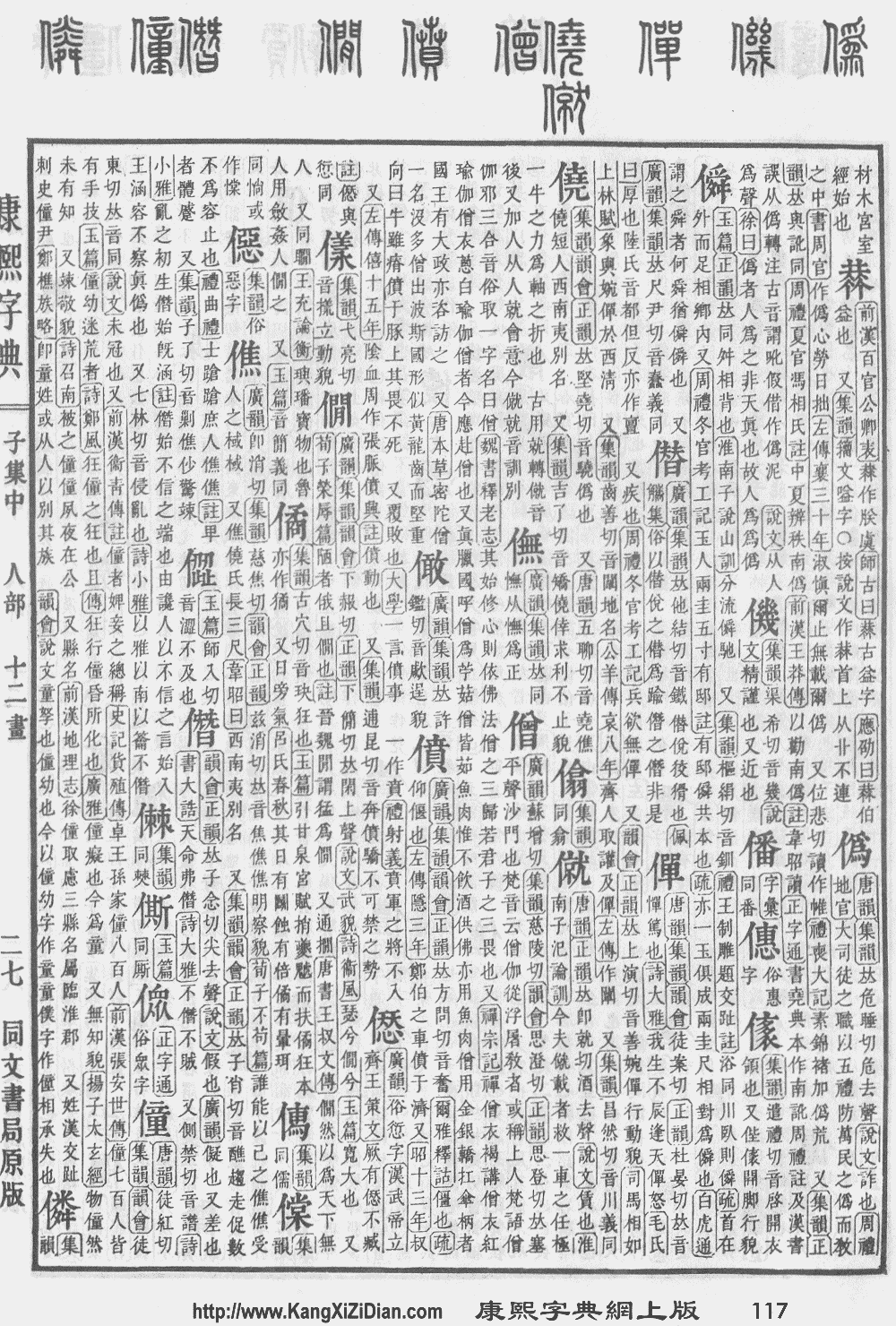
- Kangxi Dictionary: page 117, character 8
- Dai Kanwa Jiten: character 1111
- Dae Jaweon: page 248, character 14
- Hanyu Da Zidian (first edition): volume 1, page 216, character 9
- Unihan data for U+50E3
Chinese
| trad. | 僣 | |
|---|---|---|
| simp. # | 僣 | |
Glyph origin
Etymology 1
| For pronunciation and definitions of 僣 – see 僭. (This character is an ancient form of 僭). |
Pronunciation
Japanese
Kanji
僣
- This term needs a translation to English. Please help out and add a translation, then remove the text
{{rfdef}}.
Korean
Hanja
僣 • (cham) (hangeul 참, revised cham, McCune–Reischauer ch'am)
- This term needs a translation to English. Please help out and add a translation, then remove the text
{{rfdef}}.
Vietnamese
Han character
僣: Hán Việt readings: tém[1], tím[1], tiếm
- This term needs a translation to English. Please help out and add a translation, then remove the text
{{rfdef}}.
References
- Hồ (1976).
This article is issued from Wiktionary. The text is licensed under Creative Commons - Attribution - Sharealike. Additional terms may apply for the media files.