冐
See also: 冒
| ||||||||
Translingual
Han character
冐 (Kangxi radical 13, 冂+6, 8 strokes, cangjie input 難日月 (XAB), four-corner 60227, composition ⿱日月 (T) or ⿱冃月 (GJK))
References
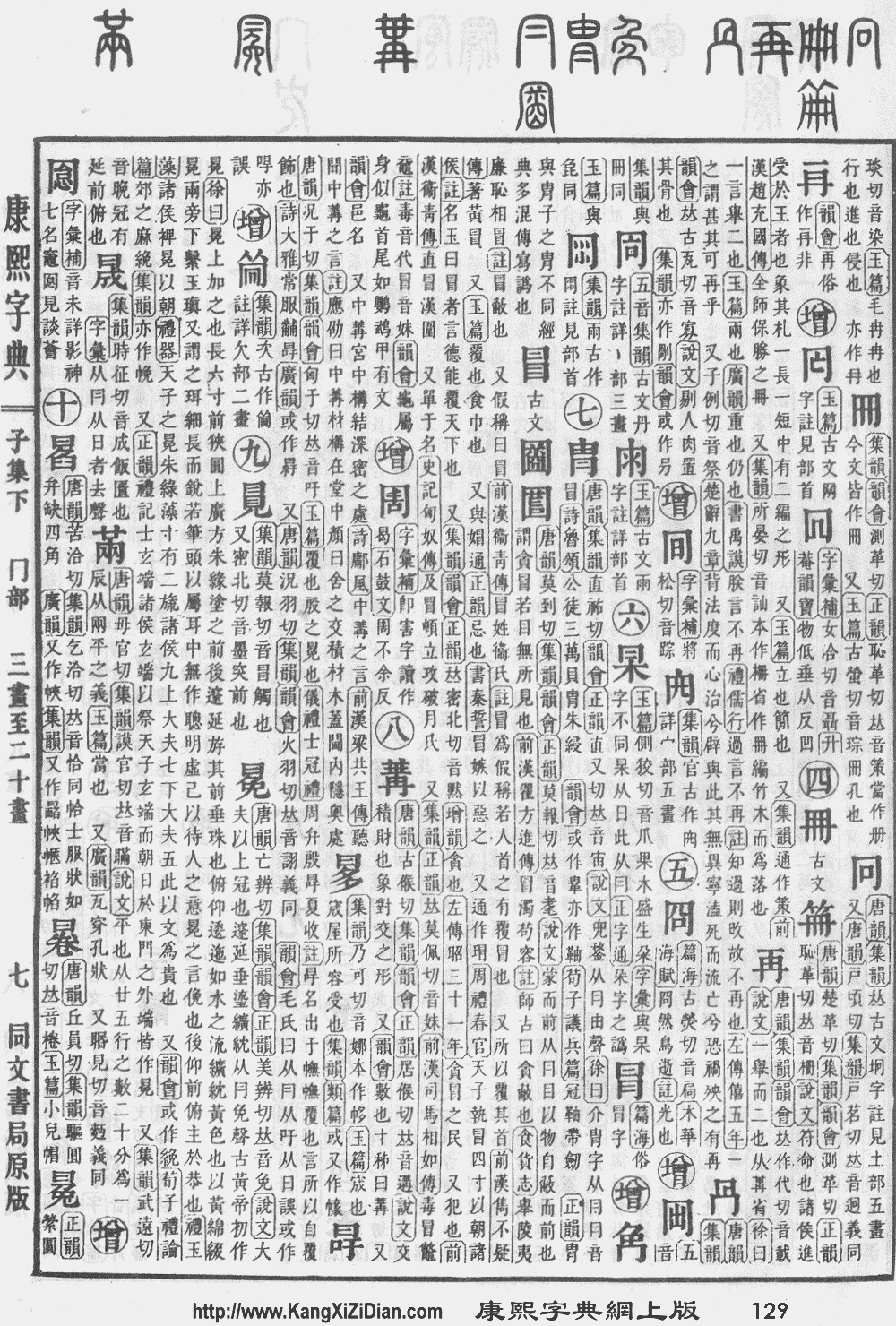
- Kangxi Dictionary: page 129, character 17
- Dai Kanwa Jiten: character 1534
- Hanyu Da Zidian (first edition): volume 2, page 1490, character 4
- Unihan data for U+5190
Chinese
Etymology 1
| For pronunciation and definitions of 冐 – see 冒 (“to cover; cloth used to dress a corpse; sack for corpses; etc.”). (This character is a variant form of 冒). |
Etymology 2
| For pronunciation and definitions of 冐 – see 冑 (“helmet worn by warriors in ancient times”). (This character is a variant form of 冑). |
Etymology 3
| For pronunciation and definitions of 冐 – see 胄 (“descendant”). (This character is a variant form of 胄). |
Japanese
Kanji
冐
- This term needs a translation to English. Please help out and add a translation, then remove the text
{{rfdef}}.
Korean
Hanja
冐 • (mo) (hangeul 모, revised mo, McCune–Reischauer mo)
- This term needs a translation to English. Please help out and add a translation, then remove the text
{{rfdef}}.
This article is issued from Wiktionary. The text is licensed under Creative Commons - Attribution - Sharealike. Additional terms may apply for the media files.