冒
| ||||||||
| ||||||||
Translingual
| Stroke order | |||
|---|---|---|---|
 | |||
| Stroke order | |||
|---|---|---|---|
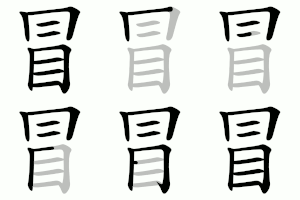 | |||
Han character
冒 (Kangxi radical 13, 冂+7, 9 strokes, cangjie input 日月山 (ABU), four-corner 60600, composition ⿱日目 (J) or ⿱⺜目 (GTKV))
Derived characters
References
- Kangxi Dictionary: page 129, character 21
- Dai Kanwa Jiten: character 1538
- Hanyu Da Zidian (first edition): volume 2, page 1499, character 12
- Unihan data for U+5192
- Unihan data for U+2F8D2
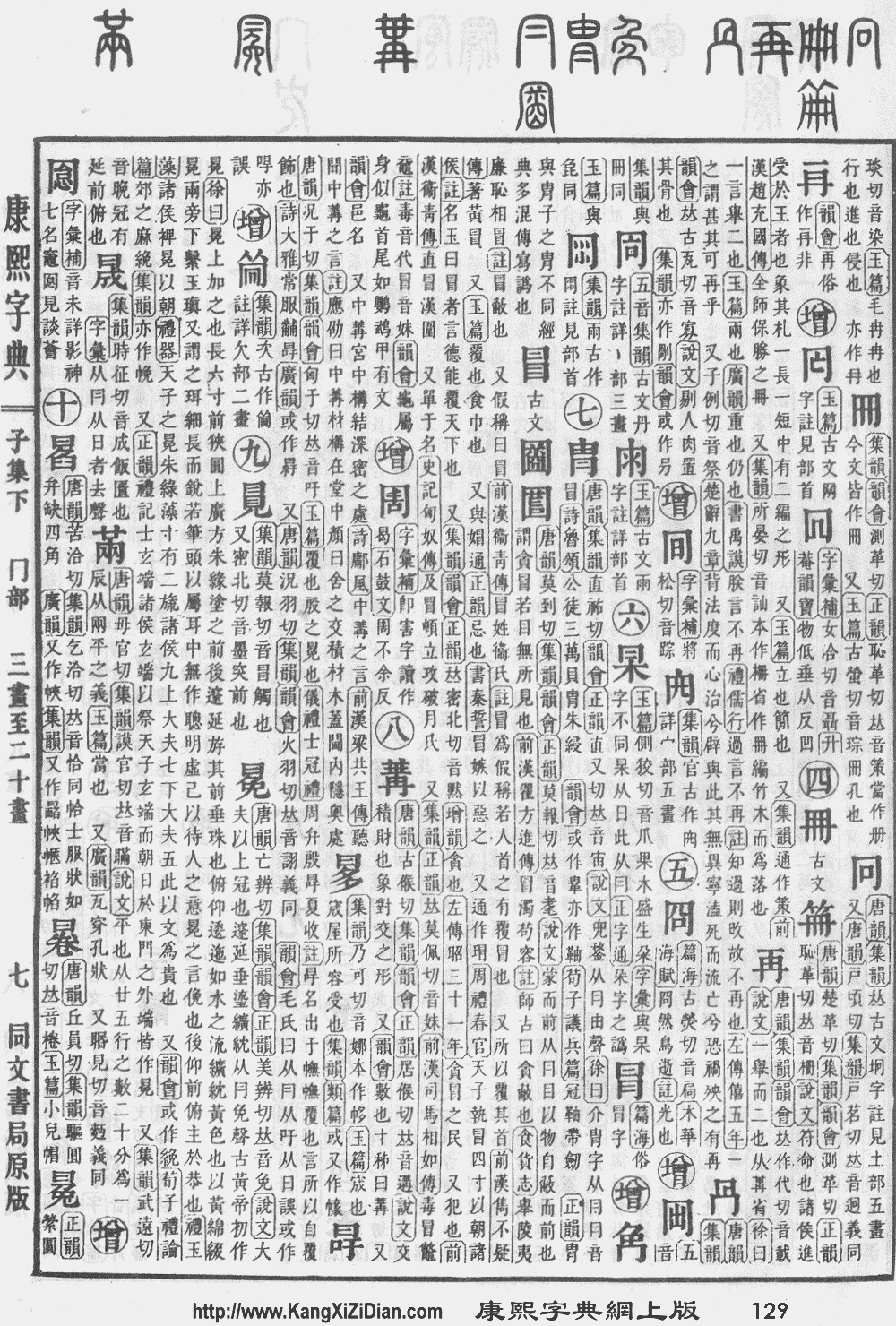
Bailang
Etymology
From Proto-Sino-Tibetan *muːŋ ~ r/s-muːk; compare Burmese မိုး (mui:, “sky”), Tibetan དམུ་ (dmu, “sky god”).
Chinese
| simp. and trad. |
冒 | |
|---|---|---|
| alternative forms | 冃 冐 | |
Glyph origin
| Historical forms of the character 冒 | |||
|---|---|---|---|
| Western Zhou | Warring States | Shuowen Jiezi (compiled in Han) | Liushutong (compiled in Ming) |
| Bronze inscriptions | Chu slip and silk script | Small seal script | Transcribed ancient scripts |
 |
 |
 |
 |
Ideogrammic compound (會意/会意) and phono-semantic compound (形聲/形声, OC *muːɡs, *mɯːɡ) : phonetic 冃 (OC *muːɡs, “hat”) + semantic 目 (“eyes”).
Etymology 1
Original meaning was “to cover”.
Sino-Tibetan. Schuessler (2007) connects it with Proto-Sino-Tibetan *muːŋ ~ r/s-muːk (“sky, clouds, fog, dark, covered”), whence Burmese မိုး (mui:, “sky; rain; to hold something over the head; roof”), Tibetan མུ (mu), དམུ (dmu), རྨུ (rmu), སྨུ (smu, “(archaic) sky”).
Derivative: 帽 (OC *muːɡs, “hat”).
Pronunciation
Definitions
冒
- † to cover
- † cloth used to dress a corpse; sack for corpses
- † to wear a hat
- † Original form of 帽 (mào, “hat”).
- † to pretend to be
- to risk; to brave; to face
- † bold; thoughtless; boldly
- 冒失 ― màoshī ― thoughtlessly
- 黨中央辦事,總是同地方商量,不同地方商量從來不冒下命令。 [MSC, trad.]
- From: 1956, 毛澤東 (Mao Zedong), 《論十大關係》 (On the Ten Major Relationships), 《毛澤東選集》. English translation based on the Foreign Languages Press edition
- Dǎngzhōngyāng bànshì, zǒngshì tóng dìfāng shāngliang, bù tóng dìfāng shāngliang cónglái bù mào xià mìnglìng. [Pinyin]
- It is the practice of the Central Committee of the Party to consult the local authorities on the matters to be taken up; it never hastily issues orders without prior consultation.
党中央办事,总是同地方商量,不同地方商量从来不冒下命令。 [MSC, simp.]
- † to encroach on; to violate
- 冒犯 ― màofàn ― to offend
- † to receive; to suffer from
- to emit; to give off; to send out
- (Mandarin) to appear; to emerge
- (dialectal Mandarin, of water) to boil
- (dialectal Mandarin, Wu) to vomit or to have diarrhoea
- (dialectal Mandarin) to cover rice or noodles with vegetables and meat; to put broth over noodles or rice
- Alternative form of 冇 (“to not have”)
- † Substitute character for 懋 (mào, “to encourage”).
- † Substitute character for 芼 (mào, “name of a vegetable”).
- † Original form of 瑁 (mào, “ceremonial jade”).
Etymology 2
“Covetous”. Compare 每 (OC *mɯːʔ, “to covet”).
Pronunciation
Pronunciation
Etymology 4
Contracted form of 木佬佬.
Definitions
冒 (Hangzhounese)
- very; quite
- 冒多 [Hangzhounese] ― very many
- many
- 來了冒工人。 [Hangzhounese, trad.]
- Many workers came.
来了冒工人。 [Hangzhounese, simp.]
Synonyms
Etymology 5
Transcription character, preserving the original pronunciation at the time of borrowing.
Pronunciation
Compounds
- 不揣冒昧 (bùchuǎimàomèi)
- 仿冒 (fǎngmào)
- 仿冒品
- 假冒 (jiǎmào)
- 冒了
- 冒充 (màochōng)
- 冒兒咕冬/冒儿咕冬
- 冒冒勢勢/冒冒势势
- 冒冒失失 (màomàoshīshī)
- 冒冒實實/冒冒实实
- 冒冷汗
- 冒名 (màomíng)
- 冒名行騙/冒名行骗
- 冒名頂替/冒名顶替 (màomíngdǐngtì)
- 冒失 (màoshī)
- 冒失鬼
- 冒姓 (màoxìng)
- 冒字頭/冒字头 (màozìtóu)
- 冒富
- 冒尖 (màojiān)
- 冒撞
- 冒支銀/冒支银
- 冒昧 (màomèi)
- 冒昧從事/冒昧从事
- 冒死 (màosǐ)
- 冒汗 (màohàn)
- 冒泡 (màopào)
- 冒泡兒/冒泡儿 (màopàor)
- 冒涼腔/冒凉腔
- 冒濫/冒滥
- 冒瀆/冒渎 (màodú)
- 冒火 (màohuǒ)
- 冒然
- 冒煙/冒烟 (màoyān)
- 冒煙突火/冒烟突火 (mào yān tūhuǒ)
- 冒熱氣/冒热气
- 冒牌 (màopái)
- 冒牌貨/冒牌货 (màopáihuò)
- 冒犯 (màofàn)
- 冒用 (màoyòng)
- 冒禮/冒礼
- 冒稱/冒称
- 冒突
- 冒籍
- 冒號/冒号 (màohào)
- 冒被
- 冒認/冒认 (màorèn)
- 冒進政策/冒进政策
- 冒金星兒/冒金星儿
- 冒鋒突圍/冒锋突围
- 冒鏑當鋒/冒镝当锋
- 冒險/冒险 (màoxiǎn)
- 冒險犯難/冒险犯难
- 冒險進取/冒险进取
- 冒雨 (màoyǔ)
- 冒雨剪韭
- 冒雪
- 冒霜撥露/冒霜拨露
- 冒露安身
- 冒頓/冒顿
- 冒領/冒领 (màolǐng)
- 冒頭/冒头 (màotóu)
- 冒風/冒风
- 冒餉/冒饷
- 失張冒勢/失张冒势
- 感冒 (gǎnmào)
- 打脫冒/打脱冒
- 披霜冒露
- 浮冒
- 湯風冒雪/汤风冒雪
- 火冒
- 火冒三丈 (huǒmàosānzhàng)
- 甘冒虎口
- 美得冒泡
- 覆冒
- 觸冒/触冒
- 貪冒/贪冒
- 貪冒榮寵/贪冒荣宠
- 貪榮冒寵/贪荣冒宠
- 迎風冒雪/迎风冒雪
- 靦冒/䩄冒
- 頂名冒姓/顶名冒姓
- 風熱感冒/风热感冒
Japanese
| Shinjitai | 冒 | |
| Kyūjitai [1] |
冒󠄃 冒+ 󠄃?(Hanyo-Denshi) (Moji_Joho) |
 |
| The displayed kanji may be different from the image due to your environment. See here for details. | ||
Readings
From Middle Chinese 冒 (MC mawH):
From Middle Chinese 冒 (MC mok):
Unknown:
From native Japanese roots:
References
- “冒”, in 漢字ぺディア (Kanjipedia) (in Japanese), 日本漢字能力検定協会, 2015–2024