刃
| ||||||||
 | ||||||||
Translingual
| Japanese | 刃 |
|---|---|
| Simplified | 刃 |
| Traditional | 刃 |
Alternative forms
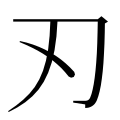
Note the compositional differences between Traditional, Simplified, and Japanese Shinjitai in the placement of the additional stroke.
Han character
| Stroke order | |||
|---|---|---|---|
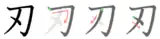 | |||
刃 (Kangxi radical 18, 刀+1, 3 strokes, cangjie input 尸竹戈 (SHI), four-corner 17420, composition ⿹刀丿(G) or ⿹刀丶(HTKV) or ⿻刀丶(J))
References
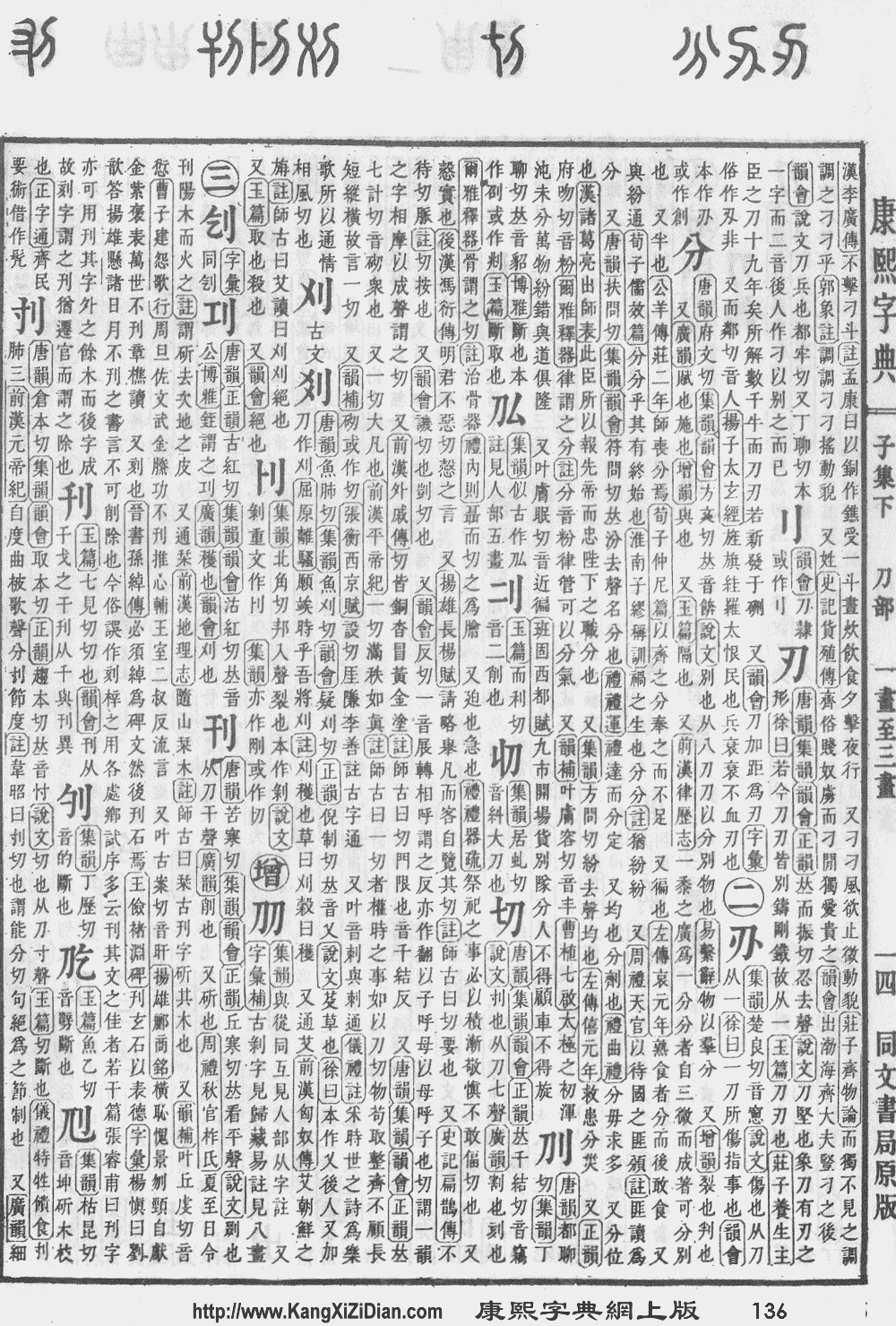
- Kangxi Dictionary: page 136, character 2
- Dai Kanwa Jiten: character 1850
- Dae Jaweon: page 304, character 7
- Hanyu Da Zidian (first edition): volume 1, page 320, character 3
- Unihan data for U+5203
- Unihan data for U+2F81E
Chinese
| trad. | 刃 | |
|---|---|---|
| simp. # | 刃 | |
Glyph origin
| Historical forms of the character 刃 | |||
|---|---|---|---|
| Shang | Warring States | Shuowen Jiezi (compiled in Han) | Liushutong (compiled in Ming) |
| Oracle bone script | Chu slip and silk script | Small seal script | Transcribed ancient scripts |
 |
 |
 |
 |
Etymology
(This etymology is missing or incomplete. Please add to it, or discuss it at the Etymology scriptorium.)
Pronunciation
Compounds
- 事刃
- 五刃
- 交光飛刃/交光飞刃
- 交刃
- 亭刃
- 伏刃
- 倳刃
- 兇刃/凶刃
- 兩刃/两刃
- 兩刃矛/两刃矛
- 兵不接刃
- 兵不污刃
- 兵不血刃 (bīngbùxuèrèn)
- 兵刃 (bīngrèn)
- 兵未血刃
- 兵無血刃/兵无血刃
- 冒刃
- 冰刃
- 刀刃 (dāorèn)
- 刃兒/刃儿
- 刃具 (rènjù)
- 刃器
- 刃角
- 刃迎縷解/刃迎缕解
- 刃鋩/刃铓
- 刃面
- 利刃 (lìrèn)
- 剚刃
- 創刃/创刃
- 劍刃/剑刃
- 合刃
- 器刃
- 堅刃/坚刃
- 堅甲利刃/坚甲利刃
- 嬋娟刃/婵娟刃
- 寸刃
- 封刃
- 尺刃
- 延頸待刃/延颈待刃
- 弦刃
- 張弓拔刃/张弓拔刃
- 應刃而解/应刃而解
- 戈刃
- 戢刃
- 手刃
- 手無寸刃/手无寸刃
- 投刃皆虛/投刃皆虚
- 推刃
- 接刃
- 揚刃/扬刃
- 攢刃/攒刃
- 斂刃/敛刃
- 智刃
- 曲刃
- 束刃
- 枝刃
- 枕戈剚刃
- 柔刃
- 梃刃
- 植刃
- 淬刃
- 游刃
- 游刃有餘/游刃有余 (yóurènyǒuyú)
- 游刃餘地/游刃余地
- 漏刃
- 狂刃
- 瓊刃/琼刃
- 甲刃
- 略刃
- 發刃/发刃
- 登鋒履刃/登锋履刃
- 白刃 (báirèn)
- 白刃戰/白刃战 (báirènzhàn)
- 目牛游刃 (mùniúyóurèn)
- 相刃
- 矢刃
- 砥刃
- 素刃
- 臁刃
- 自刃
- 芒刃
- 芙蓉刃
- 血刃
- 行刃
- 袖刃
- 角刃
- 誓刃
- 赴火蹈刃
- 蹈刃
- 軍不血刃/军不血刃
- 迎刃
- 迎刃以解
- 迎刃冰解
- 迎刃立解
- 迎刃而理
- 迎刃而解 (yíngrèn'érjiě)
- 遊刃/游刃
- 遊刃有餘/游刃有余 (yóurènyǒuyú)
- 遊刃餘地/游刃余地
- 郢刃
- 金刃
- 鉤刃/钩刃
- 鋒刃/锋刃
- 鋩刃/铓刃
- 錐刃/锥刃
- 鐵刃/铁刃
- 開刃/开刃 (kāirèn)
- 陷刃
- 雪刃
- 霜刃
- 順刃/顺刃
- 頓刃/顿刃
- 飛刃/飞刃
- 飲刃/饮刃
- 餘刃/余刃
- 鬱刃/郁刃
- 齊刃/齐刃
Descendants
Japanese
| Shinjitai | 刃 | |
| Kyūjitai [1] |
刃󠄁 刃+ 󠄁?(Adobe-Japan1) |
 |
| 刃󠄃 刃+ 󠄃?(Hanyo-Denshi) (Moji_Joho) | ||
| The displayed kanji may be different from the image due to your environment. See here for details. | ||
Readings
Compounds
- 刃傷 (ninjō)
Etymology 1
/pa/ → /ɸa/ → /ha/
From Old Japanese, from Proto-Japonic *pa.
Cognate with 歯 (ha, “tooth”).[2][3] Possibly also related to 葉 (ha, “leaf”), but the pitch accents do not match. Compare English blade.
Derived terms
Idioms
- 剣の刃を渡る (tsurugi no ha o wataru)
Etymology 2
| Kanji in this term |
|---|
| 刃 |
| やいば Grade: S |
| kun’yomi |
/jaki ɸa/ → /jakiba/ → /jaĩba/ → /jaiba/
イ音便 (i-onbin) form of 焼き刃 (yakiba), a compound of 焼き (yaki, “burned, fired”) + 刃 (ha, “edge, blade”, see above).[2][3] The ha changes to ba as an instance of rendaku (連濁).
Pronunciation
Noun
Derived terms
- 刃の験者 (yaiba no genja)
- 氷の刃 (kōri no yaiba)
- 心の刃 (kokoro no yaiba)
- 邪見の刃 (jaken no yaiba)
- 情けに刃向かう刃なし (nasake ni hamukau yaiba nashi)
Idioms
- 笑中に刃を研ぐ (shōchū ni yaiba o togu)
- 刃に掛かる (yaiba ni kakaru)
- 刃に血塗らず (yaiba ni chi nurazu)
- 刃に伏す (yaiba ni fusu)
Proverbs
- 刃は切れるが重宝 (yaiba wa kireru ga chōhō, “for a blade, cutting [sharpness] is precious” → the highest value of a tool is its ability to do what it is designed for)
Idioms
Affix
刃 • (jin)
Derived terms
References
- Haga, Gōtarō (1914) 漢和大辞書 [The Great Kanji-Japanese Dictionary] (in Japanese), Fourth edition, Tōkyō: Kōbunsha, , page 281 (paper), page 190 (digital)
- Shōgaku Tosho (1988) 国語大辞典(新装版) [Unabridged Dictionary of Japanese (Revised Edition)] (in Japanese), Tōkyō: Shogakukan, →ISBN
- Matsumura, Akira, editor (2006), 大辞林 [Daijirin] (in Japanese), Third edition, Tōkyō: Sanseidō, →ISBN
Korean
Hanja
刃 (eum 인 (in))
- This term needs a translation to English. Please help out and add a translation, then remove the text
{{rfdef}}.
Old Japanese
Etymology
Cognate with 歯 (pa, “tooth”).[1][2] Possibly also related to 葉 (pa, “leaf”). Compare English blade.
Descendants
- Japanese: 刃 (ha, yaiba)
References
- Shōgaku Tosho (1988) 国語大辞典(新装版) [Unabridged Dictionary of Japanese (Revised Edition)] (in Japanese), Tōkyō: Shogakukan, →ISBN
- Matsumura, Akira, editor (2006), 大辞林 [Daijirin] (in Japanese), Third edition, Tōkyō: Sanseidō, →ISBN
Further reading
- 葉 (“leaf”) entry at Gogen-Allguide (in Japanese)