嗡
| ||||||||
Translingual
Han character
嗡 (Kangxi radical 30, 口+10, 13 strokes, cangjie input 口金戈一 (RCIM), four-corner 68027, composition ⿰口翁)
Further reading
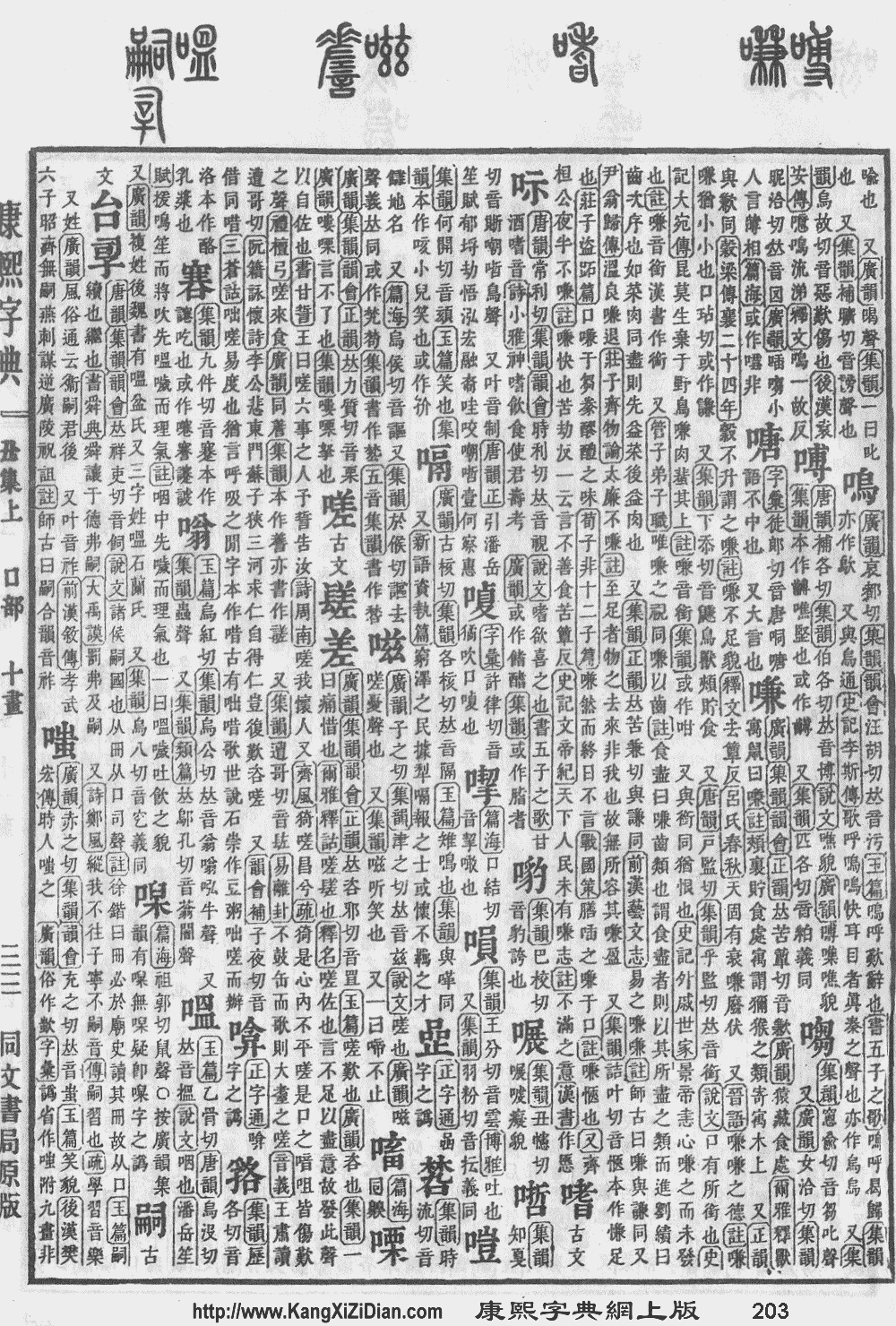
- Kangxi Dictionary: page 203, character 27
- Dai Kanwa Jiten: character 4106
- Dae Jaweon: page 426, character 7
- Hanyu Da Zidian (first edition): volume 1, page 669, character 12
- Unihan data for U+55E1
Chinese
| trad. | 嗡 | |
|---|---|---|
| simp. # | 嗡 | |
Glyph origin
Characters in the same phonetic series (公) (Zhengzhang, 2003)
| Old Chinese | |
|---|---|
| 慃 | *qroːŋʔ |
| 袞 | *kluːnʔ |
| 蔉 | *kluːnʔ |
| 滾 | *kluːnʔ |
| 忩 | *sʰloːŋ |
| 鬆 | *sqʰloːŋs, *sqʰluːŋ, *skʰloŋ, *sqʰloŋ |
| 凇 | *sqʰloːŋs, *sqʰloŋ, *sɢloŋ |
| 公 | *kloːŋ |
| 蚣 | *kloːŋ, *kljoŋ |
| 翁 | *qloːŋ |
| 螉 | *qloːŋ |
| 蓊 | *qloːŋ, *qloːŋʔ |
| 嗡 | *qloːŋ |
| 滃 | *qloːŋʔ |
| 暡 | *qloːŋʔ |
| 勜 | *qloːŋʔ |
| 塕 | *qloːŋʔ |
| 瓮 | *qloːŋs |
| 崧 | *sqʰluŋ |
| 菘 | *sqʰluŋ |
| 硹 | *sqʰluŋ |
| 淞 | *sqʰloŋ, *sɢloŋ |
| 蜙 | *sqʰloŋ |
| 倯 | *sqʰloŋ |
| 松 | *sɢloŋ |
| 訟 | *sɢloŋ, *sɢloŋs |
| 頌 | *sɢloŋs, *loŋ |
| 忪 | *kljoŋ |
| 彸 | *kljoŋ |
| 衳 | *kljoŋ |
| 伀 | *kljoŋ |
| 妐 | *kljoŋ |
| 炂 | *kljoŋ |
| 鈆 | *kljoŋ, *lon |
Phono-semantic compound (形聲/形声, OC *qloːŋ) : semantic 口 (“mouth”) + phonetic 翁 (OC *qloːŋ).
Etymology 1
(This etymology is missing or incomplete. Please add to it, or discuss it at the Etymology scriptorium.)
Pronunciation
Compounds
- 嗡嗡 (wēngwēng)
- 嗡嗡彈/嗡嗡弹
- 嗡嗡祖拉
- 嗡子
- 嗡鳴/嗡鸣
- 大轟大嗡/大轰大嗡
Pronunciation
Compounds
- 嗡摩尼呸咩哄 (wēng mānī bēimēi hòng )
- 嗡阿吽 (wēng ā hòng )
References
- “嗡”, in 漢語多功能字庫 (Multi-function Chinese Character Database), 香港中文大學 (the Chinese University of Hong Kong), 2014–
Japanese
Kanji
嗡
- This term needs a translation to English. Please help out and add a translation, then remove the text
{{rfdef}}.
Korean
Hanja
嗡 (eumhun 소 울음 옹 (so ureum ong))
- This term needs a translation to English. Please help out and add a translation, then remove the text
{{rfdef}}.
References
Vietnamese
Han character
嗡: Hán Việt readings: ông, án
嗡: Nôm readings: óng, ông
- This term needs a translation to English. Please help out and add a translation, then remove the text
{{rfdef}}.
References
This article is issued from Wiktionary. The text is licensed under Creative Commons - Attribution - Sharealike. Additional terms may apply for the media files.