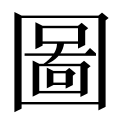
圖
| ||||||||
 | ||||||||
Translingual
| Traditional | 圖 |
|---|---|
| Shinjitai | 図 |
| Simplified | 图 |
Alternative forms
Note that the 啚 component in this character is written ⿳口十回 (China, Vietnam) and ⿳口亠回 (Taiwan, Hong Kong, Japan, Korea). Differences between the traditional Chinese forms exist due to different national standards.
Han character
圖 (Kangxi radical 31, 囗+11, 14 strokes, cangjie input 田口十田 (WRJW) or 田口卜田 (WRYW), four-corner 60600, composition ⿴囗啚)
References
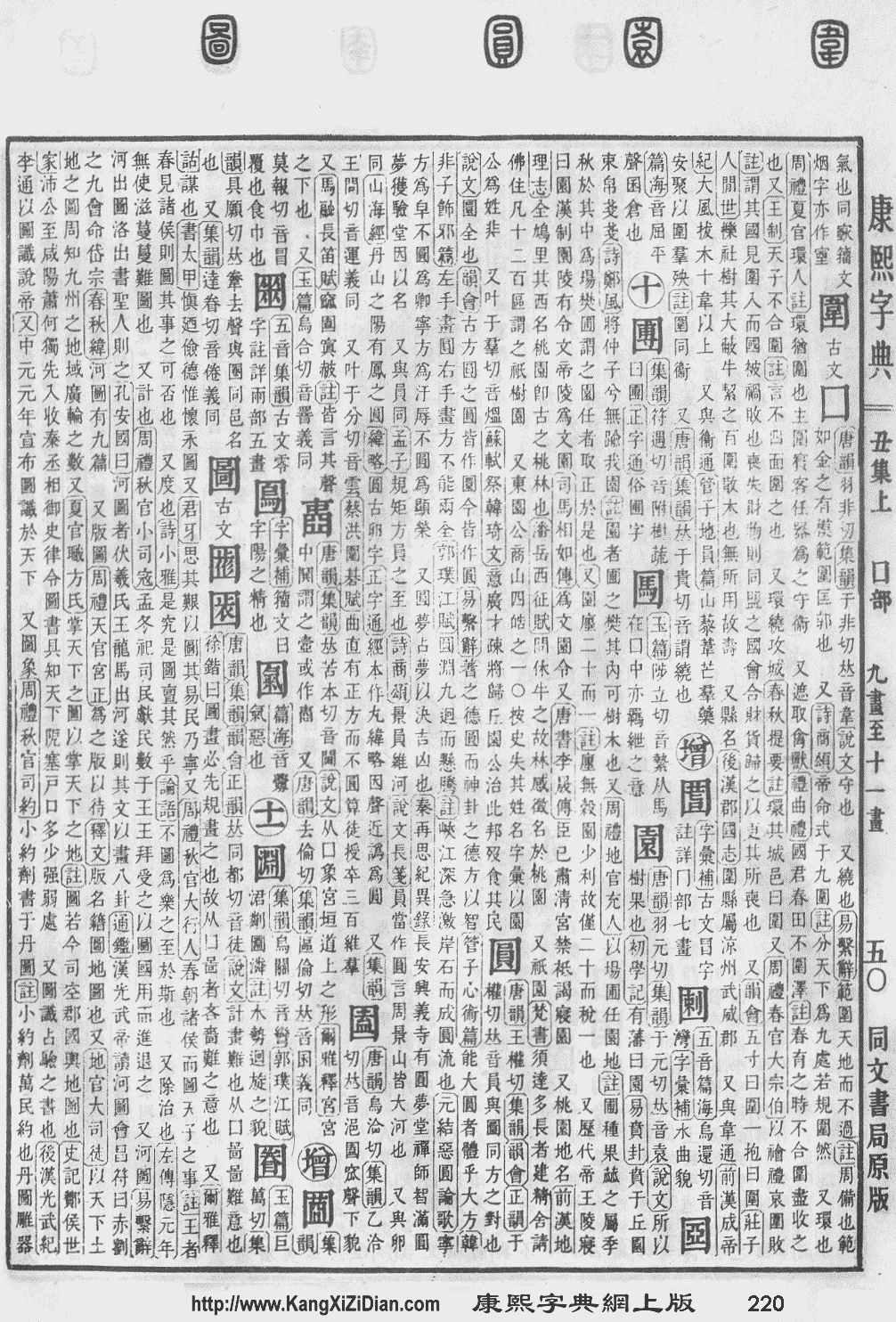
- Kangxi Dictionary: page 220, character 18
- Dai Kanwa Jiten: character 4832
- Dae Jaweon: page 452, character 11
- Hanyu Da Zidian (first edition): volume 1, page 725, character 6
- Unihan data for U+5716
- Unihan data for U+2F84B
Chinese
| trad. | 圖 | |
|---|---|---|
| simp. | 图 | |
| alternative forms | ||
Glyph origin
| Historical forms of the character 圖 | ||||
|---|---|---|---|---|
| Western Zhou | Warring States | Shuowen Jiezi (compiled in Han) | Liushutong (compiled in Ming) | |
| Bronze inscriptions | Bronze inscriptions | Qin slip script | Small seal script | Transcribed ancient scripts |
 |
 |
 |
 |
 |
Ideogrammic compound (會意/会意) : 囗 (“walled city”) + 啚.
啚 is the early form of 鄙 (OC *prɯʔ, “remote areas”), thus meaning “territory”.
Pronunciation
Definitions
圖
Compounds
- 三才圖會/三才图会
- 不圖/不图 (bùtú)
- 乾圖/干图
- 井柱狀圖/井柱状图
- 企圖/企图 (qǐtú)
- 伯圖/伯图
- 佛圖/佛图
- 佛圖戶/佛图户
- 佛圖澄/佛图澄
- 側視圖/侧视图
- 側面圖/侧面图
- 八卦圖/八卦图
- 八陣圖/八阵图
- 兵要圖/兵要图
- 冀圖/冀图
- 初秋圖/初秋图
- 制圖/制图
- 剖視圖/剖视图
- 剖面圖/剖面图
- 力圖/力图 (lìtú)
- 力圖上進/力图上进
- 勵精圖治/励精图治
- 包龍圖/包龙图
- 博古圖錄/博古图录
- 原圖卡/原图卡
- 厲精圖治/厉精图治
- 呼圖克圖/呼图克图 (hūtúkètú)
- 哈拉庫圖/哈拉库图
- 唯利是圖/唯利是图 (wéilìshìtú)
- 國圖/国图 (guótú)
- 圖乙/图乙
- 圖例/图例 (túlì)
- 圖們江/图们江 (Túmén Jiāng)
- 圖像/图像 (túxiàng)
- 圖冊/图册 (túcè)
- 圖利/图利 (túlì)
- 圖南/图南
- 圖呼其/图呼其 (Túhūqí)
- 圖報/图报 (túbào)
- 圖存/图存 (túcún)
- 圖害/图害 (túhài)
- 圖寫/图写
- 圖工/图工
- 圖度/图度
- 圖形/图形 (túxíng)
- 圖形分析/图形分析
- 圖控軟體/图控软体
- 圖文/图文 (túwén)
- 圖文不符/图文不符 (túwénbùfú)
- 圖文並茂/图文并茂 (túwénbìngmào)
- 圖文傳播/图文传播
- 圖景/图景 (tújǐng)
- 圖書/图书 (túshū)
- 圖書分類/图书分类
- 圖書室/图书室 (túshūshì)
- 圖書目錄/图书目录
- 圖書禮券/图书礼券
- 圖書編目/图书编目
- 圖書館/图书馆 (túshūguǎn)
- 圖書館學/图书馆学 (túshūguǎnxué)
- 圖書館週/图书馆周
- 圖木舒克/图木舒克 (Túmùshūkè)
- 圖板/图板
- 圖案/图案 (tú'àn)
- 圖案畫/图案画
- 圖格里克 (túgélǐkè)
- 圖樣/图样 (túyàng)
- 圖為不軌/图为不轨
- 圖片/图片 (túpiàn)
- 圖版/图版 (túbǎn)
- 圖瓦/图瓦 (Túwǎ)
- 圖畫/图画 (túhuà)
- 圖畫文字/图画文字
- 圖畫書/图画书 (túhuàshū)
- 圖真/图真
- 圖示/图示 (túshì)
- 圖窮匕現/图穷匕现 (túqióngbǐxiàn)
- 圖窮匕見/图穷匕见 (túqióngbǐxiàn)
- 圖籍/图籍
- 圖籙/图箓
- 圖紋/图纹
- 圖紙/图纸 (túzhǐ)
- 圖緯/图纬
- 圖繪/图绘
- 圖表/图表 (túbiǎo)
- 圖解/图解 (tújiě)
- 圖記/图记
- 圖說/图说 (túshuō)
- 圖謀/图谋 (túmóu)
- 圖謀不軌/图谋不轨 (túmóubùguǐ)
- 圖譜/图谱 (túpǔ)
- 圖讖/图谶
- 圖象/图象 (túxiàng)
- 圖財害命/图财害命
- 圖財致命/图财致命
- 圖資系統/图资系统
- 圖賴/图赖
- 圖釘/图钉 (túdīng)
- 圖錄/图录
- 圖鑑/图鉴 (tújiàn)
- 圖章/图章 (túzhāng)
- 圖騰/图腾 (túténg)
- 地圖/地图 (dìtú)
- 地籍圖/地籍图
- 培芮圖/培芮图
- 壯圖/壮图
- 大展宏圖/大展宏图 (dàzhǎnhóngtú)
- 大展鴻圖/大展鸿图 (dàzhǎnhóngtú)
- 太極圖/太极图 (tàijítú)
- 太極圖說/太极图说
- 天氣圖/天气图 (tiānqìtú)
- 失圖/失图
- 奮發圖強/奋发图强
- 妄圖/妄图 (wàngtú)
- 宏圖/宏图 (hóngtú)
- 宵旰圖治/宵旰图治
- 密點地圖/密点地图
- 專利地圖/专利地图
- 工作圖/工作图
- 工業用圖/工业用图
- 左圖右史/左图右史 (zuǒtúyòushǐ)
- 巴圖/巴图
- 巴圖爾/巴图尔
- 巴圖魯/巴图鲁 (bātúlǔ)
- 希圖/希图 (xītú)
- 平面圖/平面图 (píngmiàntú)
- 幾何圖形/几何图形 (jǐhé túxíng)
- 幾何圖案/几何图案
- 張瑞圖/张瑞图
- 後圖/后图
- 心電圖/心电图 (xīndiàntú)
- 心音圖/心音图
- 恰克圖/恰克图 (Qiàkètú)
- 惟利是圖/惟利是图 (wéilìshìtú)
- 悼心失圖/悼心失图
- 意圖/意图 (yìtú)
- 感恩圖報/感恩图报
- 應圖受籙/应图受箓
- 應籙受圖/应箓受图
- 截圖/截图 (jiétú)
- 戴罪圖功/戴罪图功
- 所圖不軌/所图不轨
- 手寫繪圖/手写绘图
- 打圖書/打图书
- 拼圖/拼图 (pīntú)
- 按圖索驥/按图索骥 (àntúsuǒjì)
- 掛圖/挂图
- 推背圖/推背图
- 捨身圖報/舍身图报
- 插圖/插图 (chātú)
- 描圖/描图 (miáotú)
- 握圖臨宇/握图临宇
- 攬勝圖/揽胜图
- 改圖/改图 (gǎitú)
- 救亡圖存/救亡图存 (jiùwángtúcún)
- 方框圖/方框图
- 方言地圖/方言地图
- 易圖明辨/易图明辨
- 昌圖縣/昌图县
- 星圖/星图 (xīngtú)
- 春宮圖/春宫图 (chūngōngtú)
- 春牛圖/春牛图
- 晒圖
- 普通地圖/普通地图
- 暗射地圖/暗射地图 (ànshè dìtú)
- 有利可圖/有利可图 (yǒulìkětú)
- 朝不圖夕/朝不图夕
- 木圖/木图
- 柏拉圖/柏拉图 (Bólātú)
- 框圖/框图
- 桃源圖/桃源图
- 條形圖/条形图 (tiáoxíngtú)
- 棄舊圖新/弃旧图新 (qìjiùtúxīn)
- 棄過圖新/弃过图新
- 構圖/构图 (gòutú)
- 橡皮圖章/橡皮图章 (xiàngpí túzhāng)
- 檢驗圖/检验图
- 次數線圖/次数线图
- 歷史線圖/历史线图 (lìshǐ xiàn tú)
- 河不出圖/河不出图
- 河圖/河图
- 河圖洛書/河图洛书
- 流程圖/流程图 (liúchéngtú)
- 海國圖志/海国图志
- 海圖/海图
- 浮圖/浮图 (Fútú)
- 消寒圖/消寒图
- 深圖遠慮/深图远虑
- 滋蔓難圖/滋蔓难图
- 潛圖問鼎/潜图问鼎
- 烏圖美仁/乌图美仁 (Wūtúměirén)
- 無利可圖/无利可图
- 版圖/版图 (bǎntú)
- 班圖族/班图族
- 璇璣圖/璇玑图
- 璿圖/璇图
- 瓦努阿圖/瓦努阿图 (Wǎnǔ'ātú)
- 異圖/异图
- 略圖/略图 (lüètú)
- 畫圖/画图 (huàtú)
- 畫圖器/画图器
- 畫地成圖/画地成图
- 畫影圖形/画影图形 (huàyǐngtúxíng)
- 發憤圖強/发愤图强
- 白澤圖/白泽图
- 百壽圖/百寿图
- 百子圖/百子图
- 百美圖/百美图
- 百諫圖/百谏图
- 皇圖/皇图
- 益智圖/益智图
- 盡心圖報/尽心图报
- 看圖說話/看图说话
- 示意圖/示意图 (shìyìtú)
- 祕戲圖/秘戏图
- 視圖/视图 (shìtú)
- 程序圖/程序图
- 空間圖形/空间图形
- 窺圖/窥图
- 立體圖形/立体图形
- 立體地圖/立体地图
- 筆陣圖/笔阵图
- 筋電圖/筋电图
- 系統圖/系统图
- 統計圖/统计图
- 統計地圖/统计地图
- 統計製圖/统计制图
- 綠圖/绿图
- 維新圖強/维新图强
- 線圖譜/线图谱
- 縮圖/缩图
- 縮圖器/缩图器
- 繪圖/绘图 (huìtú)
- 繪圖儀/绘图仪
- 繪圖板/绘图板
- 翻然改圖/翻然改图
- 考古圖/考古图
- 肌電圖/肌电图 (jīdiàntú)
- 腦電圖/脑电图 (nǎodiàntú)
- 良圖/良图
- 草圖/草图 (cǎotú)
- 藍圖/蓝图 (lántú)
- 虧圖/亏图
- 行樂圖/行乐图
- 衛星雲圖/卫星云图
- 製圖/制图 (zhìtú)
- 製圖尺/制图尺
- 製圖板/制图板
- 製圖桌/制图桌
- 西雅圖/西雅图 (Xīyǎtú)
- 要圖/要图 (yàotú)
- 設計圖/设计图 (shèjìtú)
- 試圖/试图 (shìtú)
- 謀圖不軌/谋图不轨
- 謀王圖霸/谋王图霸
- 貝拉圖/贝拉图
- 負圖之托/负图之托
- 貪名圖利/贪名图利
- 貪圖/贪图 (tāntú)
- 貼紙圖案/贴纸图案
- 賴圖/赖图
- 賽圖拉/赛图拉 (Sàitúlā)
- 走勢圖/走势图 (zǒushìtú)
- 輿圖/舆图 (yútú)
- 連環圖畫/连环图画
- 透視圖/透视图
- 遠圖長慮/远图长虑
- 鄂圖第一/鄂图第一
- 長條圖/长条图
- 阿亞圖拉/阿亚图拉 (āyàtúlā)
- 阿圖什/阿图什 (Ātúshí)
- 陣圖/阵图
- 陞官圖/升官图
- 雄圖/雄图 (xióngtú)
- 電腦繪圖/电脑绘图
- 霸圖/霸图
- 靈圖/灵图
- 頂輩宗圖/顶辈宗图
- 馬圖/马图
- 魚鱗圖冊/鱼鳞图册
- 鴻圖/鸿图 (hóngtú)
- 鴻圖大展/鸿图大展
- 鵬圖/鹏图
- 龍圖/龙图
- 龍圖公案/龙图公案
References
- Dictionary of Chinese Character Variants (教育部異體字字典), A00739
- “圖”, in 漢語多功能字庫 (Multi-function Chinese Character Database), 香港中文大學 (the Chinese University of Hong Kong), 2014–
Korean
Etymology
(This etymology is missing or incomplete. Please add to it, or discuss it at the Etymology scriptorium. Particularly: “Middle Korean readings, if any”)
Pronunciation
- (SK Standard/Seoul) IPA(key): [to̞]
- Phonetic hangul: [도]
Compounds
Compounds
- 황도 (皇圖, hwangdo)
Vietnamese
This article is issued from Wiktionary. The text is licensed under Creative Commons - Attribution - Sharealike. Additional terms may apply for the media files.