坪
| ||||||||
Translingual
Han character
坪 (Kangxi radical 32, 土+5, 8 strokes, cangjie input 土一火十 (GMFJ), four-corner 41149, composition ⿰土平)
Derived characters
- 𦱾
References
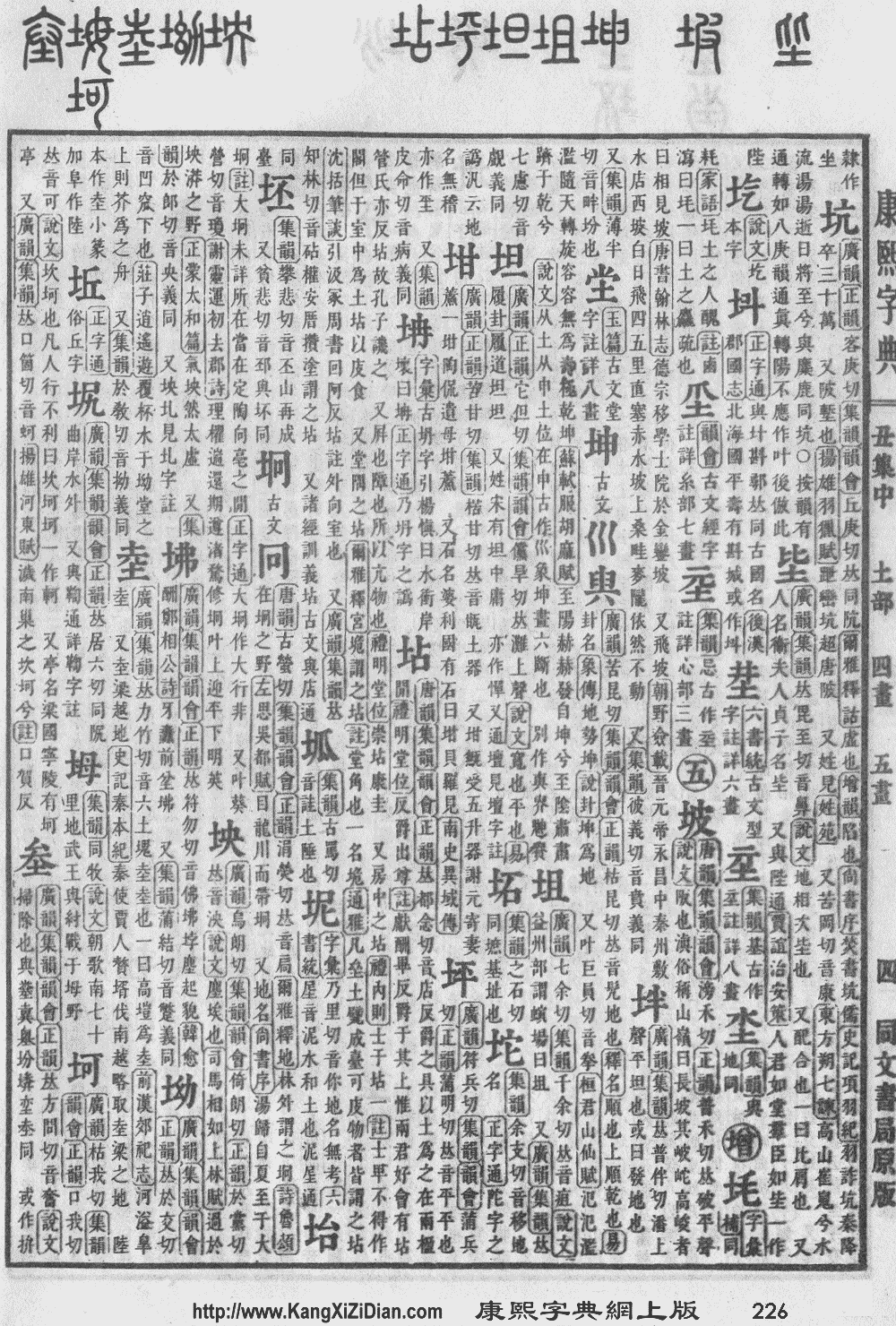
- Kangxi Dictionary: page 226, character 22
- Dai Kanwa Jiten: character 4976
- Dae Jaweon: page 461, character 34
- Hanyu Da Zidian (first edition): volume 1, page 430, character 9
- Unihan data for U+576A
Chinese
| simp. and trad. |
坪 | |
|---|---|---|
Glyph origin
Phono-semantic compound (形聲/形声, OC *beŋ) : semantic 土 (“earth”) + phonetic 平 (OC *ben, *beŋ).
Etymology
The Taiwanese measurement unit of area was borrowed from the Japanese one during Japanese colonial period.
Pronunciation
Definitions
坪
Compounds
- 七里坪 (Qīlǐpíng)
- 下坪 (Xiàpíng)
- 下谷坪 (Xiàgǔpíng)
- 三鬥坪/三斗坪
- 仁和坪 (Rénhépíng)
- 停機坪/停机坪 (tíngjīpíng)
- 兩坪/两坪 (Liǎngpíng)
- 六里坪 (Liùlǐpíng)
- 南坪 (Nánpíng)
- 卸甲坪 (Xièjiǎpíng)
- 厚坪 (Hòupíng)
- 古村坪 (Gǔcūnpíng)
- 喬家坪/乔家坪 (Qiáojiāpíng)
- 地坪 (dìpíng)
- 坪場/坪场
- 坪壩/坪坝 (píngbà)
- 坪數/坪数
- 坪林 (Pínglín)
- 坪頂/坪顶 (Píngdǐng)
- 大支坪 (Dàzhīpíng)
- 姚坪 (Yáopíng)
- 安坪 (Ānpíng)
- 官坪 (Guānpíng)
- 富城坪 (Fùchéngpíng)
- 寺坪 (Sìpíng)
- 小坪 (Xiǎopíng)
- 康坪 (Kāngpíng)
- 建坪 (Jiànpíng)
- 方高坪 (Fānggāopíng)
- 木魚坪/木鱼坪 (Mùyúpíng)
- 松木坪 (Sōngmùpíng)
- 柯坪 (Kēpíng)
- 柘木坪 (Zhèmùpíng)
- 桃坪 (Táopíng)
- 棉花坪 (Miánhuāpíng)
- 榔坪 (Lángpíng)
- 楂樹坪/楂树坪 (Zhāshùpíng)
- 樟村坪 (Zhāngcūnpíng)
- 樟樹坪/樟树坪 (Zhāngshùpíng)
- 水井坪 (Shuǐjǐngpíng)
- 水坪 (Shuǐpíng)
- 沙坪 (Shāpíng)
- 洋坪 (Yángpíng)
- 活龍坪/活龙坪 (Huólóngpíng)
- 清坪 (Qīngpíng)
- 清太坪 (Qīngtàipíng)
- 溪口坪 (Xīkǒupíng)
- 火燒坪/火烧坪 (Huǒshāopíng)
- 白楊坪/白杨坪 (Báiyángpíng)
- 秦家坪 (Qínjiāpíng)
- 竹坪 (Zhúpíng)
- 篤坪/笃坪 (Dǔpíng)
- 紅坪/红坪 (Hóngpíng)
- 紅花坪/红花坪 (Hónghuāpíng)
- 花坪 (Huāpíng)
- 茅坪 (Máopíng)
- 茅坪場/茅坪场 (Máopíngchǎng)
- 草坪 (cǎopíng)
- 蒿坪 (Hāopíng)
- 薛坪 (Xuēpíng)
- 賀家坪/贺家坪 (Hèjiāpíng)
- 鄂坪 (Èpíng)
- 金坪 (Jīnpíng)
- 金果坪 (Jīnguǒpíng)
- 長坪/长坪 (Chángpíng)
- 阿坶坪
- 雙坪/双坪 (Shuāngpíng)
- 鞦韆坪/秋千坪 (Qiūqiānpíng)
- 馬坪/马坪 (Mǎpíng)
- 馮坪/冯坪 (Féngpíng)
- 騾坪/骡坪 (Luópíng)
- 高坪 (Gāopíng)
- 龍坪/龙坪 (Lóngpíng)
- 龍潭坪/龙潭坪 (Lóngtánpíng)
- 龍舟坪/龙舟坪 (Lóngzhōupíng)
References
- “Entry #3717”, in 臺灣閩南語常用詞辭典 [Dictionary of Frequently-Used Taiwan Minnan] (overall work in Mandarin and Hokkien), Ministry of Education, R.O.C., 2023.
Japanese
| Shinjitai | 坪 | |
| Kyūjitai [1] |
坪󠄁 坪+ 󠄁?(Adobe-Japan1) |
 |
| 坪󠄃 坪+ 󠄃?(Hanyo-Denshi) (Moji_Joho) | ||
| The displayed kanji may be different from the image due to your environment. See here for details. | ||
Usage notes
The on'yomi are not used in modern Japanese.
Etymology
| Kanji in this term |
|---|
| 坪 |
| つぼ Grade: S |
| kun’yomi |
Cognate with 壺 (tsubo, “basin”). The current meaning related to area arose from the way a surrounded area with the base or floor lower than the circumference looks like a basin.[2]
Although the reading is different, this areal measurement meaning for 坪 is shared in common with the terms 평 (坪, pyeong) in Korean and 坪 (pe5) in Taiwanese.
Noun
坪 • (tsubo)
References
- “坪”, in 漢字ぺディア (Kanjipedia) (in Japanese), 日本漢字能力検定協会, 2015–2024
- Shōgaku Tosho (1988) 国語大辞典(新装版) [Unabridged Dictionary of Japanese (Revised Edition)] (in Japanese), Tōkyō: Shogakukan, →ISBN
- Matsumura, Akira, editor (2006), 大辞林 [Daijirin] (in Japanese), Third edition, Tōkyō: Sanseidō, →ISBN
Korean
Etymology
From Middle Chinese 坪 (MC bjaeng). Recorded as Middle Korean 펴ᇰ (phyeng) (Yale: phyeng) in Hunmong Jahoe (訓蒙字會 / 훈몽자회), 1527.
Compounds
- 평당 (坪當, pyeongdang)
- 평수 (坪數, pyeongsu)
Vietnamese
Han character
- This term needs a translation to English. Please help out and add a translation, then remove the text
{{rfdef}}.