兵
| ||||||||
Translingual
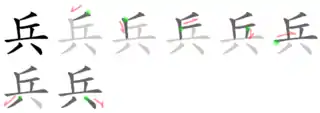
| Stroke order | |||
|---|---|---|---|
 | |||
Han character
兵 (Kangxi radical 12, 八+5, 7 strokes, cangjie input 人一金 (OMC), four-corner 72801, composition ⿱丘八)
Derived characters
References
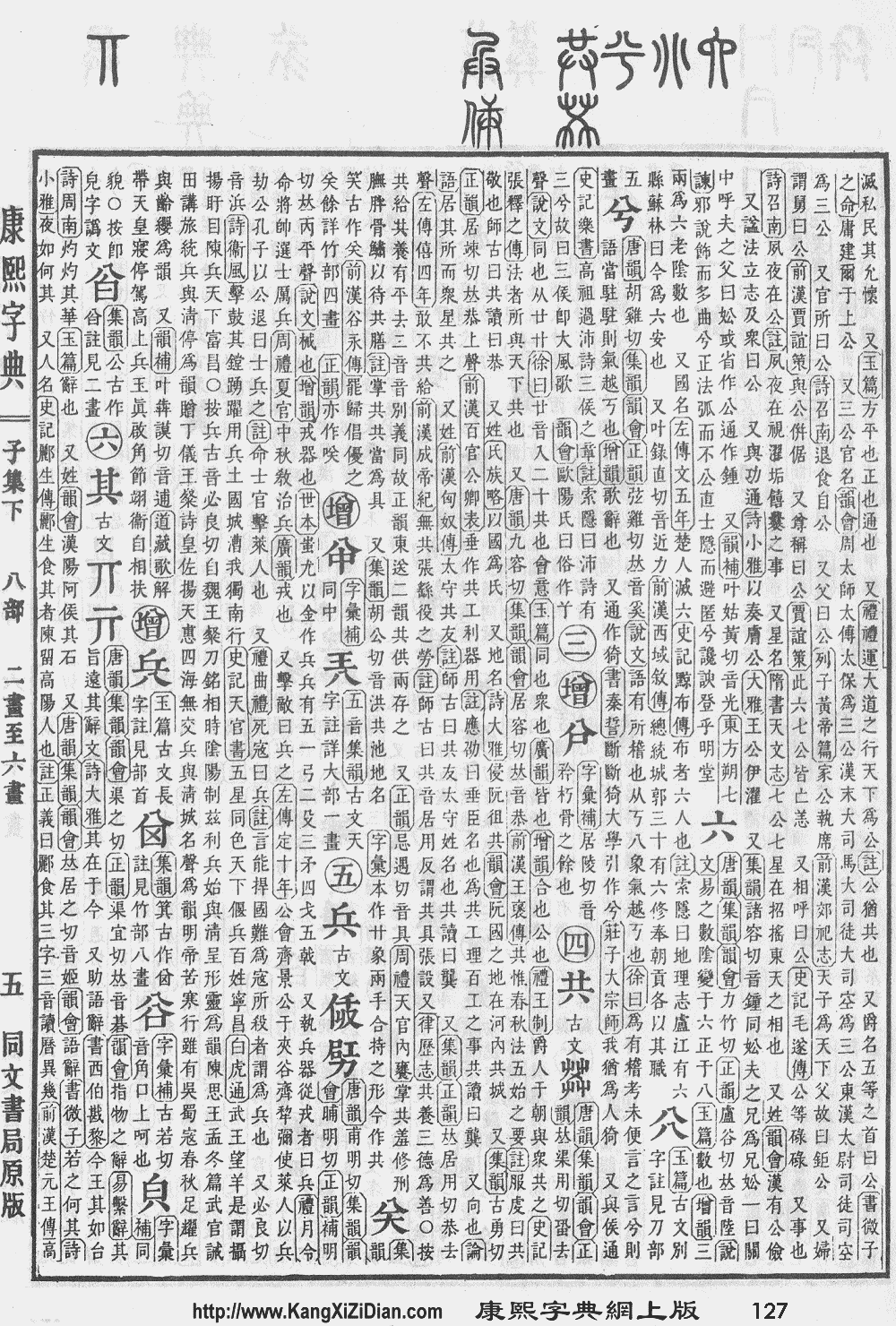
- Kangxi Dictionary: page 127, character 10
- Dai Kanwa Jiten: character 1462
- Hanyu Da Zidian (first edition): volume 1, page 244, character 4
- Unihan data for U+5175
Chinese
| simp. and trad. |
兵 | |
|---|---|---|
Glyph origin
| Historical forms of the character 兵 | ||||||||||||||||||||||||||
|---|---|---|---|---|---|---|---|---|---|---|---|---|---|---|---|---|---|---|---|---|---|---|---|---|---|---|
| Shang | Western Zhou | Shuowen Jiezi (compiled in Han) | Liushutong (compiled in Ming) | |||||||||||||||||||||||
| Oracle bone script | Bronze inscriptions | Small seal script | Transcribed ancient scripts | |||||||||||||||||||||||
 |
 |
 |
 | |||||||||||||||||||||||
|||
|
References: Mostly from Richard Sears' Chinese Etymology site (authorisation),
| ||||||||||||||||||||||||||


Ideogrammic compound (會意/会意) : 斤 (“a short axe”) + 廾 (“2 hands”) – a pair of hands holding a weapon.
Pronunciation
Definitions
兵
- weapon
- 是何異於刺人而殺之,曰:「非我也,兵也。」 [Classical Chinese, trad.]
- From: Mencius, c. 4th century BCE, translated based on James Legge's version
- Shì hé yìyú cì rén ér shā zhī, yuē: “Fēi wǒ yě, bīng yě.” [Pinyin]
- In what does this differ from stabbing a man and killing him, and then saying - "It was not I; it was the weapon?"
是何异于刺人而杀之,曰:「非我也,兵也。」 [Classical Chinese, simp.]
- army; troops
- soldier; warrior (Classifier: 個/个)
- 士兵 ― shìbīng ― soldier
- warfare
- 兵者,國之大事。 [Classical Chinese, trad.]
- From: The Art of War, circa 5th century BCE, translated based on Lionel Giles's version
- Bīng zhě, guó zhī dàshì. [Pinyin]
- Warfare is of vital importance to the State.
兵者,国之大事。 [Classical Chinese, simp.]
- (xiangqi) pawn; private; soldier (on the red side)
- (chess) pawn
- (Cantonese) Short for 觀音兵/观音兵 (guānyīnbīng).
- (Philippine Hokkien) police
Synonyms
Coordinate terms
Compounds
- 一兵一卒
- 不戰而屈人之兵/不战而屈人之兵 (bù zhàn ér qū rén zhī bīng)
- 亂兵/乱兵 (luànbīng)
- 五兵
- 交兵 (jiāobīng)
- 伏兵 (fúbīng)
- 休兵 (xiūbīng)
- 伐兵
- 佳兵
- 佳兵不祥
- 倒兵
- 偃兵息甲
- 偵察兵/侦察兵 (zhēnchábīng)
- 傘兵/伞兵 (sǎnbīng)
- 傘兵部隊/伞兵部队
- 傳令兵/传令兵
- 傭兵/佣兵 (yōngbīng)
- 傷兵/伤兵 (shāngbīng)
- 先禮後兵/先礼后兵 (xiānlǐhòubīng)
- 兵丁 (bīngdīng)
- 兵不厭權/兵不厌权
- 兵不厭詐/兵不厌诈 (bīngbùyànzhà)
- 兵不由將/兵不由将
- 兵不血刃 (bīngbùxuèrèn)
- 兵亂/兵乱 (bīngluàn)
- 兵事 (bīngshì)
- 兵交
- 兵交馬踏/兵交马踏
- 兵仗
- 兵備/兵备
- 兵出無名/兵出无名
- 兵刃 (bīngrèn)
- 兵制 (bīngzhì)
- 兵力 (bīnglì)
- 兵勇 (bīngyǒng)
- 兵勢/兵势 (bīngshì)
- 兵卒 (bīngzú)
- 兵厄 (bīng'è)
- 兵員/兵员 (bīngyuán)
- 兵器 (bīngqì)
- 兵團/兵团 (bīngtuán)
- 兵士 (bīngshì)
- 兵多將廣/兵多将广
- 兵威 (bīngwēi)
- 兵學/兵学
- 兵家 (bīngjiā)
- 兵家大忌
- 兵家常事
- 兵少將微/兵少将微
- 兵工 (bīnggōng)
- 兵工廠/兵工厂 (bīnggōngchǎng)
- 兵廚之擾/兵厨之扰
- 兵強/兵强
- 兵強將勇/兵强将勇
- 兵強將盛/兵强将盛 (bīng qiáng jiàng shèng)
- 兵強馬壯/兵强马壮 (bīngqiángmǎzhuàng)
- 兵役 (bīngyì)
- 兵役節/兵役节
- 兵役課/兵役课
- 兵微將寡/兵微将寡 (bīngwēijiàngguǎ)
- 兵快
- 兵戈 (bīnggē)
- 兵戈擾攘/兵戈扰攘
- 兵戎 (bīngróng)
- 兵敗如山倒/兵败如山倒 (bīng bài rú shān dǎo)
- 兵敗將亡/兵败将亡
- 兵書/兵书 (bīngshū)
- 兵書匣/兵书匣
- 兵杖
- 兵柄
- 兵械
- 兵機/兵机
- 兵機莫測/兵机莫测
- 兵權/兵权 (bīngquán)
- 兵法 (bīngfǎ)
- 兵法家
- 兵火 (bīnghuǒ)
- 兵災/兵灾 (bīngzāi)
- 兵災保險/兵灾保险
- 兵無血刃/兵无血刃
- 兵營/兵营 (bīngyíng)
- 兵燹 (bīngxiǎn)
- 兵牌
- 兵甲 (bīngjiǎ)
- 兵略
- 兵疲馬困/兵疲马困
- 兵盡器竭/兵尽器竭
- 兵盡矢窮/兵尽矢穷
- 兵禍/兵祸 (bīnghuò)
- 兵種/兵种 (bīngzhǒng)
- 兵端
- 兵符 (bīngfú)
- 兵精將勇/兵精将勇 (bīng jīng jiàng yǒng)
- 兵精糧足/兵精粮足
- 兵精馬壯/兵精马壮
- 兵臨城下/兵临城下 (bīnglínchéngxià)
- 兵船 (bīngchuán)
- 兵艦/兵舰 (bīngjiàn)
- 兵荒
- 兵荒將亂/兵荒将乱
- 兵荒馬亂/兵荒马乱 (bīnghuāngmǎluàn)
- 兵蟻/兵蚁 (bīngyǐ)
- 兵行詭道/兵行诡道
- 兵裝/兵装
- 兵要 (bīngyào)
- 兵要圖/兵要图
- 兵解
- 兵諫/兵谏 (bīngjiàn)
- 兵變/兵变 (bīngbiàn)
- 兵費/兵费
- 兵貴神速/兵贵神速 (bīngguìshénsù)
- 兵車行/兵车行
- 兵連禍結/兵连祸结
- 兵部 (Bīngbù)
- 兵部尚書/兵部尚书
- 兵險/兵险
- 兵難/兵难
- 兵革 (bīnggé)
- 兵革之禍/兵革之祸
- 兵額/兵额
- 兵餉/兵饷 (bīngxiǎng)
- 兵馬/兵马 (bīngmǎ)
- 兵馬俑/兵马俑 (bīngmǎyǒng)
- 兵馬倥傯/兵马倥偬
- 兵馬司/兵马司
- 兵馬大權/兵马大权
- 典兵
- 冗兵 (rǒngbīng)
- 凋兵
- 出兵 (chūbīng)
- 刀兵 (dāobīng)
- 分兵 (fēnbīng)
- 力乏兵衰
- 勁兵/劲兵
- 動兵/动兵 (dòngbīng)
- 勒兵 (lèbīng)
- 動刀兵/动刀兵 (dòng dāobīng)
- 募兵 (mùbīng)
- 募兵制 (mùbīngzhì)
- 勤務兵/勤务兵 (qínwùbīng)
- 勵兵秣馬/励兵秣马
- 千兵萬馬/千兵万马
- 厭兵/厌兵
- 厲兵/厉兵
- 厲兵秣馬/厉兵秣马
- 厲兵粟馬/厉兵粟马
- 叟兵
- 吃過路兵/吃过路兵 (chī guòlù bīng)
- 哀兵
- 哀兵必勝/哀兵必胜 (āibīngbìshèng)
- 哨兵 (shàobīng)
- 國富兵強/国富兵强 (guófùbīngqiáng)
- 國民兵/国民兵
- 國民兵役/国民兵役
- 土兵
- 坦克兵
- 基準兵/基准兵
- 堅甲利兵/坚甲利兵 (jiānjiǎlìbīng)
- 士兵 (shìbīng)
- 大兵 (dàbīng)
- 大兵團/大兵团
- 大頭兵/大头兵
- 太公兵法
- 天兵 (tiānbīng)
- 奇兵 (qíbīng)
- 女兵
- 子弟兵 (zǐdìbīng)
- 孫子兵法/孙子兵法 (Sūnzǐ Bīngfǎ)
- 官兵 (guānbīng)
- 寓兵於農/寓兵于农
- 富國強兵/富国强兵 (fùguóqiángbīng)
- 寢兵/寝兵
- 寸兵
- 寸兵尺鐵/寸兵尺铁
- 將兵/将兵 (jiàngbīng)
- 將兵長史/将兵长史
- 將銳兵驍/将锐兵骁
- 尖兵 (jiānbīng)
- 尺兵
- 屯兵 (túnbīng)
- 工兵 (gōngbīng)
- 工程兵 (gōngchéngbīng)
- 工農兵/工农兵 (gōngnóngbīng)
- 師老兵疲/师老兵疲
- 常備兵/常备兵 (chángbèibīng)
- 常備兵役/常备兵役
- 帶兵/带兵 (dàibīng)
- 府兵
- 庫兵/库兵
- 廂兵/厢兵
- 弄兵潢池
- 弓兵
- 引兵 (yǐnbīng)
- 弭兵 (mǐbīng)
- 弭兵之會/弭兵之会
- 弱兵
- 徒兵
- 得勝之兵/得胜之兵
- 徵兵/征兵 (zhēngbīng)
- 徵兵制度/征兵制度
- 心兵
- 志願兵/志愿兵 (zhìyuànbīng)
- 息兵
- 憲兵/宪兵 (xiànbīng)
- 憲兵隊/宪兵队 (xiànbīngduì)
- 戎兵
- 戢兵
- 折兵 (zhébīng)
- 招兵 (zhāobīng)
- 招兵買馬/招兵买马 (zhāobīngmǎimǎ)
- 按兵 (ànbīng)
- 按兵不動/按兵不动 (ànbīng-bùdòng)
- 按兵不舉/按兵不举
- 按甲休兵
- 按甲寢兵/按甲寝兵
- 授兵
- 排兵布陣/排兵布阵
- 援兵 (yuánbīng)
- 提兵 (tíbīng)
- 揮兵/挥兵
- 搬兵 (bānbīng)
- 損兵折將/损兵折将
- 損將折兵/损将折兵
- 撥兵/拨兵
- 撤兵 (chèbīng)
- 撒豆成兵
- 擅兵
- 擁兵/拥兵 (yōngbīng)
- 操兵
- 擁兵玩寇/拥兵玩寇
- 擁兵自固/拥兵自固
- 擁兵自重/拥兵自重 (yōngbīngzìzhòng)
- 擐甲執兵/擐甲执兵
- 收兵 (shōubīng)
- 救兵 (jiùbīng)
- 敗兵折將/败兵折将 (bàibīngzhéjiàng)
- 敗將殘兵/败将残兵
- 散兵 (sǎnbīng)
- 散兵游勇
- 整兵
- 斂兵/敛兵
- 斬木為兵/斩木为兵
- 新兵 (xīnbīng)
- 服兵役
- 案兵
- 案兵不動/案兵不动
- 案兵束甲
- 棄甲曳兵/弃甲曳兵
- 構兵/构兵 (gòubīng)
- 構怨連兵/构怨连兵
- 標兵/标兵 (biāobīng)
- 機兵/机兵
- 步兵 (bùbīng)
- 步兵學校/步兵学校
- 步兵校尉
- 步兵炮
- 殘兵敗將/残兵败将 (cánbīngbàijiàng)
- 民兵 (mínbīng)
- 民窮兵疲/民穷兵疲
- 水兵 (shuǐbīng)
- 江東步兵/江东步兵
- 治兵
- 派兵 (pàibīng)
- 洗兵
- 添兵減灶/添兵减灶
- 潢池弄兵
- 炮兵 (pàobīng)
- 炮兵學校/炮兵学校
- 父子兵
- 特種兵/特种兵 (tèzhǒngbīng)
- 犀兵
- 班兵
- 用兵 (yòngbīng)
- 用兵如神 (yòngbīngrúshén)
- 甲兵 (jiǎbīng)
- 當兵/当兵 (dāngbīng)
- 疑兵 (yíbīng)
- 發兵/发兵 (fābīng)
- 白桿兵/白杆兵
- 百萬雄兵/百万雄兵
- 盛食厲兵/盛食厉兵
- 矢盡兵窮/矢尽兵穷
- 知兵
- 短兵 (duǎnbīng)
- 短兵接戰/短兵接战
- 短兵相接 (duǎnbīngxiāngjiē)
- 砥兵礪伍/砥兵砺伍
- 礪兵秣馬/砺兵秣马
- 祠兵
- 神兵 (shénbīng)
- 禍結兵連/祸结兵连
- 秣馬利兵/秣马利兵
- 秣馬厲兵/秣马厉兵
- 稱兵/称兵
- 空降兵 (kōngjiàngbīng)
- 窮兵極武/穷兵极武
- 窮兵黷武/穷兵黩武 (qióngbīngdúwǔ)
- 站衛兵/站卫兵
- 精兵 (jīngbīng)
- 精兵猛將/精兵猛将
- 糧寡兵微/粮寡兵微
- 紅衛兵/红卫兵 (hóngwèibīng)
- 紅頭兵/红头兵 (hóngtóubīng)
- 紙上談兵/纸上谈兵 (zhǐshàngtánbīng)
- 統兵/统兵 (tǒngbīng)
- 綠旗兵/绿旗兵
- 綠林兵/绿林兵
- 練兵/练兵 (liànbīng)
- 緩兵之計/缓兵之计 (huǎnbīngzhījì)
- 練兵積粟/练兵积粟
- 總兵/总兵 (zǒngbīng)
- 繕甲厲兵/缮甲厉兵
- 繕甲治兵/缮甲治兵
- 罷兵/罢兵 (bàbīng)
- 義兵/义兵 (yìbīng)
- 義務兵/义务兵 (yìwùbīng)
- 羸兵
- 習兵/习兵
- 耀兵
- 老兵 (lǎobīng)
- 老弱殘兵/老弱残兵
- 胸中甲兵
- 胸有甲兵
- 臨難鑄兵/临难铸兵
- 興兵/兴兵 (xīngbīng)
- 興兵動眾/兴兵动众
- 舉兵/举兵 (jǔbīng)
- 良兵
- 草木皆兵 (cǎomùjiēbīng)
- 草率收兵 (cǎoshuàishōubīng)
- 號兵/号兵
- 蝦兵蟹將/虾兵蟹将 (xiābīngxièjiàng)
- 蟻聚之兵/蚁聚之兵
- 行兵列陣/行兵列阵
- 行兵布陣/行兵布阵
- 衛兵/卫兵 (wèibīng)
- 被甲兵
- 裁兵 (cáibīng)
- 補充兵役/补充兵役
- 裝甲兵/装甲兵 (zhuāngjiǎbīng)
- 覘兵/觇兵
- 親兵/亲兵 (qīnbīng)
- 觀兵/观兵
- 解兵
- 解兵釋甲/解兵释甲
- 解甲休兵
- 解甲釋兵/解甲释兵
- 訓兵秣馬/训兵秣马
- 討救兵/讨救兵
- 誘兵/诱兵
- 說兵機/说兵机
- 調兵/调兵 (diàobīng)
- 調兵遣將/调兵遣将 (diàobīngqiǎnjiàng)
- 護兵/护兵 (hùbīng)
- 赤壁鏖兵
- 起兵 (qǐbīng)
- 起兵動眾/起兵动众
- 足食足兵
- 輕兵/轻兵
- 輕卒銳兵/轻卒锐兵
- 巡兵
- 退兵 (tuìbīng)
- 逃兵 (táobīng)
- 追兵 (zhuībīng)
- 通信兵 (tōngxìnbīng)
- 進兵/进兵 (jìnbīng)
- 遣兵 (qiǎnbīng)
- 遣兵調將/遣兵调将
- 選兵秣馬/选兵秣马
- 選士厲兵/选士厉兵
- 重兵 (zhòngbīng)
- 鈍兵/钝兵
- 鋪兵/铺兵
- 鏖兵 (áobīng)
- 鏖兵赤壁
- 長兵/长兵
- 閱兵/阅兵 (yuèbīng)
- 閱兵臺/阅兵台
- 阿兵哥 (ābīnggē)
- 陰兵/阴兵
- 陳橋兵變/陈桥兵变
- 雄兵 (xióngbīng)
- 集兵練卒/集兵练卒 (jí bīng liàn zú)
- 電腦兵棋/电脑兵棋
- 韓信將兵/韩信将兵
- 韓信用兵/韩信用兵
- 韓信點兵/韩信点兵
- 領兵/领兵 (lǐngbīng)
- 顓兵/颛兵
- 風兵草甲/风兵草甲
- 養兵/养兵
- 首唱義兵/首唱义兵
- 馬兵/马兵
- 騎兵/骑兵 (qíbīng)
- 騎兵團/骑兵团
- 驅兵/驱兵 (qūbīng)
- 驕兵/骄兵
- 驕兵之計/骄兵之计
- 驕兵必敗/骄兵必败 (jiāobīngbìbài)
- 鬥而鑄兵/斗而铸兵
- 鬼子兵
- 鳴金收兵/鸣金收兵
- 點兵/点兵 (diǎnbīng)
- 點兵派將/点兵派将
- 黷武窮兵/黩武穷兵


Japanese
Readings
Etymology 1
| Kanji in this term |
|---|
| 兵 |
| つわもの Grade: 4 |
| kun’yomi |
| For pronunciation and definitions of 兵 – see the following entry. | ||
| ||
| (This term, 兵, is an alternative spelling of the above term.) |
Etymology 2
| Kanji in this term |
|---|
| 兵 |
| へい Grade: 4 |
| kan’on |
From Middle Chinese 兵 (MC pjaeng). The kan'on, so a later borrowing.
Noun
兵 • (hei)
Etymology 3
| Kanji in this term |
|---|
| 兵 |
| ひょう Grade: 4 |
| goon |
From Middle Chinese 兵 (MC pjaeng). The goon, so an earlier borrowing.
Synonyms
References
- Matsumura, Akira, editor (2006), 大辞林 [Daijirin] (in Japanese), Third edition, Tōkyō: Sanseidō, →ISBN
Korean
Etymology
(This etymology is missing or incomplete. Please add to it, or discuss it at the Etymology scriptorium. Particularly: “Middle Korean readings, if any”)
Pronunciation
- (SK Standard/Seoul) IPA(key): [pjʌ̹ŋ]
- Phonetic hangul: [병]
Vietnamese
Han character
兵: Hán Việt readings: binh (
兵: Nôm readings: binh[1][2][3][4][5][6], banh[1][3][4][5][6], bênh[1][3][7][5], bưng[1], bành[1]
Compounds
- 傷兵 (thương binh)
- 先兵 (tiên binh)
- 戰兵 (chiến binh)
- 砲兵 (pháo binh)
- 親兵 (thân binh, “partisan”)
References
- Nguyễn (2014).
- Nguyễn et al. (2009).
- Trần (2004).
- Bonet (1899).
- Génibrel (1898).
- Taberd & Pigneau de Béhaine (1838).
- Hồ (1976).