奪
See also: 夺
| ||||||||
Translingual
Han character
奪 (Kangxi radical 37, 大+11, 14 strokes, cangjie input 大人土戈 (KOGI), four-corner 40341, composition ⿳大隹寸)
Derived characters
- 𡁯, 𡚞
Descendants
- 夺 (in simplified Chinese)
References
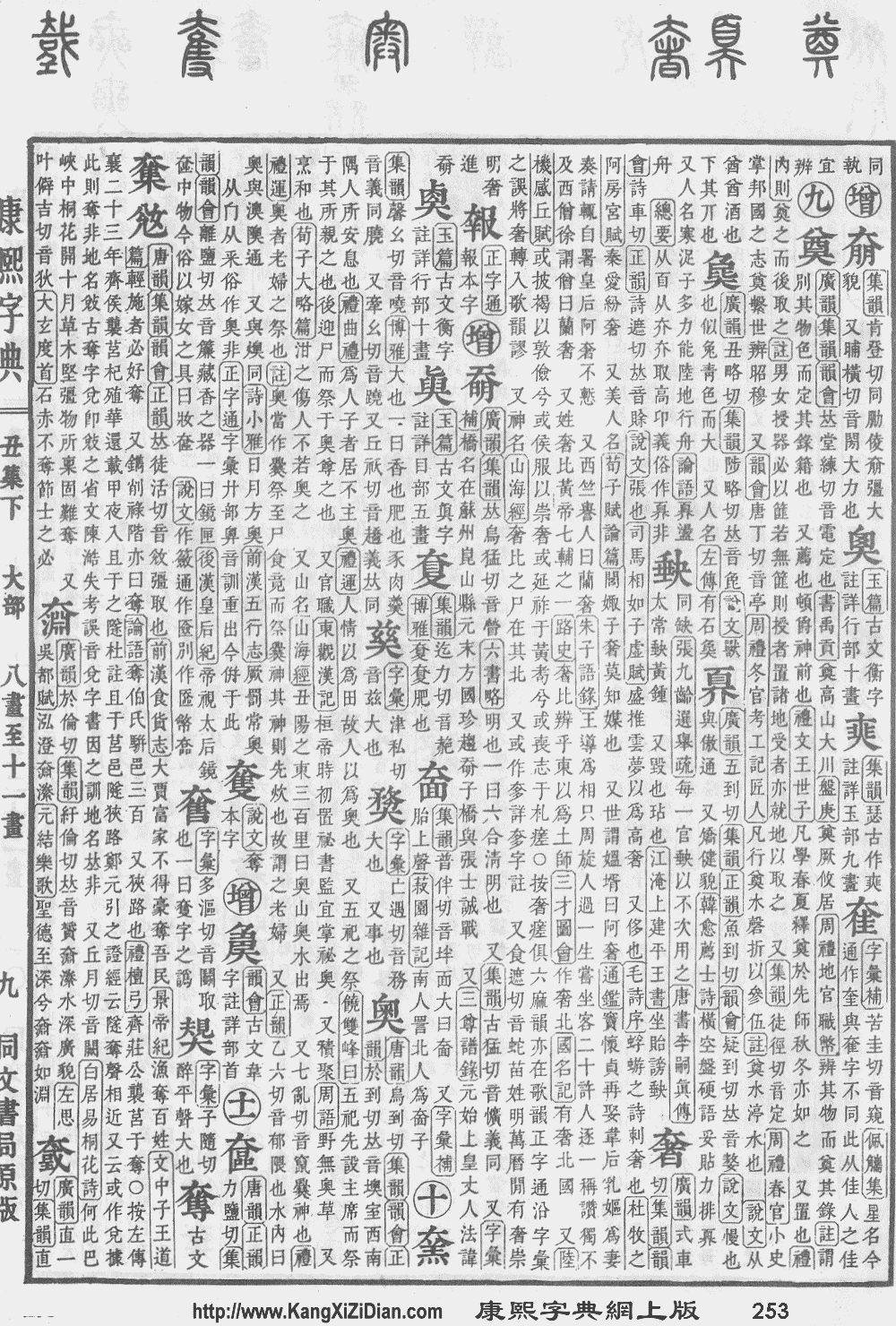
- Kangxi Dictionary: page 253, character 25
- Dai Kanwa Jiten: character 5994
- Dae Jaweon: page 515, character 21
- Hanyu Da Zidian (first edition): volume 1, page 547, character 14
- Unihan data for U+596A
Chinese
| trad. | 奪 | |
|---|---|---|
| simp. | 夺 | |
| alternative forms | 𡙜 敓 𡜎 𡙸 𠔟 | |
Glyph origin
| Historical forms of the character 奪 | ||
|---|---|---|
| Western Zhou | Shuowen Jiezi (compiled in Han) | Liushutong (compiled in Ming) |
| Bronze inscriptions | Small seal script | Transcribed ancient scripts |
 |
 |
 |
Ideogrammic compound (會意/会意) : 衣 (“clothing”) + 雀 (“bird”) + 又 (“hand”) – a hand seizing a bird from someone.
Etymology
Ultimately from Proto-Sino-Tibetan. Cognate with 脫 (OC *lˤot, “remove outer covering”) and 蛻 (OC *l̥ˤot-s, “exuviae (skin cast off during molting)”).
Pronunciation 1
Definitions
奪
Compounds
- 不奪農時/不夺农时
- 你爭我奪/你争我夺
- 侵奪/侵夺
- 傾奪/倾夺
- 光彩奪目/光彩夺目 (guāngcǎiduómù)
- 先聲奪人/先声夺人 (xiānshēngduórén)
- 光輝奪目/光辉夺目
- 削奪/削夺
- 剝奪/剥夺 (bōduó)
- 劫奪/劫夺 (jiéduó)
- 喧賓奪主/喧宾夺主 (xuānbīnduózhǔ)
- 天奪之魄/天夺之魄
- 奪人/夺人
- 奪休/夺休
- 奪冠/夺冠 (duóguàn)
- 奪取/夺取 (duóqǔ)
- 奪名/夺名
- 奪命/夺命
- 奪嫡/夺嫡
- 奪席談經/夺席谈经
- 奪彩/夺彩
- 奪志/夺志
- 奪情/夺情
- 奪手/夺手
- 奪格/夺格 (duógé)
- 奪標/夺标
- 奪權/夺权 (duóquán)
- 奪氣/夺气
- 奪目/夺目 (duómù)
- 奪眶而出/夺眶而出
- 奪職/夺职
- 奪胎換骨/夺胎换骨
- 奪舍/夺舍 (duóshè)
- 奪路/夺路 (duólù)
- 奪錦袍/夺锦袍
- 奪門而出/夺门而出
- 奪魂/夺魂
- 奪魁/夺魁 (duókuí)
- 奪魄/夺魄
- 婦奪夫權/妇夺夫权
- 定奪/定夺 (dìngduó)
- 巧偷豪奪/巧偷豪夺
- 巧取豪奪/巧取豪夺 (qiǎoqǔháoduó)
- 巧奪天工/巧夺天工 (qiǎoduótiāngōng)
- 強奪/强夺 (qiángduó)
- 強詞奪理/强词夺理 (qiǎngcíduólǐ)
- 志不可奪/志不可夺
- 惡紫奪朱/恶紫夺朱
- 截奪/截夺 (jiéduó)
- 戴憑奪席/戴凭夺席
- 打奪/打夺
- 抄奪/抄夺
- 掠奪/掠夺 (lüèduó)
- 推奪/推夺
- 揣奪/揣夺
- 換骨奪胎/换骨夺胎
- 搶奪/抢夺 (qiǎngduó)
- 搶奪罪/抢夺罪
- 撦鼓奪旗/撦鼓夺旗
- 攙奪/搀夺
- 攘奪/攘夺
- 攙行奪市/搀行夺市
- 攫奪/攫夺 (juéduó)
- 斬將奪旗/斩将夺旗
- 暴取豪奪/暴取豪夺
- 替狗奪食/替狗夺食
- 橫刀奪愛/横刀夺爱 (héngdāoduó'ài)
- 殺生與奪/杀生与夺
- 氣消膽奪/气消胆夺
- 求名奪利/求名夺利
- 河川襲奪/河川袭夺
- 漁奪/渔夺
- 潛移陰奪/潜移阴夺
- 潛移默奪/潜移默夺
- 燦爛奪目/灿烂夺目
- 爭分奪秒/争分夺秒 (zhēngfēnduómiǎo)
- 爭名奪利/争名夺利 (zhēngmíngduólì)
- 爭奪/争夺 (zhēngduó)
- 爭權奪利/争权夺利 (zhēngquánduólì)
- 生奪硬搶/生夺硬抢
- 生死與奪/生死与夺
- 生殺予奪/生杀予夺 (shēngshāyǔduó)
- 生殺與奪/生杀与夺 (shēngshāyǔduó)
- 神分志奪/神分志夺
- 神搖意奪/神摇意夺
- 篡奪/篡夺 (cuànduó)
- 裁奪/裁夺 (cáiduó)
- 褒貶與奪/褒贬与夺
- 褫奪/褫夺 (chǐduó)
- 褫奪公權/褫夺公权
- 襲奪/袭夺
- 襲奪河/袭夺河
- 訛奪/讹夺 (éduó)
- 詐取豪奪/诈取豪夺
- 豔麗奪目/艳丽夺目
- 豪奪/豪夺
- 豪奪巧取/豪夺巧取
- 起奪/起夺
- 蹊田奪牛/蹊田夺牛
- 輝煌奪目/辉煌夺目
- 迷魂奪魄/迷魂夺魄
- 酌奪/酌夺
- 銷魂奪魄/销魂夺魄
- 閉口奪氣/闭口夺气
- 鮮豔奪目/鲜艳夺目
- 鰲裡奪尊/鳌里夺尊
- 鳩奪鵲巢/鸠夺鹊巢
Pronunciation 2
Definitions
奪
- † name of an ancient place
Japanese
Korean
Hanja
奪 • (tal) (hangeul 탈, revised tal, McCune–Reischauer t'al)
- This term needs a translation to English. Please help out and add a translation, then remove the text
{{rfdef}}.
Vietnamese
This article is issued from Wiktionary. The text is licensed under Creative Commons - Attribution - Sharealike. Additional terms may apply for the media files.