姧
See also: 姦
| ||||||||
Translingual
Han character
姧 (Kangxi radical 38, 女+6, 9 strokes, cangjie input 女女一十 (VVMJ), composition ⿰㚣干)
Derived characters
References
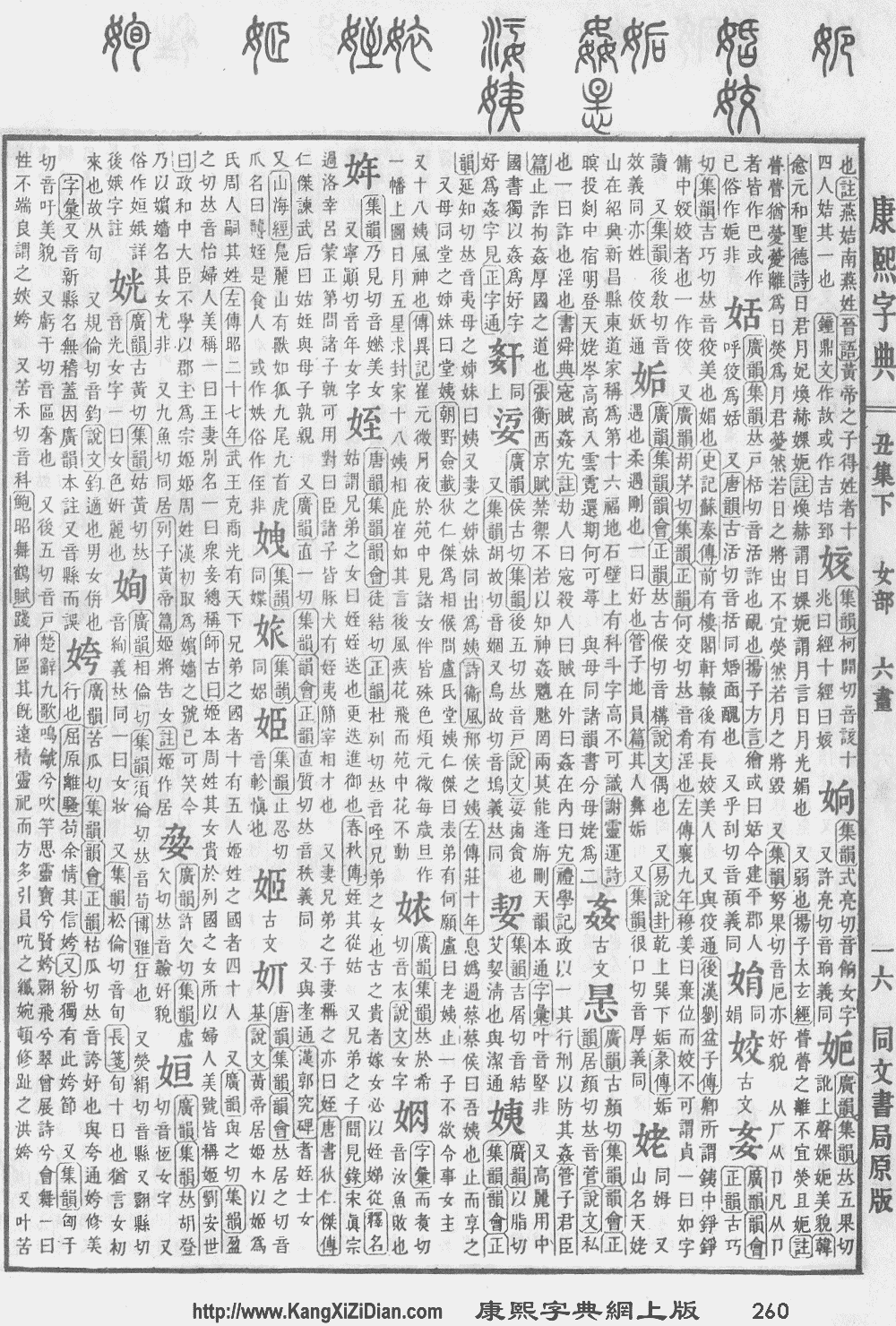
- Kangxi Dictionary: page 260, character 12
- Dai Kanwa Jiten: character 6218
- Dae Jaweon: page 526, character 10
- Hanyu Da Zidian (first edition): volume 2, page 1048, character 8
- Unihan data for U+59E7
Chinese
| For pronunciation and definitions of 姧 – see 姦 (“evil; wicked; treacherous; evildoer; treacherous person; etc.”). (This character is a variant form of 姦). |
Japanese
Kanji
姧
- This term needs a translation to English. Please help out and add a translation, then remove the text
{{rfdef}}.
Readings
Compounds
| Kanji in this term |
|---|
| 姧 |
| かん Hyōgaiji |
| on’yomi |
Etymology
From Middle Chinese 姧 (kan).
Inflection
Inflection of 姧
| Stem forms | |||
|---|---|---|---|
| Imperfective (未然形) | 姧だろ | かんだろ | kan daro |
| Continuative (連用形) | 姧で | かんで | kan de |
| Terminal (終止形) | 姧だ | かんだ | kan da |
| Attributive (連体形) | 姧な | かんな | kan na |
| Hypothetical (仮定形) | 姧なら | かんなら | kan nara |
| Imperative (命令形) | 姧であれ | かんであれ | kan de are |
| Key constructions | |||
| Informal negative | 姧ではない 姧じゃない |
かんではない かんじゃない |
kan de wa nai kan ja nai |
| Informal past | 姧だった | かんだった | kan datta |
| Informal negative past | 姧ではなかった 姧じゃなかった |
かんではなかった かんじゃなかった |
kan de wa nakatta kan ja nakatta |
| Formal | 姧です | かんです | kan desu |
| Formal negative | 姧ではありません 姧じゃありません |
かんではありません かんじゃありません |
kan de wa arimasen kan ja arimasen |
| Formal past | 姧でした | かんでした | kan deshita |
| Formal negative past | 姧ではありませんでした 姧じゃありませんでした |
かんではありませんでした かんじゃありませんでした |
kan de wa arimasen deshita kan ja arimasen deshita |
| Conjunctive | 姧で | かんで | kan de |
| Conditional | 姧なら(ば) | かんなら(ば) | kan nara (ba) |
| Provisional | 姧だったら | かんだったら | kan dattara |
| Volitional | 姧だろう | かんだろう | kan darō |
| Adverbial | 姧に | かんに | kan ni |
| Degree | 姧さ | かんさ | kansa |
References
- Matsumura, Akira, editor (2006), 大辞林 [Daijirin] (in Japanese), Third edition, Tōkyō: Sanseidō, →ISBN
- NHK Broadcasting Culture Research Institute, editor (1998), NHK日本語発音アクセント辞典 [NHK Japanese Pronunciation Accent Dictionary] (in Japanese), Tōkyō: NHK Publishing, →ISBN
This article is issued from Wiktionary. The text is licensed under Creative Commons - Attribution - Sharealike. Additional terms may apply for the media files.