に
 | ||||||||
Japanese
| Stroke order | |||
|---|---|---|---|
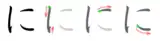 | |||
Pronunciation
- IPA(key): [ɲ̟i]
Etymology 1
Derived in the Heian period from writing the man'yōgana kanji 仁 in the cursive sōsho style.
Syllable
に • (ni)
See also
Etymology 2
From Old Japanese, from Proto-Japonic *ni.
Particle
に • (ni)
- (with nouns)
- particle for indirect objects; to
- 俺に返せ。
- Ore ni kaese.
- Give it back to me.
- 俺に返せ。
- particle for location; in, at
- particle for direction; toward, into
- particle indicating a passive agent; by
- 蚊にさされた。
- Ka ni sasareta.
- I was bitten by a mosquito.
- 蚊にさされた。
- particle indicating a point in time; at
- 7時にね。
- Shichi-ji ni ne.
- It is at seven o'clock. (confirmation of when an event will take place)
- 7時にね。
- particle used occasionally to replace と when organizing and counting; and
- particle for indicating the emotional reason that one does something; in
- particle for indirect objects; to
- (with the stem form of verbs)
- (with な-adjectives)
Synonyms
- へ (e): to; toward
- In the sense indicating destination, the particles へ (e) and に (ni) are often interchangeable, though there is a slight difference of connotation or emphasis. へ (e) emphasizes the journey to the destination, while に (ni) emphasizes the arrival or entering it. The distinction is not quite the same as between English to and into; に (ni) is usually best translated as to because に (ni), unlike English into, can refer to the journey in addition to the arrival or entering the destination.
Etymology 3
| Alternative spelling |
|---|
| 似 |
Pronunciation
- IPA(key): [ɲ̟i]
This article is issued from Wiktionary. The text is licensed under Creative Commons - Attribution - Sharealike. Additional terms may apply for the media files.