娵
| ||||||||
Translingual
Han character
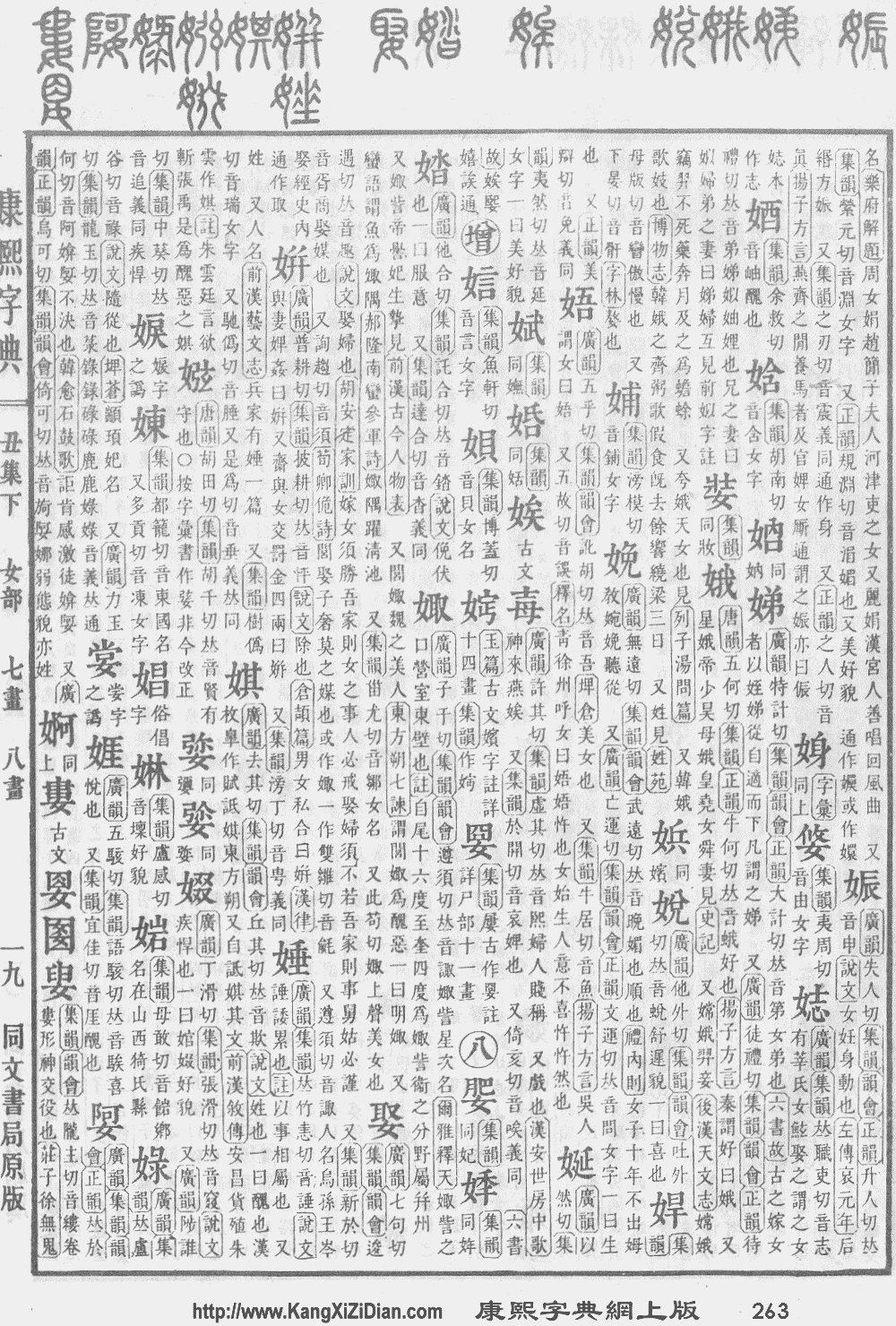
娵 (Kangxi radical 38, 女+8, 11 strokes, cangjie input 女尸十水 (VSJE), four-corner 41447, composition ⿰女取)
References
- Kangxi Dictionary: page 263, character 29
- Dai Kanwa Jiten: character 6364
- Dae Jaweon: page 530, character 17
- Hanyu Da Zidian (first edition): volume 2, page 1055, character 10
- Unihan data for U+5A35
Chinese
| trad. | 娵 | |
|---|---|---|
| simp. # | 娵 | |
Glyph origin
Characters in the same phonetic series (取) (Zhengzhang, 2003)
| Old Chinese | |
|---|---|
| 陬 | *ʔsloː, *ʔsru, *ʔslo |
| 棷 | *ʔsloː, *sʰloːʔ, *sloːʔ, *ʔsru |
| 掫 | *ʔsloː, *ʔsruʔ, *ʔslo |
| 緅 | *ʔsloː, *ʔsru, *slos |
| 趣 | *sʰloːʔ, *sʰlos |
| 取 | *sʰloːʔ, *sʰloʔ |
| 鯫 | *zloː, *zloːʔ, *sʰlo |
| 棸 | *rlu, *rluʔ, *ʔsru |
| 鄹 | *ʔsru, *zloʔ, *ljoːnʔ |
| 郰 | *ʔsru |
| 齱 | *ʔsru, *sʰroːɡ |
| 菆 | *ʔsru, *sʰros, *zloːn |
| 箃 | *ʔsru |
| 黀 | *ʔsru |
| 驟 | *zrus |
| 最 | *zloːds |
| 襊 | *sʰoːds, *sʰoːd |
| 蕞 | *zoːds |
| 嘬 | *sʰroːds |
| 諏 | *ʔslo |
| 娵 | *ʔslo |
| 娶 | *sʰloʔ, *sʰlos, *slo |
| 聚 | *zloʔ, *zlos |
| 埾 | *zlos |
| 藂 | *zloːŋ |
| 叢 | *zloːŋ |
| 繓 | *ʔsoːd |
| 撮 | *ʔsoːd, *sʰoːd |
Phono-semantic compound (形聲/形声, OC *ʔslo) : semantic 女 + phonetic 取 (OC *sʰloːʔ, *sʰloʔ).
Pronunciation
Definitions
娵
- This term needs a translation to English. Please help out and add a translation, then remove the text
{{rfdef}}.
Japanese
Noun
| Kanji in this term |
|---|
| 娵 |
| よめ Hyōgaiji |
| kun’yomi |
娵 • (yome)
- Alternative spelling of 嫁 (yome): daughter-in-law; bride
Derived terms
- 娵入り (yomeiri)
- 娵女 (yomejo)
- 大娵 (ōyome)
Korean
Hanja
娵 • (chu) (hangeul 추, revised chu, McCune–Reischauer ch'u)
- This term needs a translation to English. Please help out and add a translation, then remove the text
{{rfdef}}.
This article is issued from Wiktionary. The text is licensed under Creative Commons - Attribution - Sharealike. Additional terms may apply for the media files.