侯
| ||||||||
Translingual
| Stroke order | |||
|---|---|---|---|
 | |||
Han character
侯 (Kangxi radical 9, 人+7, 9 strokes, cangjie input 人弓一大 (ONMK), four-corner 27234, composition ⿰亻⿱⿱𠃍一矢 or ⿰亻⿱⿱乛一矢)
Derived characters
References
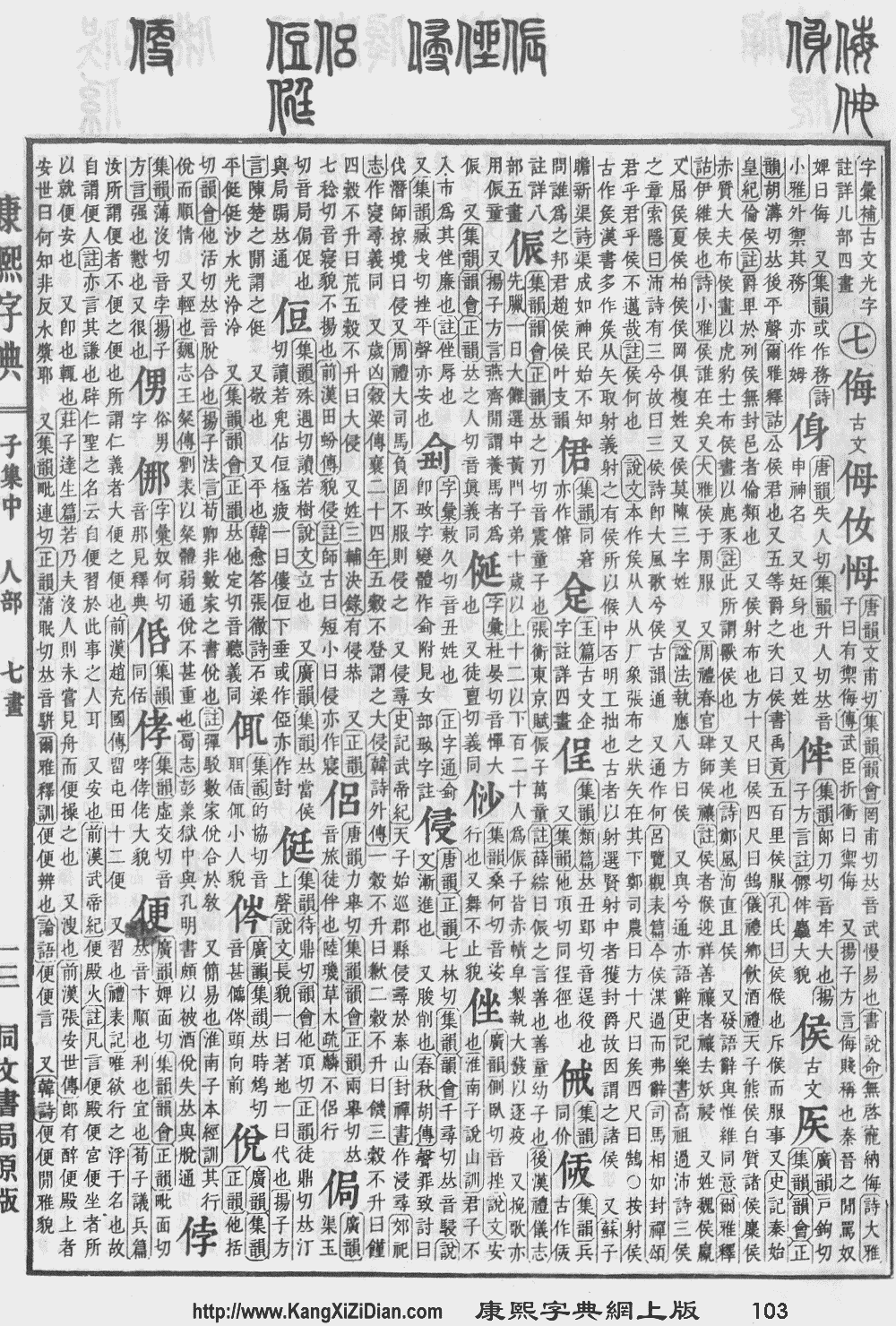
- Kangxi Dictionary: page 103, character 7
- Dai Kanwa Jiten: character 633
- Dae Jaweon: page 218, character 20
- Hanyu Da Zidian (first edition): volume 1, page 167, character 1
- Unihan data for U+4FAF
Chinese
| trad. | 侯 | |
|---|---|---|
| simp. # | 侯 | |
| 2nd round simp. | 𫶬 | |
| alternative forms | 矦 ancient form 𥎦 ancient form 𬾗 historical variant 𬾃 historical variant | |
Glyph origin
| Historical forms of the character 侯 | |||||||||||||||||||||||||||||||||||||||||||||||||||||||||||||||||||||||||||||||||||||||||||||||||||||||||||||||||||||||||||||||||||||||||||||||||||||||||||||||||||||||||||||||||||||||||||||||||||||||||
|---|---|---|---|---|---|---|---|---|---|---|---|---|---|---|---|---|---|---|---|---|---|---|---|---|---|---|---|---|---|---|---|---|---|---|---|---|---|---|---|---|---|---|---|---|---|---|---|---|---|---|---|---|---|---|---|---|---|---|---|---|---|---|---|---|---|---|---|---|---|---|---|---|---|---|---|---|---|---|---|---|---|---|---|---|---|---|---|---|---|---|---|---|---|---|---|---|---|---|---|---|---|---|---|---|---|---|---|---|---|---|---|---|---|---|---|---|---|---|---|---|---|---|---|---|---|---|---|---|---|---|---|---|---|---|---|---|---|---|---|---|---|---|---|---|---|---|---|---|---|---|---|---|---|---|---|---|---|---|---|---|---|---|---|---|---|---|---|---|---|---|---|---|---|---|---|---|---|---|---|---|---|---|---|---|---|---|---|---|---|---|---|---|---|---|---|---|---|---|---|---|---|
| Shang | Western Zhou | Shuowen Jiezi (compiled in Han) | Liushutong (compiled in Ming) | ||||||||||||||||||||||||||||||||||||||||||||||||||||||||||||||||||||||||||||||||||||||||||||||||||||||||||||||||||||||||||||||||||||||||||||||||||||||||||||||||||||||||||||||||||||||||||||||||||||||
| Oracle bone script | Bronze inscriptions | Small seal script | Transcribed ancient scripts | ||||||||||||||||||||||||||||||||||||||||||||||||||||||||||||||||||||||||||||||||||||||||||||||||||||||||||||||||||||||||||||||||||||||||||||||||||||||||||||||||||||||||||||||||||||||||||||||||||||||
 |
 |
 |
 | ||||||||||||||||||||||||||||||||||||||||||||||||||||||||||||||||||||||||||||||||||||||||||||||||||||||||||||||||||||||||||||||||||||||||||||||||||||||||||||||||||||||||||||||||||||||||||||||||||||||
|||
|
References: Mostly from Richard Sears' Chinese Etymology site (authorisation),
| |||||||||||||||||||||||||||||||||||||||||||||||||||||||||||||||||||||||||||||||||||||||||||||||||||||||||||||||||||||||||||||||||||||||||||||||||||||||||||||||||||||||||||||||||||||||||||||||||||||||||


Pictogram (象形) – a target for arrows.
Etymology
- "target" > "prince, marquis"
- 侯 (OC *ɡoː)'s connection to archery is noted by Schuessler (2007), Theobald (2017), Goldin (2021), etc. Goldin further relates it to 鍭 (OC *ɡoː, *ɡoːs, “arrow with metal tip”), which Schuessler instead relates to 后 (OC *ɡoːʔ, *ɡoːs).
- Schuessler (2007) proposes an Austroasiatic etymology, comparing 侯 (OC *ɡoː) to Khmer គាស់ (kŏəh, “to raise (a crossbow) with a view to aiming”), Khmer [script needed] (kpoḥ, “to be raised up, clearly visible”), & Khmer [script needed] (goḥ, “to hit (squarely)”).
- When meaning "target > prince, marquis", possibly distinct from 后 (OC *ɡoːʔ, *ɡoːs, “(head >) ruler > queen”) (Schuessler, 2007; Goldin, 2021).
- Its derivatives, from sense "target (n.) > to target (v.)", are 候 (OC *ɡoːs) & 觀 (OC *koːn, *koːns), both meaning "to watch" (Schuessler, 2007); contra Lau (1999), who thinks sense "to watch" to be fundamental and "target; lord, marquis" to be derivatives..
- "to be; to have"
- Austroasiatic (Schuessler, 2007). Compare Proto-Vietic *kɔːʔ (“to have, to be”) and Proto-Monic *gooʔ (“to get, to possess”); compare also Jingpho gu³¹ (“to have”).
Pronunciation 1
Definitions
侯
- marquis; lord
- 王者之制:祿爵,公、侯、伯、子、男,凡五等。 [Classical Chinese, trad.]
- From: The Book of Rites, c. 4th – 2nd century BCE
- Wángzhě zhī zhì: lùjué, gōng, hóu, bó, zǐ, nán, fán wǔděng. [Pinyin]
- According to the regulations of emolument and rank framed by the kings, there were the duke; the marquis; the earl; the count; and the baron - in all, five gradations (of rank).
王者之制:禄爵,公、侯、伯、子、男,凡五等。 [Classical Chinese, simp.]
- (obsolete) target
- 終日射侯 [Pre-Classical Chinese, trad.]
- From: The Classic of Poetry, c. 11th – 7th centuries BCE, translated based on James Legge's version
- Zhōngrì shè hóu [Pinyin]
- Shooting all day at the target
终日射侯 [Pre-Classical Chinese, simp.]
- (obsolete) to be, to have
- 山有嘉卉、侯栗侯梅。 [Pre-Classical Chinese, trad. and simp.]
- From: The Classic of Poetry, c. 11th – 7th centuries BCE, translated based on James Legge's version
- Shān yǒu jiāhuì, hóu lì hóu méi. [Pinyin]
- On the mountains are fine trees, - there are chestnut trees and there are plum trees.
- a surname
- 侯孝賢/侯孝贤 ― Hóu Xiàoxián ― Hou Hsiao-hsien (Taiwanese film director)
Compounds
- 三侯之章
- 五侯鯖/五侯鲭
- 侯伯
- 侯景之亂/侯景之乱
- 侯服
- 侯服玉食
- 侯栗
- 侯營/侯营 (Hóuyíng)
- 侯爵 (hóujué)
- 侯王
- 侯生
- 侯甸
- 侯白
- 侯萬戶/侯万户
- 侯門/侯门
- 侯門如海/侯门如海
- 侯馬盟書/侯马盟书
- 列侯 (lièhóu)
- 博望侯
- 即墨侯
- 名號侯/名号侯
- 君侯 (jūnhóu)
- 夏侯 (Xiàhóu)
- 宜侯夨簋
- 富比王侯
- 封侯
- 封侯拜相
- 封侯萬里
- 封侯賜爵/封侯赐爵
- 射侯 (shèhóu)
- 彭侯
- 徹侯/彻侯
- 拜將封侯/拜将封侯
- 拜相封侯
- 摩侯羅/摩侯罗
- 故侯
- 故侯瓜
- 敝屣王侯
- 淮陰侯/淮阴侯
- 漢壽亭侯/汉寿亭侯
- 王侯 (wánghóu)
- 王侯將相/王侯将相 (wánghóujiàngxiàng)
- 留侯
- 留侯論/留侯论
- 百里侯
- 萬戶侯/万户侯 (wànhùhóu)
- 萬里侯
- 萬里封侯
- 粉侯
- 縣侯/县侯
- 蔡侯紙/蔡侯纸
- 蕃侯
- 褒成侯
- 覓封侯/觅封侯
- 談笑封侯/谈笑封侯
- 諸侯/诸侯 (zhūhóu)
- 邑侯
- 郡侯
- 鄉侯/乡侯
- 關內侯/关内侯
- 陽侯/阳侯
- 陽侯之患/阳侯之患
- 隋侯之珠
- 隋侯明月
- 隨侯之珠/随侯之珠
- 雍齒封侯
- 魏文侯
Pronunciation 2
Japanese
Korean
Etymology
From Middle Chinese 侯 (MC huw).
| Historical readings |
|---|
|
Pronunciation
- (SK Standard/Seoul) IPA(key): [ɸʷu]
- Phonetic hangul: [후]
Compounds
Vietnamese
Han character
- This term needs a translation to English. Please help out and add a translation, then remove the text
{{rfdef}}.