孻
| ||||||||
Translingual
Han character
孻 (Kangxi radical 39, 子+14, 17 strokes, cangjie input 弓木中一廿 (NDLMT), four-corner 15417, composition ⿰子盡)
References
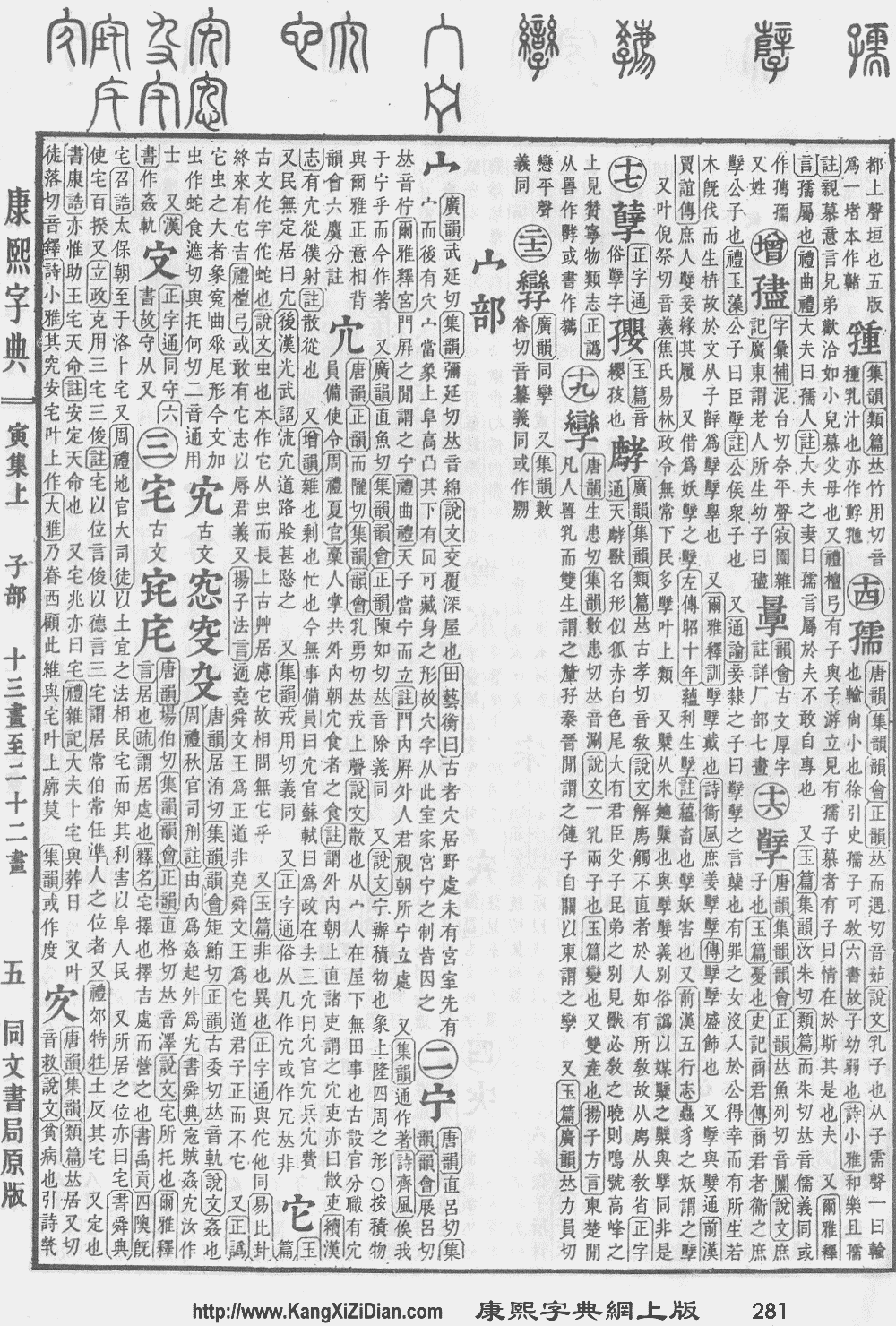
- Kangxi Dictionary: page 281, character 3
- Dai Kanwa Jiten: character 7043
- Dae Jaweon: page 551, character 4
- Hanyu Da Zidian (first edition): volume 2, page 1020, character 4
- Unihan data for U+5B7B
Chinese
Glyph origin
Ideogrammic compound (會意/会意) : 子 (“son”) + 盡 (“end; finish”).
Attested since the Ming era, in 《菽園雜記》 by w:zh:陸容:
- 廣東有“孻”字,音柰平聲,老年所生幼子。 [Classical Chinese, trad.]
- From: 明・陸容《菽園雜記》
- Guǎngdōng yǒu “孻” zì, yīn nài píngshēng, lǎonián suǒ shēng yòuzǐ. [Pinyin]
- In Guangdong, there is 孻 character, read as 柰 (MC najH) with level tone, it means «the youngest son of an old parent» [i.e. the last son].
广东有“𡥧”字,音柰平声,老年所生幼子。 [Classical Chinese, simp.]
Pronunciation
Japanese
Kanji
孻
- This term needs a translation to English. Please help out and add a translation, then remove the text
{{rfdef}}.
This article is issued from Wiktionary. The text is licensed under Creative Commons - Attribution - Sharealike. Additional terms may apply for the media files.