有
| ||||||||
| ||||||||
 | ||||||||
Translingual
| Stroke order (Japan) | |||
|---|---|---|---|
 | |||
| Stroke order (Chinese) | |||
|---|---|---|---|
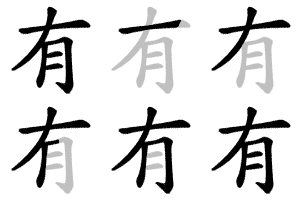 | |||
| Stroke order (Japan) | |||
|---|---|---|---|
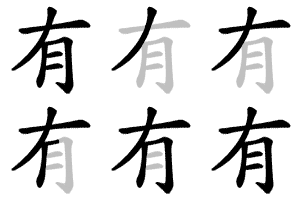 | |||
Han character
有 (Kangxi radical 74, 月+2, 6 strokes, cangjie input 大月 (KB), four-corner 40227, composition ⿸𠂇月)
Derived characters
Usage notes
Despite the technically-correct radical being ⺼ (“meat”) as described in this entry’s glyph origin section, 有 is associated with the radical 月 (“moon”) in dictionaries for historical reasons and is likewise written as if it contained the 月 radical, i.e. it has 二 instead of 冫 inside of 冂.
References
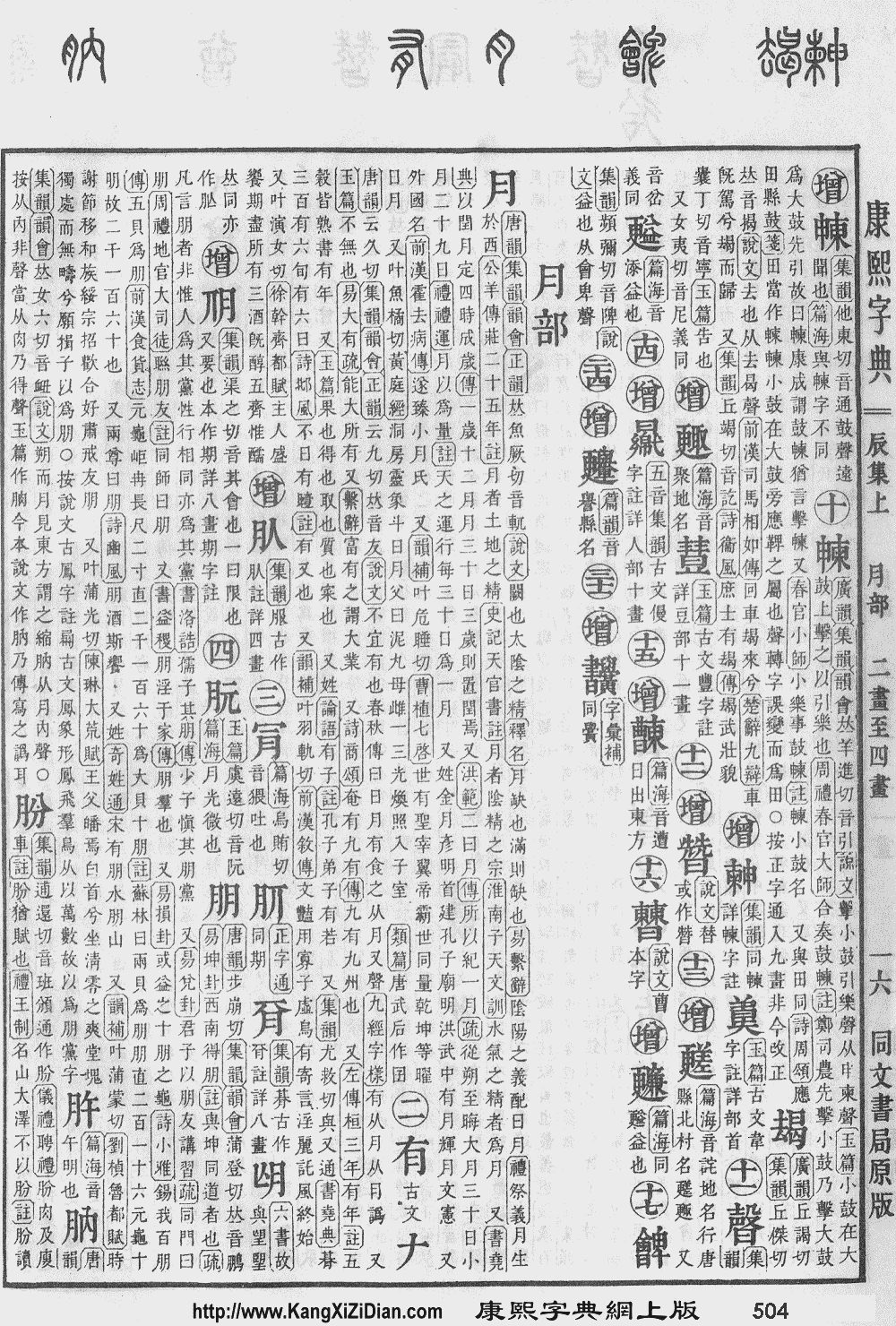
- Kangxi Dictionary: page 504, character 20
- Dai Kanwa Jiten: character 14332
- Dae Jaweon: page 880, character 2
- Hanyu Da Zidian (first edition): volume 3, page 2041, character 5
- Unihan data for U+6709
Chinese
| trad. | 有 | |
|---|---|---|
| simp. # | 有 | |
| alternative forms | 𠂇 𢇔 𪠥 | |
Glyph origin
| Historical forms of the character 有 | ||||
|---|---|---|---|---|
| Shang | Western Zhou | Warring States | Shuowen Jiezi (compiled in Han) | Liushutong (compiled in Ming) |
| Oracle bone script | Bronze inscriptions | Chu slip and silk script | Small seal script | Transcribed ancient scripts |
 |
 |
 |
 |
 |
Ideogrammic compound (會意/会意) and phono-semantic compound (形聲/形声, OC *ɢʷɯʔ) : phonetic 又 (OC *ɢʷɯs, “hand”) + semantic ⺼ (“meat”) – a hand holding meat, hence “in possession of”. The hand shape has been significantly abstracted; compare 右 (OC *ɢʷɯʔ, *ɢʷɯs).
Alternatively, the graph was perhaps originally intended for the word 醢 (OC *qʰɯːʔ, “minced pickled meat”), which also has the 又 (OC *ɢʷɯs) element as phonetic.
Shuowen Jiezi and other ancient sources have erroneously analyzed the character as a phono-semantic compound (形聲/形声, OC *ɢʷɯʔ) : phonetic 又 (OC *ɢʷɯs) + semantic 月 (“moon”). Shuowen Jiezi defines 有 as "不宜有也" ("[to have something that] not should be had"), citing the Spring and Autumn Annals (春秋傳): "日月有食之" ("There are solar and lunar eclipses"). As eclipses were not auspicious to the Chinese, they were "something that should not be happening". The 月 component alludes to the inauspicious lunar eclipse.
Pronunciation 1
Definitions
有
- to have; to possess (when a subject is present)
- there is; to exist (when a subject is absent)
- (euphemistic) to be pregnant with a child
- abundant; affluent
- many; much; (of time) long; (of age) old
- some (indefinite pronoun)
- (literary or dialectal) Placed before a verb to emphasize that the action has been done.
- a surname
- 有子 ― Yǒuzǐ ― Philosopher You
- A meaningless prefix.
- 有夏 ― yǒuxià ― China
- (Hokkien, Teochew) Particle used after a verb to indicate accomplishment or accomplishability of a goal.
Usage notes
Synonyms
- (to exist):
- (particle used after a verb to indicate accomplishment):
| Variety | Location | Words |
|---|---|---|
| Formal (Written Standard Chinese) | 得到 | |
| Mandarin | Taiwan | 得到 |
| Malaysia | 得到 | |
| Singapore | 得到 | |
| Cantonese | Guangzhou | 得到 |
| Hong Kong | 得到 | |
| Kuala Lumpur (Guangfu) | 得到 | |
| Penang (Guangfu) | 得到 | |
| Singapore (Guangfu) | 得到 | |
| Southern Min | Xiamen | 有 |
| Taipei | 有 GT | |
| Penang (Hokkien) | 有 | |
| Singapore (Hokkien) | 有 | |
| Jieyang | 有 | |
| Singapore (Teochew) | 有 | |
| Note | GT - General Taiwanese (no specific region identified) | |
Descendants
- → English: got (Singapore English) (semantic loan)
Compounds
- 一人有慶,兆民賴之/一人有庆,兆民赖之
- 一無所有/一无所有 (yīwúsuǒyǒu)
- 一爭兩醜,一讓兩有/一争两丑,一让两有
- 三人行必有我師/三人行必有我师
- 上天有好生之德
- 丈夫有淚不輕彈/丈夫有泪不轻弹 (zhàngfū yǒu lèi bù qīng tán)
- 三年有成
- 上有天堂,下有蘇杭/上有天堂,下有苏杭 (shàng yǒu tiāntáng, xià yǒu Sūháng)
- 上有政策,下有對策/上有政策,下有对策 (shàng yǒu zhèngcè, xià yǒu duìcè)
- 丈母娘看女婿,越看越有趣
- 三生有幸 (sānshēngyǒuxìng)
- 下筆如有神/下笔如有神 (xiàbǐ rú yǒu shén)
- 下筆有神/下笔有神
- 不可無一,不可有二/不可无一,不可有二 (bùkě wú yī, bùkě yǒu èr)
- 不孝有三,無後為大/不孝有三,无后为大 (bùxiào yǒu sān, wú hòu wéi dà)
- 不得有誤/不得有误
- 不得有違/不得有违
- 不是沒有/不是没有
- 不有 (bùyǒu)
- 不求有功,但求無過/不求有功,但求无过 (bùqiú yǒugōng, dànqiú wúguò)
- 不知人間有羞恥事/不知人间有羞耻事 (bùzhī rénjiān yǒu xiūchǐ shì)
- 不論天有眼,但管地無皮/不论天有眼,但管地无皮
- 世上無難事,只怕有心人/世上无难事,只怕有心人
- 丘中有麻
- 中谷有蓷
- 久有存心
- 九有
- 亂中有序/乱中有序 (luànzhōngyǒuxù)
- 事不三思,終有後悔/事不三思,终有后悔
- 事不有餘/事不有余
- 事出有因 (shìchūyǒuyīn)
- 事有鬥巧,物有故然/事有斗巧,物有故然
- 二虎相鬥,必有一傷/二虎相斗,必有一伤
- 井井有條/井井有条 (jǐngjǐngyǒutiáo)
- 井井有理
- 井然有序 (jǐngrányǒuxù)
- 互通有無/互通有无
- 亙古未有/亘古未有 (gèngǔwèiyǒu)
- 亢龍有悔/亢龙有悔
- 享有 (xiǎngyǒu)
- 人各有志 (rén gè yǒuzhì)
- 人外有人,天外有天 (rén wài yǒu rén, tiān wài yǒu tiān)
- 人有千算,天有一算
- 人有失手,馬有亂蹄/人有失手,马有乱蹄
- 人有旦夕禍福/人有旦夕祸福
- 人有臉樹有皮/人有脸树有皮
- 人無害虎心,虎有傷人意/人无害虎心,虎有伤人意
- 人無遠慮,必有近憂/人无远虑,必有近忧 (rén wú yuǎnlǜ, bì yǒu jìnyōu)
- 今朝有酒今朝醉 (jīnzhāo yǒu jiǔ jīnzhāo zuì)
- 付之烏有/付之乌有
- 他無所有/他无所有
- 作作有芒
- 何功之有
- 但有 (dànyǒu)
- 何有
- 佔有/占有 (zhànyǒu)
- 你有千條妙計,我有一定之規/你有千条妙计,我有一定之规
- 佔有權/占有权 (zhànyǒuquán)
- 佔為己有/占为己有 (zhànwéijǐyǒu)
- 何罪之有 (hézuìzhīyǒu)
- 使君有婦/使君有妇
- 保有 (bǎoyǒu)
- 信而有徵/信而有征 (xìn'éryǒuzhēng)
- 倘有
- 傻人有傻福 (shǎ rén yǒu shǎ fú)
- 僅有/仅有 (jǐnyǒu)
- 光有
- 兒孫自有兒孫福/儿孙自有儿孙福 (érsūn zì yǒu érsūn fú)
- 兩虎相鬥,必有一傷/两虎相斗,必有一伤
- 公同共有
- 公有 (gōngyǒu)
- 公有制 (gōngyǒuzhì)
- 公有土地
- 公有林
- 公有財產/公有财产 (gōngyǒu cáichǎn)
- 公有財貨/公有财货
- 公說公有理,婆說婆有理/公说公有理,婆说婆有理 (gōng shuō gōng yǒulǐ, pó shuō pó yǒulǐ)
- 共有 (gòngyǒu)
- 共有人
- 其來有自/其来有自
- 具有 (jùyǒu)
- 兼而有之 (jiān'éryǒuzhī)
- 冉有
- 冤各有頭,債各有主/冤各有头,债各有主
- 冤有頭,債有主/冤有头,债有主 (yuān yǒu tóu, zhài yǒu zhǔ)
- 凹凸有致 (āotūyǒuzhì)
- 出有入無/出有入无
- 出言有序
- 別有天地/别有天地 (biéyǒutiāndì)
- 別有居心/别有居心
- 別有心肝/别有心肝
- 別有心腸/别有心肠
- 別有洞天/别有洞天 (biéyǒudòngtiān)
- 別有用心/别有用心 (biéyǒuyòngxīn)
- 別有肺腸/别有肺肠
- 別有風味/别有风味 (biéyǒufēngwèi)
- 別致有趣/别致有趣
- 前所未有 (qiánsuǒwèiyǒu)
- 力有未逮 (lìyǒuwèidài)
- 勿藥有喜/勿药有喜
- 匏有苦葉/匏有苦叶
- 化為烏有/化为乌有 (huàwéiwūyǒu)
- 匹夫有責/匹夫有责
- 十個指頭有長短/十个指头有长短
- 十室之邑,必有忠信
- 十指有長短/十指有长短
- 十步之內,必有芳草/十步之内,必有芳草
- 千里餽糧,士有飢色/千里馈粮,士有饥色
- 卓有成效 (zhuóyǒuchéngxiào)
- 南山有臺/南山有台
- 南有嘉魚/南有嘉鱼
- 原有 (yuányǒu)
- 受之有愧
- 古今少有
- 古今有一無二/古今有一无二
- 只有 (zhǐyǒu)
- 另有 (lìngyǒu)
- 另有下文
- 只有出的氣,沒有進的氣/只有出的气,没有进的气
- 可有可無/可有可无 (kěyǒukěwú)
- 只知有己,不知有人
- 叫花子沒有猢猻/叫花子没有猢狲
- 吉人自有天報/吉人自有天报
- 吉人自有天相 (jírén zìyǒu tiānxiàng)
- 各有千秋 (gèyǒuqiānqiū)
- 各有各的
- 各有所長/各有所长 (gèyǒusuǒcháng)
- 合當有事/合当有事
- 名花有主 (mínghuāyǒuzhǔ)
- 合該有事/合该有事
- 含有 (hányǒu)
- 唯有 (wéiyǒu)
- 善惡到頭終有報/善恶到头终有报
- 嘖有煩言/啧有烦言
- 固有 (gùyǒu)
- 固有國籍/固有国籍
- 固有文化
- 固有道德
- 國家興亡,匹夫有責/国家兴亡,匹夫有责
- 國有/国有 (guóyǒu)
- 國有企業/国有企业
- 國有國法,家有家規/国有国法,家有家规 (guó yǒu guófǎ, jiā yǒu jiāguī)
- 國有林/国有林
- 國有經濟/国有经济
- 國有股/国有股 (guóyǒugǔ)
- 國有財產/国有财产
- 國有資產/国有资产 (guóyǒu zīchǎn)
- 園有桃/园有桃
- 土地國有/土地国有
- 土地所有權/土地所有权
- 土地所有權狀/土地所有权状
- 地下有知
- 大有 (dàyǒu)
- 大有之年
- 大有人在 (dàyǒurénzài)
- 大有作為/大有作为 (dàyǒuzuòwéi)
- 大有來頭/大有来头
- 大有助益
- 大有可為/大有可为 (dàyǒukěwéi)
- 大有可觀/大有可观
- 大有斬獲/大有斩获
- 大有為/大有为
- 大有逕庭/大有迳庭
- 大難不死,必有厚祿/大难不死,必有厚禄
- 大難不死,必有厚福/大难不死,必有厚福
- 大難不死,必有後祿/大难不死,必有后禄
- 大難不死,必有後福/大难不死,必有后福 (dànàn bù sǐ, bì yǒu hòufú)
- 大風吹倒梧桐樹,自有旁人說長短/大风吹倒梧桐树,自有旁人说长短
- 天上少有,地下無雙/天上少有,地下无双
- 天下沒有不散的筵席/天下没有不散的筵席 (tiānxià méiyǒu bù sàn de yánxí)
- 天下沒有白吃的午餐/天下没有白吃的午餐 (tiānxià méiyǒu báichī de wǔcān)
- 天下無難事,只怕有心人/天下无难事,只怕有心人 (tiānxià wú nánshì, zhǐpà yǒuxīnrén)
- 天下興亡,匹夫有責/天下兴亡,匹夫有责 (tiānxià xīngwáng, pǐfū yǒuzé)
- 天命有歸/天命有归
- 天塌下來,自有長的撐住/天塌下来,自有长的撑住
- 天塌了有地接著
- 天有不測風雲/天有不测风云 (tiān yǒu bùcè fēngyún)
- 天生我材必有用 (tiān shēng wǒ cái bì yǒu yòng)
- 天若有情天亦老 (tiān ruò yǒuqíng tiān yì lǎo)
- 奮發有為/奋发有为
- 女婿有半子之勞/女婿有半子之劳
- 好心有好報/好心有好报
- 如有所失
- 如有神助
- 子虛烏有/子虚乌有 (zǐxū-wūyǒu)
- 孔武有力 (kǒngwǔyǒulì)
- 學問有素/学问有素
- 學有所用/学有所用
- 學業有成/学业有成
- 害人之心不可有,防人之心不可無/害人之心不可有,防人之心不可无 (hàirén zhī xīn bùkě yǒu, fángrén zhī xīn bùkě wú)
- 家家有本難念的經/家家有本难念的经 (jiājiā yǒu běn nán niàn de jīng)
- 家有千口,主事一人
- 家有千貫,不如日進分文/家有千贯,不如日进分文
- 家有千金,不如日進分文/家有千金,不如日进分文
- 家有患難,鄰保相助/家有患难,邻保相助
- 家有敝帚,享之千金
- 家門有幸/家门有幸
- 富有 (fùyǒu)
- 富貴有餘/富贵有余
- 寧可信其有,不可信其無/宁可信其有,不可信其无 (níngkě xìn qíyǒu, bùbùkě xìn qí wú)
- 寧可無了有,不可有了無/宁可无了有,不可有了无
- 實繁有徒/实繁有徒
- 將在外,君命有所不受/将在外,君命有所不受
- 專有名詞/专有名词 (zhuānyǒu míngcí)
- 小有小難,大有大難/小有小难,大有大难
- 少有 (shǎoyǒu)
- 尚有可為/尚有可为
- 尤有甚者
- 尺有所短,寸有所長/尺有所短,寸有所长 (chǐ yǒu suǒ duǎn, cùn yǒu suǒ cháng)
- 屬垣有耳/属垣有耳
- 山人自有妙計/山人自有妙计
- 山有扶蘇/山有扶苏
- 山有樞/山有枢
- 崇有論/崇有论
- 工業所有權/工业所有权
- 左宜右有
- 希有 (xīyǒu)
- 師出有名/师出有名 (shīchūyǒumíng)
- 常將有日思無日,莫待無時思有時/常将有日思无日,莫待无时思有时
- 年年有餘/年年有余 (niánniányǒuyú)
- 年輕有為/年轻有为
- 強中更有強中手/强中更有强中手
- 強中自有強中手/强中自有强中手 (qiángzhōngzìyǒuqiángzhōngshǒu)
- 強有力/强有力 (qiángyǒulì)
- 彬彬有禮/彬彬有礼 (bīnbīnyǒulǐ)
- 後會有期/后会有期 (hòuhuìyǒuqī)
- 後繼有人/后继有人
- 徒有其名 (túyǒuqímíng)
- 徒有其表
- 徒有虛名/徒有虚名 (túyǒuxūmíng)
- 得未嘗有/得未尝有
- 得未曾有 (déwèicéngyǒu)
- 心中有數/心中有数 (xīnzhōngyǒushù)
- 心有靈犀/心有灵犀 (xīnyǒulíngxī)
- 心有靈犀一點通/心有灵犀一点通 (xīn yǒu língxī yīdiǎn tōng)
- 心有餘悸/心有余悸 (xīnyǒuyújì)
- 心有餘而力不足/心有余而力不足 (xīn yǒuyú ér lì bùzú)
- 心裡有個譜/心里有个谱
- 心裡有數/心里有数 (xīnliyǒushù)
- 忙中有錯/忙中有错
- 念念有詞/念念有词
- 急得有如熱鍋中的螞蟻/急得有如热锅中的蚂蚁
- 急水也有回頭浪/急水也有回头浪
- 恢恢有餘/恢恢有余
- 惡人自有惡人磨/恶人自有恶人磨
- 惡有/恶有
- 情有可原 (qíngyǒukěyuán)
- 惡有惡報/恶有恶报 (èyǒu'èbào)
- 情有獨鍾/情有独钟 (qíngyǒudúzhōng)
- 惘若有失
- 應有盡有/应有尽有 (yīngyǒujìnyǒu)
- 懷有鬼胎/怀有鬼胎
- 成事不足,敗事有餘/成事不足,败事有余 (chéngshì bùzú, bàishì yǒuyú)
- 或有
- 戲法人人會變,巧妙各有不同/戏法人人会变,巧妙各有不同
- 戶有餘糧/户有余粮
- 所在多有
- 所有 (suǒyǒu)
- 所有人 (suǒyǒurén)
- 所有格 (suǒyǒugé)
- 所有權/所有权 (suǒyǒuquán)
- 所有權狀/所有权状
- 持之有故 (chízhīyǒugù)
- 振作有為/振作有为
- 振振有詞/振振有词 (zhènzhènyǒucí)
- 措置有方
- 握有
- 損有餘,補不足/损有余,补不足
- 摽有梅
- 摯而有別/挚而有别
- 擁有/拥有 (yōngyǒu)
- 據有/据有 (jùyǒu)
- 據為己有/据为己有 (jùwéijǐyǒu)
- 擲地有聲/掷地有声
- 攑頭三尺有神明/𫽥头三尺有神明 (gia̍h thâu saⁿ chhioh ū sîn-bîng) (Min Nan)
- 收歸國有/收归国有
- 故有
- 教子有方
- 敗棋有勝著/败棋有胜著
- 文王有聲/文王有声
- 既作生人,便有生理
- 既有 (jìyǒu)
- 既有今日,何必當初/既有今日,何必当初 (jìyǒu jīnrì hébì dāngchū)
- 日出萬言,必有一傷/日出万言,必有一伤
- 日有所思,夜有所夢/日有所思,夜有所梦 (rì yǒu suǒ sī, yè yǒu suǒ mèng)
- 日起有功
- 早起的鳥兒有蟲吃/早起的鸟儿有虫吃 (zǎoqǐ de niǎor yǒu chóng chī)
- 昊天有成命
- 明知山有虎,偏向虎山行 (míngzhī shān yǒu hǔ, piān xiàng hǔ shān xíng)
- 明知山有虎,故作採樵人/明知山有虎,故作采樵人
- 是罐子也有兩個耳朵/是罐子也有两个耳朵
- 智者千慮,必有一失/智者千虑,必有一失 (zhìzhěqiānlǜ, bìyǒuyīshī)
- 曠古未有/旷古未有
- 書中自有千鍾粟/书中自有千钟粟
- 書中自有顏如玉/书中自有颜如玉 (shū zhōng zì yǒu yán rú yù)
- 書中自有黃金屋/书中自有黄金屋 (shū zhōng zì yǒu huángjīn wū)
- 書山有路勤為徑,學海無涯苦作舟/书山有路勤为径,学海无涯苦作舟
- 有……有……
- 有……無……/有……无……
- 有一分心,盡一分力/有一分心,尽一分力
- 有一句說一句/有一句说一句
- 有一套 (yǒu yītào)
- 有一得一
- 有一手 (yǒu yīshǒu)
- 有一手兒/有一手儿 (yǒu yīshour)
- 有一搭沒一搭/有一搭没一搭 (yǒu yīdā méi yīdā)
- 有一步,沒一步/有一步,没一步
- 有一無二/有一无二
- 有一腿 (yǒu yītuǐ)
- 有一頓,沒一頓/有一顿,没一顿 (yǒu yīdùn, méi yīdùn)
- 有了 (yǒu le)
- 有了人家
- 有了存孝,不顯彥章/有了存孝,不显彦章
- 有事 (yǒushì)
- 有些 (yǒuxiē)
- 有人 (yǒurén)
- 有人家
- 有人緣/有人缘 (yǒurényuán)
- 有人緣兒/有人缘儿
- 有何不可 (yǒuhébùkě)
- 有你沒我/有你没我
- 有作為/有作为
- 有你的 (yǒu nǐ de)
- 有來/有来
- 有例不滅,無例不興/有例不灭,无例不兴
- 有例可援
- 有來有去/有来有去
- 有來有往/有来有往 (yǒuláiyǒuwǎng)
- 有來頭/有来头
- 有信兒/有信儿
- 有個地洞鑽了下去/有个地洞钻了下去
- 有個好歹/有个好歹
- 有個屁用/有个屁用
- 有個數兒/有个数儿
- 有借有還,再借不難/有借有还,再借不难
- 有個說兒/有个说儿
- 有偏
- 有偏
- 有備無患/有备无患 (yǒubèiwúhuàn)
- 有備而來/有备而来 (yǒubèi'érlái)
- 有傷風化/有伤风化 (yǒushāngfēnghuà)
- 有價/有价 (yǒujià)
- 有價證券/有价证券 (yǒujià zhèngquàn)
- 有儘有讓/有尽有让
- 有償/有偿 (yǒucháng)
- 有償契約/有偿契约
- 有償行為/有偿行为
- 有光紙/有光纸
- 有兒靠兒,無兒靠婿/有儿靠儿,无儿靠婿
- 有兩下子/有两下子 (yǒu liǎngxiàzi)
- 有兩把刷子/有两把刷子 (yǒu liǎng bǎ shuāzi)
- 有兩日/有两日
- 有典有則/有典有则
- 有其父必有其子 (yǒu qí fù bì yǒu qí zǐ)
- 有冤報冤,有仇報仇/有冤报冤,有仇报仇
- 有出入
- 有出息 (yǒu chūxi)
- 有分
- 有分兒/有分儿
- 有分寸
- 有分教
- 有利 (yǒulì)
- 有利可圖/有利可图 (yǒulìkětú)
- 有刮劃,沒是處/有刮划,没是处
- 有則改之,無則加勉/有则改之,无则加勉 (yǒu zé gǎi zhī, wú zé jiā miǎn)
- 有力 (yǒulì)
- 有功 (yǒugōng)
- 有加無已/有加无已
- 有助 (yǒuzhù)
- 有勁/有劲 (yǒujìn)
- 有勇無謀/有勇无谋 (yǒuyǒngwúmóu)
- 有勞/有劳 (yǒuláo)
- 有勞有逸/有劳有逸
- 有勾當/有勾当
- 有北
- 有南北
- 有口無心/有口无心 (yǒukǒuwúxīn)
- 有口無行/有口无行
- 有口皆碑 (yǒukǒujiēbēi)
- 有口難分/有口难分 (yǒukǒunánfēn)
- 有口難言/有口难言 (yǒukǒunányán)
- 有口難辨/有口难辨
- 有司 (yǒusī)
- 有史以來/有史以来 (yǒushǐyǐlái)
- 有司徹/有司彻
- 有名 (yǒumíng)
- 有名亡實/有名亡实
- 有名契約/有名契约
- 有名有姓 (yǒumíngyǒuxìng)
- 有名氣/有名气
- 有名無實/有名无实 (yǒumíngwúshí)
- 有味 (yǒuwèi)
- 有周
- 有命
- 有味兒/有味儿
- 有味電影/有味电影
- 有哏
- 有喜 (yǒuxǐ)
- 有因
- 有國難投/有国难投
- 有增無損/有增无损
- 有增無減/有增无减
- 有夏
- 有夠/有够 (yǒugòu)
- 有夫之婦/有夫之妇 (yǒufūzhīfù)
- 有天沒日/有天没日
- 有天沒日頭/有天没日头
- 有天無日/有天无日
- 有天無日頭/有天无日头
- 有失體統/有失体统
- 有奇 (yǒujī)
- 有奔頭/有奔头
- 有女同車/有女同车
- 有女懷春/有女怀春
- 有奶便是娘 (yǒu nǎi biànshì niáng)
- 有如 (yǒurú)
- 有好兒/有好儿
- 有好有壞/有好有坏
- 有如水火
- 有始有卒
- 有始有終/有始有终 (yǒushǐyǒuzhōng)
- 有始無終/有始无终 (yǒushǐwúzhōng)
- 有娀
- 有娠
- 有孔蟲/有孔虫
- 有孝 (yǒuxiào)
- 有守
- 有客
- 有室
- 有家
- 有害 (yǒuhài)
- 有容乃大
- 有害無利/有害无利
- 有家難奔/有家难奔
- 有尿小子
- 有屈無伸/有屈无伸
- 有山無木,有水無魚/有山无木,有水无鱼
- 有巢氏
- 有工夫
- 有帳/有帐
- 有年 (yǒunián)
- 有年紀/有年纪
- 有幸 (yǒuxìng)
- 有底 (yǒudǐ)
- 有底稿
- 有庳 (Yǒubì)
- 有張沒智/有张没智
- 有形 (yǒuxíng)
- 有形戰力/有形战力
- 有形損耗/有形损耗
- 有形資本/有形资本
- 有形資產/有形资产
- 有影 (yû-yáng)
- 有征無戰/有征无战
- 有待 (yǒudài)
- 有後/有后
- 有得
- 有得有失
- 有德
- 有徵/有征
- 有心 (yǒuxīn)
- 有心人 (yǒuxīnrén)
- 有心無力/有心无力 (yǒuxīnwúlì)
- 有心眼兒/有心眼儿
- 有志 (yǒuzhì)
- 有志之士 (yǒuzhìzhīshì)
- 有志者事竟成 (yǒu zhì zhě shì jìng chéng)
- 有志難酬/有志难酬
- 有志竟成
- 有性生殖 (yǒuxìng shēngzhí)
- 有性繁殖
- 有性雜交/有性杂交
- 有恥/有耻
- 有恆/有恒 (yǒuhéng)
- 有恙
- 有恃無恐/有恃无恐 (yǒushìwúkǒng)
- 有情 (yǒuqíng)
- 有情世間/有情世间
- 有感
- 有意 (yǒuyì)
- 有感地震
- 有意思 (yǒuyìsi)
- 有意無意/有意无意 (yǒuyìwúyì)
- 有感而發/有感而发 (yǒugǎn'érfā)
- 有意識/有意识 (yǒuyìshí)
- 有感電影/有感电影
- 有想頭/有想头
- 有憑有據/有凭有据
- 有成 (yǒuchéng)
- 有我無人/有我无人
- 有戲/有戏 (yǒuxì)
- 有戲看/有戏看
- 有所不知 (yǒusuǒ bùzhī)
- 有所作為/有所作为
- 有所思
- 有所顧忌/有所顾忌
- 有才 (yǒucái)
- 有才無命/有才无命
- 有把傢伙
- 有把握 (yǒu bǎwò)
- 有損/有损
- 有損無益/有损无益
- 有撇斷/有撇断
- 有擾/有扰
- 有故
- 有效 (yǒuxiào)
- 有效射程 (yǒuxiào shèchéng)
- 有效數字/有效数字 (yǒuxiào shùzì)
- 有效期 (yǒuxiàoqī)
- 有效距離/有效距离
- 有效電阻/有效电阻
- 有救 (yǒujiù)
- 有教無類/有教无类 (yǒujiàowúlèi)
- 有數/有数 (yǒushù)
- 有數兒/有数儿
- 有文章
- 有斤兩/有斤两
- 有方 (yǒufāng)
- 有日 (yǒurì)
- 有日子 (yǒurìzi)
- 有時/有时 (yǒushí)
- 有時候/有时候
- 有時有晌兒/有时有晌儿
- 有時有會兒/有时有会儿
- 有會/有会
- 有會子/有会子 (yǒuhuǐzi)
- 有服
- 有服之親/有服之亲
- 有望 (yǒuwàng)
- 有朝一日 (yǒuzhāoyīrì)
- 有期徒刑 (yǒuqī túxíng)
- 有本有原
- 有杕之杜
- 有板有眼 (yǒubǎnyǒuyǎn)
- 有枝有葉/有枝有叶
- 有枝添葉/有枝添叶
- 有枝節/有枝节
- 有染 (yǒurǎn)
- 有案
- 有案可查 (yǒu'ànkěchá)
- 有案可稽 (yǒu'ànkějī)
- 有條不紊/有条不紊 (yǒutiáobùwèn)
- 有條有理/有条有理
- 有棗沒棗打三竿/有枣没枣打三竿
- 有極/有极 (yǒují)
- 有模子
- 有樣子/有样子
- 有樣學樣/有样学样 (yǒuyàngxuéyàng)
- 有模有樣/有模有样
- 有機/有机 (yǒujī)
- 有機化合物/有机化合物 (yǒujī huàhéwù)
- 有機化學/有机化学 (yǒujī huàxué)
- 有機可乘/有机可乘 (yǒujīkěchéng)
- 有機合成/有机合成
- 有機物/有机物 (yǒujīwù)
- 有機玻璃/有机玻璃 (yǒujī bōlí)
- 有機的/有机的
- 有機線條/有机线条
- 有機肥料/有机肥料 (yǒujī féiliào)
- 有機蔬菜/有机蔬菜
- 有機質/有机质 (yǒujīzhì)
- 有機農業/有机农业
- 有機酸/有机酸
- 有機食品/有机食品
- 有機體/有机体 (yǒujītǐ)
- 有權/有权 (yǒuquán)
- 有死無二/有死无二
- 有毒植物
- 有氣/有气 (yǒuqì)
- 有氧呼吸
- 有氣沒力/有气没力
- 有氣無力/有气无力 (yǒuqìwúlì)
- 有氧舞蹈
- 有氧運動/有氧运动 (yǒuyǎng yùndòng)
- 有氧飲料/有氧饮料
- 有求必應/有求必应 (yǒuqiúbìyìng)
- 有求斯應/有求斯应
- 有準兒/有准儿
- 有漏
- 有為/有为 (yǒuwéi)
- 有無句/有无句
- 有無相生/有无相生
- 有無相通/有无相通
- 有熊
- 有犯無隱/有犯无隐
- 有狐
- 有理 (yǒulǐ)
- 有理函數/有理函数 (yǒulǐ hánshù)
- 有理化 (yǒulǐhuà)
- 有理式 (yǒulǐshì)
- 有理數/有理数 (yǒulǐshù)
- 有理無情/有理无情
- 有瓜葛
- 有生 (yǒushēng)
- 有生之年 (yǒushēngzhīnián)
- 有生以來/有生以来 (yǒushēngyǐlái)
- 有生力量 (yǒushēng lìliàng)
- 有產階級/有产阶级 (yǒuchǎn jiējí)
- 有用 (yǒuyòng)
- 有用功
- 有病 (yǒubìng)
- 有的 (yǒude)
- 有的放矢 (yǒudìfàngshǐ)
- 有的是 (yǒudeshì)
- 有的沒的/有的没的 (yǒudeméide)
- 有益 (yǒuyì)
- 有目共睹 (yǒumùgòngdǔ)
- 有目共見/有目共见 (yǒumùgòngjiàn)
- 有目共賞/有目共赏 (yǒumùgòngshǎng)
- 有目如盲
- 有盼兒/有盼儿 (yǒupànr)
- 有眉目
- 有看頭/有看头 (yǒukàntou)
- 有眼不識泰山/有眼不识泰山 (yǒu yǎn bù shí Tàishān)
- 有眼光
- 有眼力
- 有眼如盲
- 有眼無珠/有眼无珠 (yǒuyǎnwúzhū)
- 有眼色
- 有瞽
- 有知 (yǒuzhī)
- 有碴兒/有碴儿
- 有礙/有碍 (yǒu'ài)
- 有礙觀瞻/有碍观瞻 (yǒu'àiguānzhān)
- 有神 (yǒushén)
- 有神論/有神论 (yǒushénlùn)
- 有福同享
- 有福同享,有禍同當/有福同享,有祸同当 (yǒu fú tóng xiǎng, yǒu huò tóng dāng)
- 有福同享,有難同當/有福同享,有难同当 (yǒu fú tóng xiǎng, yǒu nàn tóng dāng)
- 有禮/有礼 (yǒulǐ)
- 有私 (yǒusī)
- 有秋
- 有稜有角/有棱有角
- 有種/有种 (yǒuzhǒng)
- 有空 (yǒukòng)
- 有窮/有穷 (Yǒuqióng)
- 有竅/有窍
- 有等
- 有約在先/有约在先
- 有終/有终
- 有絲分裂/有丝分裂 (yǒusī fēnliè)
- 有給職/有给职
- 有緊沒要/有紧没要
- 有緣/有缘 (yǒuyuán)
- 有緣千里來相會,無緣對面不相逢/有缘千里来相会,无缘对面不相逢
- 有緣千里能相會,無緣對面不相逢/有缘千里能相会,无缘对面不相逢
- 有線廣播/有线广播
- 有線電/有线电
- 有線電報/有线电报
- 有線電視/有线电视 (yǒuxiàn diànshì)
- 有線電話/有线电话
- 有罪 (yǒuzuì)
- 有罪推定 (yǒuzuì tuīdìng)
- 有翅難飛/有翅难飞
- 有聲/有声 (yǒushēng)
- 有聲有色/有声有色 (yǒushēngyǒusè)
- 有聲片/有声片
- 有聲片兒/有声片儿
- 有聲電影/有声电影
- 有職/有职
- 有職者/有职者
- 有聽頭兒/有听头儿
- 有肚皮
- 有肚腸/有肚肠
- 有肝膽/有肝胆
- 有胎盤類/有胎盘类
- 有腳書廚/有脚书厨
- 有腳陽春/有脚阳春
- 有臉/有脸
- 有膽有識/有胆有识
- 有臉面/有脸面
- 有致
- 有舊/有旧 (yǒujiù)
- 有良心
- 有色人種/有色人种 (yǒusè rénzhǒng)
- 有色眼鏡/有色眼镜 (yǒusè yǎnjìng)
- 有色金屬/有色金属 (yǒusè jīnshǔ)
- 有苦難言/有苦难言
- 有苗頭/有苗头
- 有著落
- 有落兒/有落儿
- 有虞氏
- 有虧職守/有亏职守
- 有血性
- 有血有肉 (yǒuxuèyǒuròu)
- 有行無市/有行无市 (yǒuhángwúshì)
- 有袋類/有袋类 (yǒudàilèi)
- 有要沒緊/有要没紧
- 有見識/有见识
- 有言在先 (yǒuyán zàixiān)
- 有話好說/有话好说 (yǒuhuàhǎoshuō)
- 有說有笑/有说有笑 (yǒushuōyǒuxiào)
- 有請/有请 (yǒuqǐng)
- 有講究/有讲究
- 有識/有识 (yǒushí)
- 有識之士/有识之士 (yǒushízhīshì)
- 有譜兒/有谱儿
- 有證為憑/有证为凭
- 有財有勢/有财有势
- 有賀/有贺
- 有賴/有赖 (yǒulài)
- 有賺頭/有赚头
- 有起色
- 有趣 (yǒuqù)
- 有蹄類/有蹄类
- 有身 (yǒushēn)
- 有身子 (yǒu shēnzi)
- 有軌電車/有轨电车 (yǒuguǐdiànchē)
- 有輪/有轮
- 有進無退/有进无退
- 有道
- 有過之無不及/有过之无不及 (yǒu guò zhī wú bù jí)
- 有邊讀邊/有边读边 (yǒu biān dú biān)
- 有酒
- 有采
- 有量 (yǒuliàng)
- 有針線/有针线
- 有鉤絛蟲/有钩绦虫
- 有錢/有钱 (yǒuqián)
- 有錢不買半年閒/有钱不买半年闲
- 有錢人/有钱人 (yǒuqiánrén)
- 有錢有勢/有钱有势
- 有鑒於此/有鉴于此 (yǒujiànyúcǐ)
- 有門兒/有门儿
- 有門路/有门路
- 有閒/有闲
- 有間/有间
- 有關/有关 (yǒuguān)
- 有限 (yǒuxiàn)
- 有限公司 (yǒuxiàn gōngsī)
- 有限小數/有限小数
- 有限戰爭/有限战争
- 有限政府
- 有限花序
- 有限責任公司/有限责任公司 (yǒuxiàn zérèn gōngsī)
- 有隙
- 有隙可乘 (yǒuxìkěchéng)
- 有零 (yǒulíng)
- 有靈觀/有灵观
- 有面兒/有面儿
- 有靳道
- 有章
- 有頃/有顷 (yǒuqǐng)
- 有頭兒/有头儿
- 有頭有尾/有头有尾 (yǒutóuyǒuwěi)
- 有頭有臉/有头有脸 (yǒutóuyǒuliǎn)
- 有頭無尾/有头无尾 (yǒutóuwúwěi)
- 有頭腦/有头脑
- 有頭臉/有头脸
- 有餘/有余 (yǒuyú)
- 有首尾
- 有駜/有𱅈
- 有驚無險/有惊无险 (yǒujīngwúxiǎn)
- 有骨氣/有骨气
- 有骨頭/有骨头
- 有鬼似的
- 有魂沒識/有魂没识
- 有鱗目/有鳞目
- 有點/有点 (yǒudiǎn)
- 有點兒/有点儿 (yǒudiǎnr)
- 有點影兒/有点影儿
- 有點頭緒/有点头绪
- 有鼻
- 有鼻子有眼兒/有鼻子有眼儿 (yǒu bízi yǒu yǎnr)
- 有齒郵票/有齿邮票
- 朋友有舊/朋友有旧
- 朝中有人好做官
- 期月有成
- 本末有序
- 此處不留人,自有留人處/此处不留人,自有留人处
- 歷有年所/历有年所
- 死有餘僇/死有余僇
- 死有餘罪/死有余罪
- 死有餘責/死有余责
- 死有餘辜/死有余辜 (sǐyǒuyúgū)
- 死生有命
- 殷有三仁
- 民有 (mínyǒu)
- 江有汜
- 沒有/没有 (méiyǒu)
- 沒有不是/没有不是
- 沒有不透風的牆/没有不透风的墙 (méiyǒu bù tòufēng de qiáng)
- 沒有主意/没有主意
- 沒有人/没有人
- 沒有來歷/没有来历
- 沒有兩樣/没有两样 (méiyǒu liǎngyàng)
- 沒有影兒/没有影儿 (méiyǒuyǐngr)
- 沒有意思/没有意思
- 沒有準兒/没有准儿
- 沒有的話/没有的话
- 沒有規矩不能成方圓/没有规矩不能成方圆
- 沒有說的/没有说的
- 沒有過/没有过
- 沒有邊邊/没有边边
- 沒有長羽毛就忘了根本/没有长羽毛就忘了根本
- 沒有閒錢補笊籬/没有闲钱补笊篱
- 沒有面目/没有面目
- 津津有味 (jīnjīnyǒuwèi)
- 滿有把握/满有把握
- 漸有起色/渐有起色
- 炯炯有光
- 炯炯有神
- 烏有/乌有 (wūyǒu)
- 烏有先生/乌有先生
- 無中生有/无中生有 (wúzhōng-shēngyǒu)
- 無奇不有/无奇不有 (wúqíbùyǒu)
- 無所不有/无所不有
- 無有/无有
- 無獨有偶/无独有偶 (wúdú-yǒu'ǒu)
- 無私有弊/无私有弊
- 無絲有線/无丝有线
- 煞有介事 (shàyǒujièshì)
- 牆有茨/墙有茨
- 版權所有/版权所有 (bǎnquán suǒyǒu)
- 物各有主
- 特有 (tèyǒu)
- 獨有/独有 (dúyǒu)
- 甘棠有蔭/甘棠有荫
- 生動有趣/生动有趣
- 生死有命
- 生財有道/生财有道 (shēngcáiyǒudào)
- 男兒有淚不輕彈/男儿有泪不轻弹 (nán'ér yǒu lèi bù qīng tán)
- 男兒膝下有黃金/男儿膝下有黄金 (nán'ér xīxià yǒu huángjīn)
- 男女有別/男女有别 (nánnǚyǒubié)
- 男有分,女有歸/男有分,女有归
- 留有餘地/留有余地
- 略有耳聞/略有耳闻
- 畫中有詩/画中有诗
- 白玉有瑕
- 皇天不負有心人/皇天不负有心人
- 盜亦有道/盗亦有道 (dàoyìyǒudào)
- 目下有臥蠶/目下有卧蚕
- 相門有相/相门有相
- 相驚伯有/相惊伯有
- 眾望有歸/众望有归
- 確有其事/确有其事 (quèyǒuqíshì)
- 祇樹有緣/祇树有缘
- 禍中有福/祸中有福
- 福無重受日,禍有並來時/福无重受日,祸有并来时
- 禍福有命/祸福有命
- 萬有/万有 (wànyǒu)
- 萬有引力/万有引力 (wànyǒu yǐnlì)
- 禽有禽言,獸有獸語/禽有禽言,兽有兽语
- 私有 (sīyǒu)
- 私有制 (sīyǒuzhì)
- 私有財產/私有财产 (sīyǒu cáichǎn)
- 移有足無/移有足无
- 稀有 (xīyǒu)
- 稀有氣體/稀有气体 (xīyǒu qìtǐ)
- 稀有金屬/稀有金属
- 稱家有無/称家有无
- 空前未有 (kōngqiánwèiyǒu)
- 窮達有命/穷达有命
- 粗中有細/粗中有细
- 終身有托/终身有托
- 終身有靠/终身有靠
- 絕無僅有/绝无仅有 (juéwújǐnyǒu)
- 綽有餘裕/绰有余裕
- 綽綽有裕/绰绰有裕
- 綽綽有餘/绰绰有余 (chuòchuòyǒuyú)
- 總有一天/总有一天
- 繁有徒
- 罄其所有
- 罕有 (hǎnyǒu)
- 罪有應得/罪有应得 (zuìyǒuyīngdé)
- 罪有攸歸/罪有攸归
- 羅敷有夫/罗敷有夫
- 老天有眼
- 老有所終/老有所终
- 胸中有數/胸中有数
- 胸有丘壑
- 胸有定見/胸有定见
- 胸有成竹 (xiōngyǒuchéngzhú)
- 胸有甲兵
- 腹有鱗甲/腹有鳞甲
- 臂有四肘
- 臉色有異/脸色有异
- 自有公論/自有公论 (zì yǒu gōnglùn)
- 自有肺腸/自有肺肠
- 自有辦法/自有办法
- 自有道理 (zìyǒudàolǐ)
- 舉頭三尺有神明/举头三尺有神明 (jǔtóu sān chǐ yǒu shénmíng)
- 若有其事
- 若有所亡
- 若有所喪/若有所丧
- 若有所失
- 若有所思 (ruòyǒusuǒsī)
- 若有所聞/若有所闻
- 若有若無/若有若无
- 若有還無/若有还无
- 莫須有/莫须有 (mòxūyǒu)
- 蓬蓽有輝/蓬荜有辉
- 虛有其表/虚有其表 (xūyǒuqíbiǎo)
- 蜂蠆有毒/蜂虿有毒
- 行之有效 (xíngzhīyǒuxiào)
- 行己有恥/行己有耻
- 行己有方
- 行有餘力/行有余力 (xíngyǒuyúlì)
- 言之有物
- 言之有理 (yánzhīyǒulǐ)
- 言必有中 (yánbìyǒuzhòng)
- 言必有據/言必有据
- 言而有信
- 訓練有素/训练有素 (xùnliànyǒusù)
- 詩中有畫/诗中有画
- 話中有話/话中有话 (huàzhōngyǒuhuà)
- 話裡有話/话里有话
- 談吐有致/谈吐有致
- 談空說有/谈空说有
- 豈有此理/岂有此理 (qǐyǒucǐlǐ)
- 責有攸歸/责有攸归
- 貪濁有狀/贪浊有状
- 賦有/赋有 (fùyǒu)
- 赫然有聲/赫然有声
- 赫赫有名 (hèhèyǒumíng)
- 退有後言/退有后言
- 進退有常/进退有常
- 遊刃有餘/游刃有余 (yóurènyǒuyú)
- 遊必有方/游必有方
- 還有/还有 (háiyǒu)
- 還有一說/还有一说
- 還沒有/还没有
- 都鄙有章
- 酒有別腸/酒有别肠
- 野有死麕
- 野有蔓草
- 錯落有致/错落有致 (cuòluòyǒuzhì)
- 錚錚有名/铮铮有名
- 鑿鑿有據/凿凿有据
- 長幼有序/长幼有序
- 開卷有得/开卷有得
- 開卷有益/开卷有益 (kāijuànyǒuyì)
- 間有/间有
- 防有鵲巢/防有鹊巢
- 陽春有腳/阳春有脚
- 隔牆有耳/隔墙有耳 (géqiángyǒu'ěr)
- 隔窗有耳
- 隰有萇楚/隰有苌楚
- 雞屎落塗,也有三寸煙/鸡屎落涂,也有三寸烟 (ke sái lo̍h thô͘, iā ū saⁿ chhùn ian) (Min Nan)
- 青年有為/青年有为
- 非有先生
- 靡有孑遺/靡有孑遗
- 面有憂色/面有忧色
- 面有菜色 (miànyǒucàisè)
- 面有難色/面有难色 (miànyǒunánsè)
- 領導有方/领导有方
- 領有/领有 (lǐngyǒu)
- 頗有/颇有 (pōyǒu)
- 顰有為顰,笑有為笑/颦有为颦,笑有为笑
- 養顏有術/养颜有术
- 駐顏有術/驻颜有术
- 鴨蛋雖密也有縫/鸭蛋虽密也有缝
- 黃金有疵/黄金有疵
- 鼎鼎有名
Pronunciation 2
Definitions
有
- † Alternative form of 又 (yòu, “again”)
- † Alternative form of 又 (yòu, “and; with a remainder of (when dividing an integer by ten)”)
- c. 475 - 221 BCE, Disciples of Confucius, “為政 [wéizhèng, Wei Zheng]”, in James Legge, transl., 論語 [The Analects of Confucius]:
- 227, 諸葛亮, 前出師表 (Former Chu Shi Biao):
- 後值傾覆,受任於敗軍之際,奉命於危難之間,爾來二十有一年矣。 [Classical Chinese, trad.]
- Hòu zhí qīngfù, shòurèn yú bàijūn zhī jì, fèngmìng yú wēinán zhī jiān, ěrlái èrshí yòu yī nián yǐ. [Pinyin]
- Later a defeat occurred, and I was appointed during this defeat, and received orders at this dangerous time. Since then, it has been one-and-twenty years.
后值倾覆,受任于败军之际,奉命于危难之间,尔来二十有一年矣。 [Classical Chinese, simp.]
References
- “有”, in 漢語多功能字庫 (Multi-function Chinese Character Database), 香港中文大學 (the Chinese University of Hong Kong), 2014–
- Dictionary of Chinese Character Variants (教育部異體字字典), A01842
- “Entry #2449”, in 臺灣閩南語常用詞辭典 [Dictionary of Frequently-Used Taiwan Minnan] (overall work in Mandarin and Hokkien), Ministry of Education, R.O.C., 2023.
Japanese
Kanji
Readings
- Go-on: う (u, Jōyō)
- Kan-on: ゆう (yū, Jōyō)←いう (iu, historical)
- Kun: ある (aru, 有る, Jōyō); あり (ari, 有り); あり (ari, 有); もつ (motsu, 有つ); たもつ (tamotsu, 有つ)
- Nanori: あ (a); あら (ara); あり (ari); ある (aru); くに (kuni); すみ (sumi); たもつ (tamotsu); とお (tō); とも (tomo); なお (nao); なり (nari); みち (michi); もち (mochi); や (ya); り (ri); あん (an)
Etymology 1
| Kanji in this term |
|---|
| 有 |
| ゆう Grade: 3 |
| kan’on |
From Middle Chinese 有 (MC hjuwX). The sense “and, with a remainder of” is from Middle Chinese 有 / 又 (MC hjuwH).
The kan'on pronunciation, so likely a later borrowing.
Derived terms
- 有余 (yūyo)
- 有意 (yūi)
- 有為 (yūi)
- 有職 (yūshoku)
- 有識 (yūshiki)
- 有益 (yūeki)
- 有縁 (yūen)
- 有休 (yūkyū)
- 有窮 (yūkyū)
- 有功 (yūkō)
- 有徳 (yūtoku)
- 有名無実 (yūmeimujitsu)
- 有事 (yūji)
- 有能 (yūnō)
- 有機 (yūki)
- 有識者 (yūshikisha)
- 有終 (yūshū)
- 有情 (yūjō)
- 有色 (yūshoku)
- 有身 (yūshin)
- 有限 (yūgen)
- 有恒 (yūkō)
- 有効 (yūkō)
- 有司 (yūshi)
- 有数 (yūsū)
- 有職故実 (yūsokukojitsu)
- 有望 (yūbō)
- 有名 (yūmei)
- 有徳人 (yūtokujin)
- 有用 (yūyō)
- 有利 (yūri)
- 有理 (yūri)
- 有理数 (yūrisū)
Noun
- existence
- possession
- (Buddhism) Synonym of 有 (u)
- Short for 有限会社 (yūgengaisha, “limited company”).
Etymology 2
| Kanji in this term |
|---|
| 有 |
| う Grade: 3 |
| goon |
From Middle Chinese 有 (MC hjuwX).
The goon pronunciation, so likely the initial borrowing.
Etymology 3
| Kanji in this term |
|---|
| 有 |
| なお Grade: 3 |
| nanori |
Pronunciation
- IPA(key): [na̠o̞]
Etymology 4
| Kanji in this term |
|---|
| 有 |
| あ Grade: 3 |
| nanori |
| For pronunciation and definitions of 有 – see the following entry. | ||
| ||
| (This term, 有, is an alternative spelling of the above term.) |
Etymology 5
| Kanji in this term |
|---|
| 有 |
| あ(り) Grade: 3 |
| kun’yomi |
| For pronunciation and definitions of 有 – see the following entry. | ||
| ||
| (This term, 有, is an alternative spelling of the above term.) |
References
- Matsumura, Akira, editor (2006), 大辞林 [Daijirin] (in Japanese), Third edition, Tōkyō: Sanseidō, →ISBN
Kunigami
Miyako
Okinawan
Vietnamese
Han character
有: Hán Việt readings: hữu[1][2][3]
有: Nôm readings: hữu[1][3][4][5], hỡi[2][6], hơi[2]
References
- Nguyễn et al. (2009).
- Trần (2004).
- Bonet (1899).
- Génibrel (1898).
- Taberd & Pigneau de Béhaine (1838).
- Hồ (1976).