孼
See also: 孽
| ||||||||
Translingual
Han character
孼 (Kangxi radical 39, 子+16, 19 strokes, cangjie input 山十弓木 (UJND), composition ⿱辥子)
References
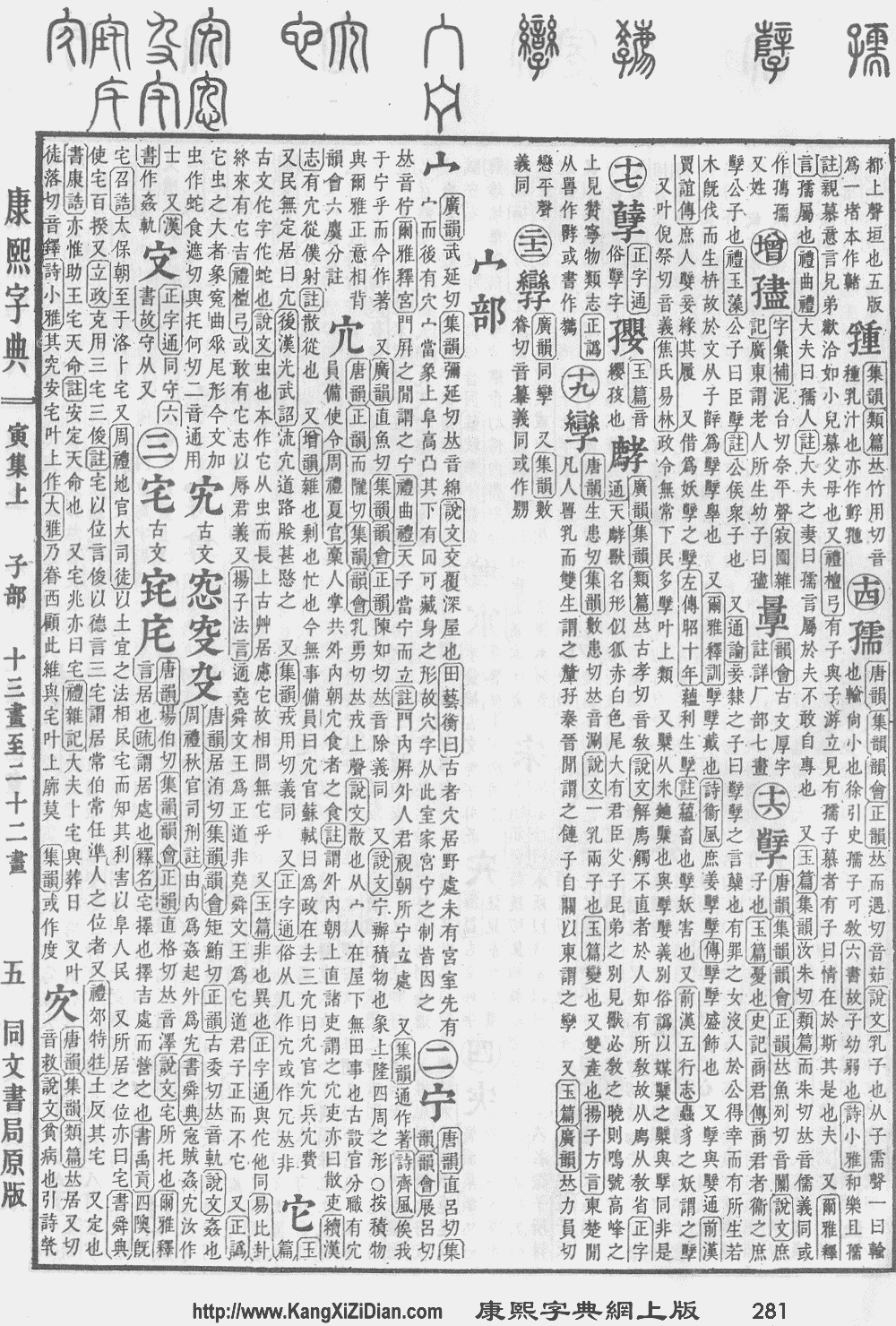
- Kangxi Dictionary: page 281, character 5
- Dai Kanwa Jiten: character 7046
- Dae Jaweon: page 551, character 5
- Hanyu Da Zidian (first edition): volume 2, page 1020, character 8
- Unihan data for U+5B7C
Chinese
Glyph origin
Japanese
Kanji
孼
- This term needs a translation to English. Please help out and add a translation, then remove the text
{{rfdef}}.
Korean
Etymology
From Middle Chinese 孽 (MC ngjet). Recorded as Middle Korean 孽/얼〮 (él) (Yale: el) in Hunmong Jahoe (訓蒙字會 / 훈몽자회), 1527.
Compounds
This article is issued from Wiktionary. The text is licensed under Creative Commons - Attribution - Sharealike. Additional terms may apply for the media files.