寝
See also: 寢
| ||||||||
Translingual
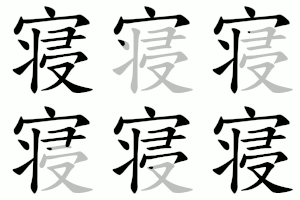
| Stroke order | |||
|---|---|---|---|
 | |||
Han character
寝 (Kangxi radical 40, 宀+10, 13 strokes, cangjie input 十中一水 (JLME), composition ⿱宀⿰丬𠬶)
References
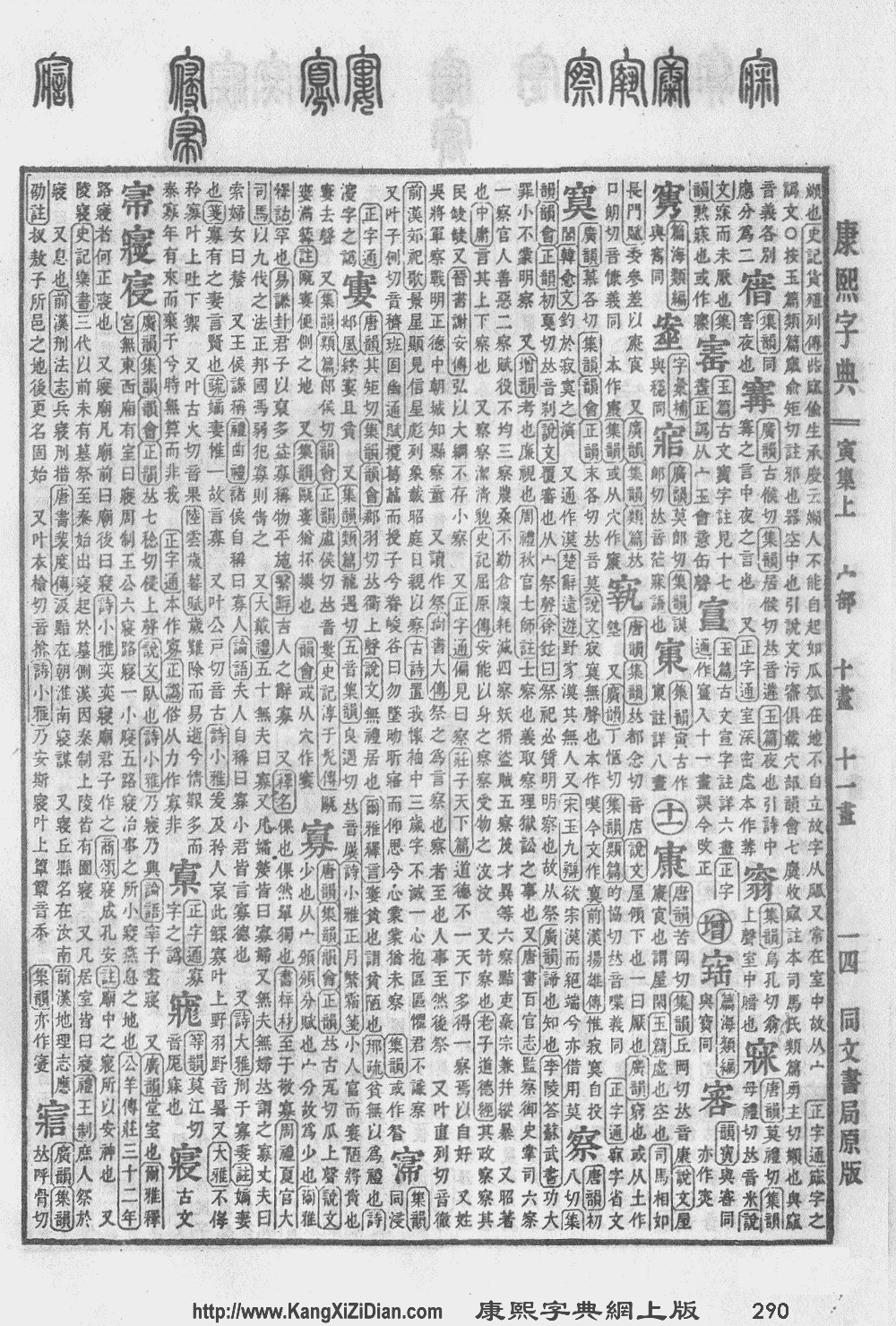
- Kangxi Dictionary: not present, would follow page 290, character 12
- Dai Kanwa Jiten: character 7278
- Dae Jaweon: page 574, character 16
- Hanyu Da Zidian (first edition): volume 2, page 946, character 7
- Unihan data for U+5BDD
Chinese
| For pronunciation and definitions of 寝 – see 寢 (“to sleep; to lie down; bedroom; etc.”). (This character is the simplified and variant form of 寢). |
Notes:
|
Japanese
Readings
Etymology 1
| Kanji in this term |
|---|
| 寝 |
| ね Grade: S |
| kun’yomi |
| Alternative spelling |
|---|
| 寢 (kyūjitai) |
From Old Japanese.
The 連用形 (ren'yōkei, “stem or continuative form”) of classical verb 寝 (nu, see below), modern 寝る (neru, “to sleep”).
Derived terms
Etymology 2
| Kanji in this term |
|---|
| 寝 |
| ぬ Grade: S |
| kun’yomi |
| Alternative spelling |
|---|
| 寢 (kyūjitai) |
From Old Japanese.
Alternative forms
Conjugation
Classical conjugation of "寝" (ナ行下二段活用, see Appendix:Japanese verbs.)
| Stem forms | |||
|---|---|---|---|
| Irrealis (未然形) | 寝 | ね | ne |
| Continuative (連用形) | 寝 | ね | ne |
| Terminal (終止形) | 寝 | ぬ | nu |
| Attributive (連体形) | 寝る | ぬる | nuru |
| Realis (已然形) | 寝れ | ぬれ | nure |
| Imperative (命令形) | 寝よ | ねよ | neyo |
| Key constructions | |||
| Negative | 寝ず | ねず | nezu |
| Contrasting conjunction | 寝れど | ぬれど | nuredo |
| Causal conjunction | 寝れば | ぬれば | nureba |
| Conditional conjunction | 寝ば | ねば | neba |
| Past tense (firsthand knowledge) | 寝き | ねき | neki |
| Past tense (secondhand knowledge) | 寝けり | ねけり | nekeri |
| Perfect tense (conscious action) | 寝つ | ねつ | netu |
| Perfect tense (natural event) | 寝ぬ | ねぬ | nenu |
| Perfect-continuative tense | 寝たり | ねたり | netari |
| Volitional | 寝む | ねむ | nemu |
Derived terms
Etymology 3
| Kanji in this term |
|---|
| 寝 |
| い Grade: S |
| irregular |
| Alternative spelling |
|---|
| 寢 (kyūjitai) |
⟨i1⟩ → */ji/ → /i/
From Old Japanese.
Noun
寝 • (i)
- (obsolete) sleep, sleeping
- c. late 9th–mid-10th century, Taketori Monogatari (page 5)[2]
- そのあたりの垣にも、家の門にも、をる人だにたはやすく見るまじき物を、夜るはやすき寝も寝ず、闇の夜に出て、穴をくじり、かひ間見、まどひあへり。
- Sono atari no kaki ni mo, ie no mon ni mo, oru hito dani tawayasuku miru majiki mono o, yoru[sic] hayasuki i mo nezu, yami no yo ni idete[sic], ana o kujiri, kai[sic]mami, madoiaeri.
- (please add an English translation of this example)
- そのあたりの垣にも、家の門にも、をる人だにたはやすく見るまじき物を、夜るはやすき寝も寝ず、闇の夜に出て、穴をくじり、かひ間見、まどひあへり。
- c. late 9th–mid-10th century, Taketori Monogatari (page 5)[2]
Derived terms
Etymology 4
| Kanji in this term |
|---|
| 寝 |
| しん Grade: S |
| on’yomi |
| Alternative spelling |
|---|
| 寢 (kyūjitai) |
/sim/ → /simʉ/ → /ɕimʉ/ → /ɕiɴ/
From Middle Chinese 寢 (MC tshimX).
Derived terms
- 不寝番 (fushinban)
Derived terms
References
- Matsumura, Akira, editor (2006), 大辞林 [Daijirin] (in Japanese), Third edition, Tōkyō: Sanseidō, →ISBN
- Horiuchi, Hideaki with Ken Akiyama (1997) Taketori Monogatari, Ise Monogatari, Tōkyō: Iwanami Shoten, →ISBN
- NHK Broadcasting Culture Research Institute, editor (1998), NHK日本語発音アクセント辞典 [NHK Japanese Pronunciation Accent Dictionary] (in Japanese), Tōkyō: NHK Publishing, →ISBN
Korean
Hanja
寝 • (chim) (hangeul 침, revised chim, McCune–Reischauer ch'im)
- This term needs a translation to English. Please help out and add a translation, then remove the text
{{rfdef}}.
This article is issued from Wiktionary. The text is licensed under Creative Commons - Attribution - Sharealike. Additional terms may apply for the media files.