寢
See also: 寝
| ||||||||
Translingual
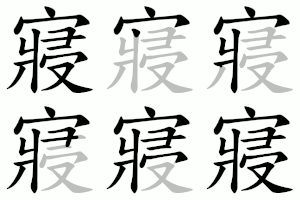
| Stroke order | |||
|---|---|---|---|
 | |||
Han character
寢 (Kangxi radical 40, 宀+11, 14 strokes, cangjie input 十女一水 (JVME), four-corner 30247, composition ⿱宀⿰爿𠬶 or ⿱宀𭷆)
References
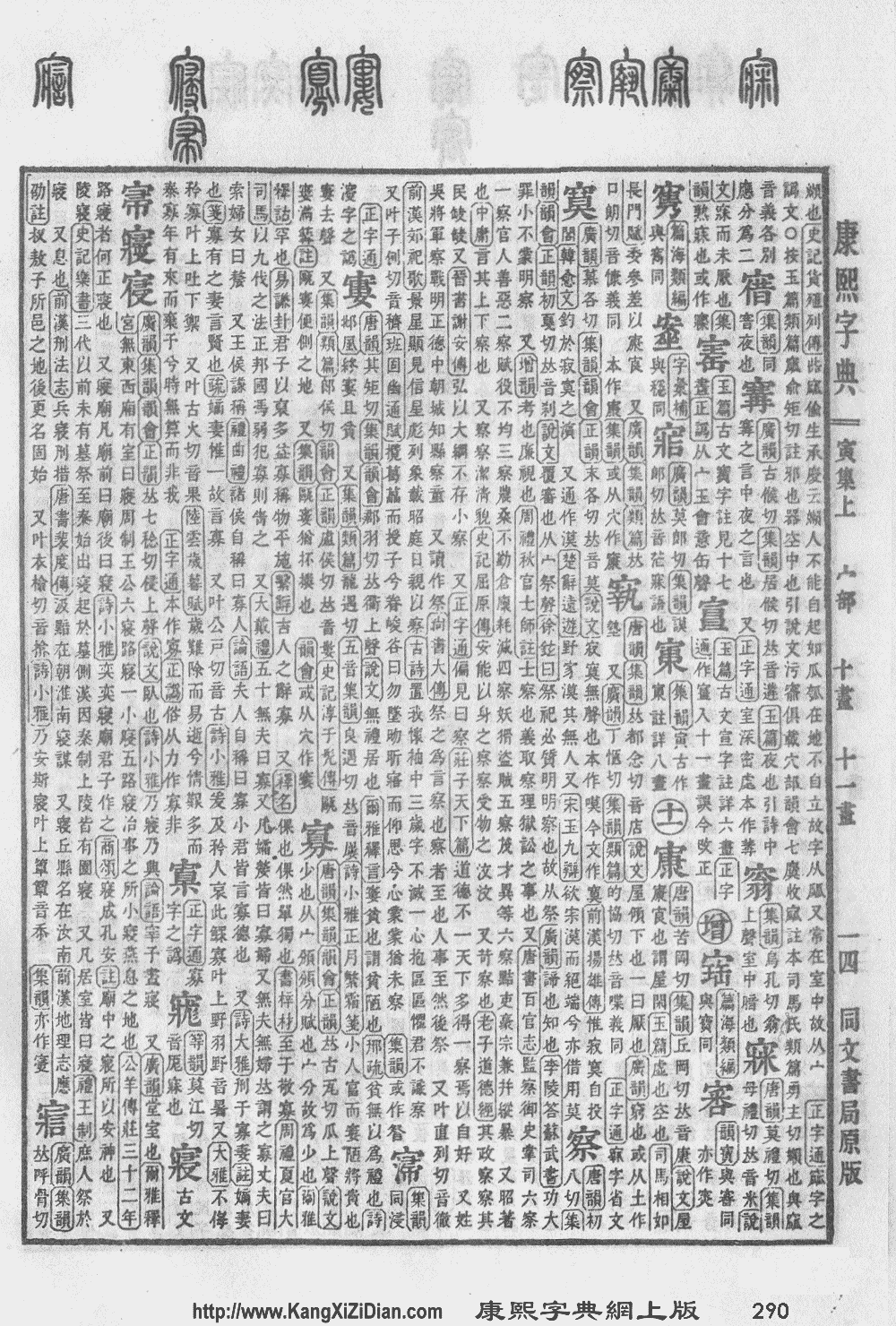
- Kangxi Dictionary: page 290, character 22
- Dai Kanwa Jiten: character 7289
- Dae Jaweon: page 575, character 2
- Hanyu Da Zidian (first edition): volume 2, page 951, character 1
- Unihan data for U+5BE2
Chinese
| trad. | 寢 | |
|---|---|---|
| simp. | 寝 | |
| alternative forms | ||
Glyph origin
Characters in the same phonetic series (侵) (Zhengzhang, 2003)
Phono-semantic compound (形聲/形声, OC *sʰimʔ) and ideogrammic compound (會意/会意) : semantic 宀 (“roof”) + semantic 爿 (“bed”) + phonetic 𠬶 (“broom and hand”).
Etymology 1
From Proto-Sino-Tibetan *g-(d)z(i/u)m (“sleep”) (STEDT). Cognate with Tibetan གཟིམ (gzim, “to sleep; to fall asleep”).
Pronunciation
Definitions
寢
Synonyms
Dialectal synonyms of 睡覺 (“to sleep”) [map]
Compounds
- 內寢/内寝
- 共寢/共寝 (gòngqǐn)
- 問寢/问寝
- 園寢/园寝
- 壽終內寢/寿终内寝
- 壽終正寢/寿终正寝 (shòuzhōngzhèngqǐn)
- 安寢/安寝 (ānqǐn)
- 寢不安席/寝不安席
- 寢不能寐/寝不能寐
- 寢不遑安/寝不遑安
- 寢丘之志/寝丘之志
- 寢兵/寝兵
- 寢具/寝具 (qǐnjù)
- 寢室/寝室 (qǐnshì)
- 寢宮/寝宫 (qǐngōng)
- 寢廟/寝庙
- 寢息/寝息 (qǐnxī)
- 寢殿/寝殿
- 寢疾/寝疾
- 寢皮食肉/寝皮食肉
- 寢苫枕塊/寝苫枕块
- 寢苫枕草/寝苫枕草
- 寢薦/寝荐
- 寢處/寝处
- 寢衣/寝衣
- 寢車/寝车
- 寢門/寝门
- 寢陋/寝陋
- 寢食/寝食 (qǐnshí)
- 寢食不安/寝食不安 (qǐnshíbù'ān)
- 寢食俱廢/寝食俱废
- 寢食難安/寝食难安 (qǐnshínán'ān)
- 小寢/小寝
- 就寢/就寝 (jiùqǐn)
- 廢寢忘食/废寝忘食 (fèiqǐnwàngshí)
- 廢寢忘餐/废寝忘餐
- 廢寢輟食/废寝辍食
- 廢食忘寢/废食忘寝
- 忘寢廢食/忘寝废食
- 忘餐失寢/忘餐失寝
- 忘餐廢寢/忘餐废寝
- 憨寢/憨寝
- 按甲寢兵/按甲寝兵
- 晏寢/晏寝
- 晝寢/昼寝 (zhòuqǐn)
- 枕戈寢甲/枕戈寝甲
- 桂宮柏寢/桂宫柏寝
- 正寢/正寝
- 歸寢/归寝
- 疾終正寢/疾终正寝
- 篠寢/筱寝
- 美食甘寢/美食甘寝
- 臨寢/临寝
- 色衰愛寢/色衰爱寝
- 薦寢席/荐寝席
- 貌寢/貌寝
- 陵寢/陵寝 (língqǐn)
- 雞鳴問寢/鸡鸣问寝
- 靈寢/灵寝 (língqǐn)
- 食肉寢皮/食肉寝皮 (shíròuqǐnpí)
- 高枕安寢/高枕安寝
Pronunciation
Definitions
寢
- (Xiamen, Zhangzhou and Taiwanese Hokkien) to approach; to draw near; to imminently occur
- 寢年/寝年 [Hokkien] ― chhím nî [Pe̍h-ōe-jī] ― to approach the end of the year
- 寢水墘/寝水墘 [Hokkien] ― chhím chúi-kîⁿ [Pe̍h-ōe-jī] ― approaching the edge of the water
- (Xiamen, Quanzhou and Taiwanese Hokkien) just; just now; a moment ago
Synonyms
Dialectal synonyms of 剛才 (“just now”) [map]
Japanese
| 寝 | |
| 寢 |
Kanji
寢
(“Jinmeiyō” kanji used for names, kyūjitai kanji, shinjitai form 寝)
- This term needs a translation to English. Please help out and add a translation, then remove the text
{{rfdef}}.
Korean
Hanja
寢 • (chim) (hangeul 침, revised chim, McCune–Reischauer ch'im)
- This term needs a translation to English. Please help out and add a translation, then remove the text
{{rfdef}}.
Vietnamese
This article is issued from Wiktionary. The text is licensed under Creative Commons - Attribution - Sharealike. Additional terms may apply for the media files.