寐
| ||||||||
Translingual
Han character
寐 (Kangxi radical 40, 宀+9, 12 strokes, cangjie input 十女一木 (JVMD), four-corner 30295, composition ⿱宀⿰爿未)
References
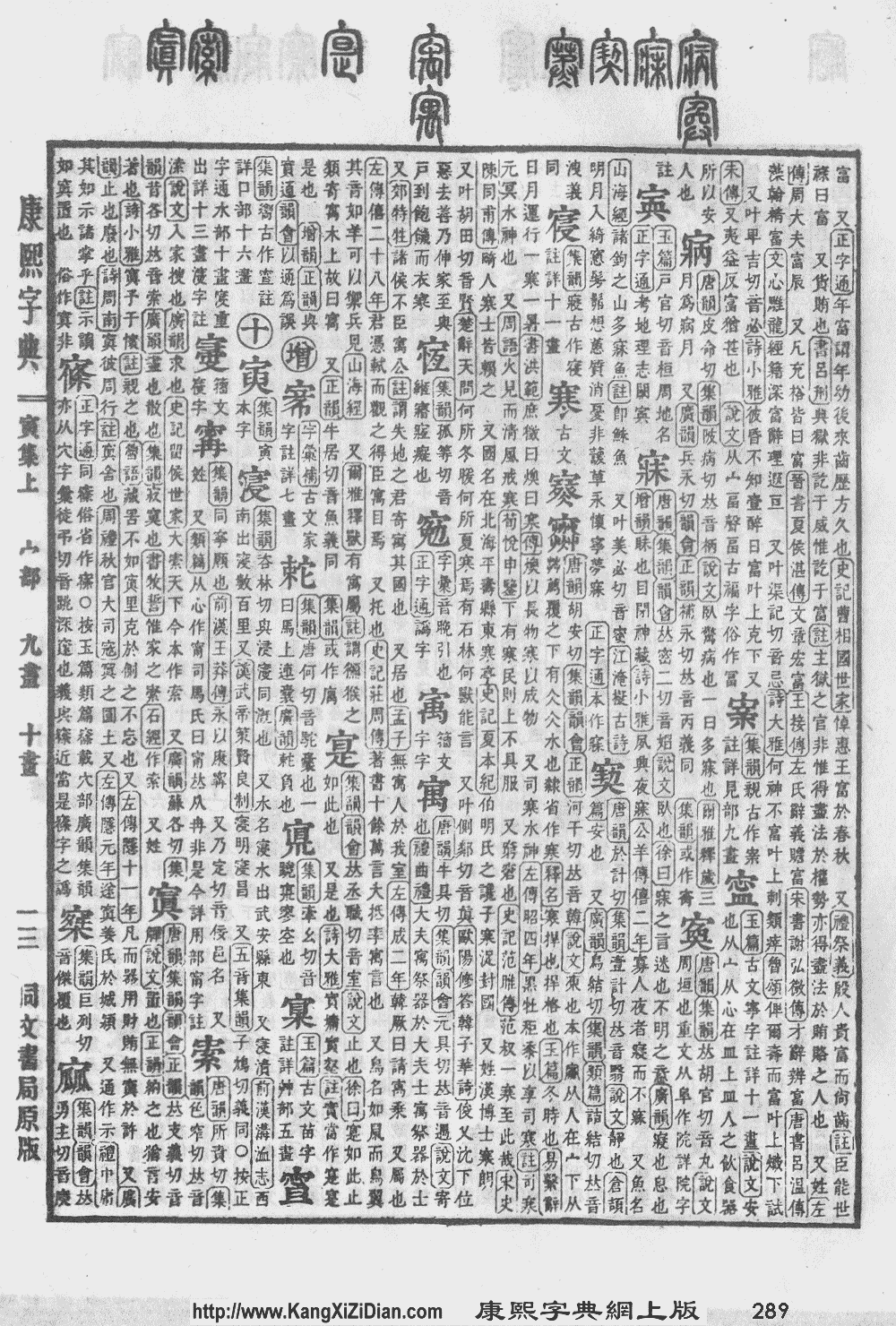
- Kangxi Dictionary: page 289, character 6
- Dai Kanwa Jiten: character 7236
- Dae Jaweon: page 572, character 6
- Hanyu Da Zidian (first edition): volume 2, page 944, character 12
- Unihan data for U+5BD0
Chinese
| simp. and trad. |
寐 | |
|---|---|---|
| 2nd round simp. | ⿱宀⿰丬未 | |
| alternative forms | 𥧌 | |
Glyph origin
Characters in the same phonetic series (未) (Zhengzhang, 2003)
Phono-semantic compound (形聲/形声, OC *mids) : abbreviated semantic 㝱 (“dream”) + phonetic 未 (OC *mɯds).
Original form may have been an ideogrammic compound (會意/会意) : 宀 (“house”) + 爿 (“bed”) + 人 (“person”) – a person sleeping on a bed in a room. Compare ancient forms of 夢.
Etymology
From Proto-Sino-Tibetan *r/s-mwəj (“to sleep; to dream”) (STEDT). Cognate with Tibetan རྨི་བ (rmi ba, “to dream”), Tibetan རྨི་ལམ (rmi lam, “dream”), Burmese မွေ့ (mwe., “to enjoy sleep”).
Pronunciation
Definitions
寐
Synonyms
Dialectal synonyms of 睡覺 (“to sleep”) [map]
Compounds
References
- “寐”, in 漢語多功能字庫 (Multi-function Chinese Character Database), 香港中文大學 (the Chinese University of Hong Kong), 2014–
Japanese
Kanji
寐
- This term needs a translation to English. Please help out and add a translation, then remove the text
{{rfdef}}.
Korean
Hanja
寐 • (mae) (hangeul 매, revised mae, McCune–Reischauer mae)
- This term needs a translation to English. Please help out and add a translation, then remove the text
{{rfdef}}.
Vietnamese
This article is issued from Wiktionary. The text is licensed under Creative Commons - Attribution - Sharealike. Additional terms may apply for the media files.