彆

彆 U+5F46, 彆
CJK UNIFIED IDEOGRAPH-5F46
← 彅
[U+5F45]
CJK Unified Ideographs 彇 →
[U+5F47]

Translingual

Han character

彆 (Kangxi radical 57, 弓+12, 15 strokes, cangjie input 火大弓 (FKN), four-corner 97727, composition ⿱敝弓)

References

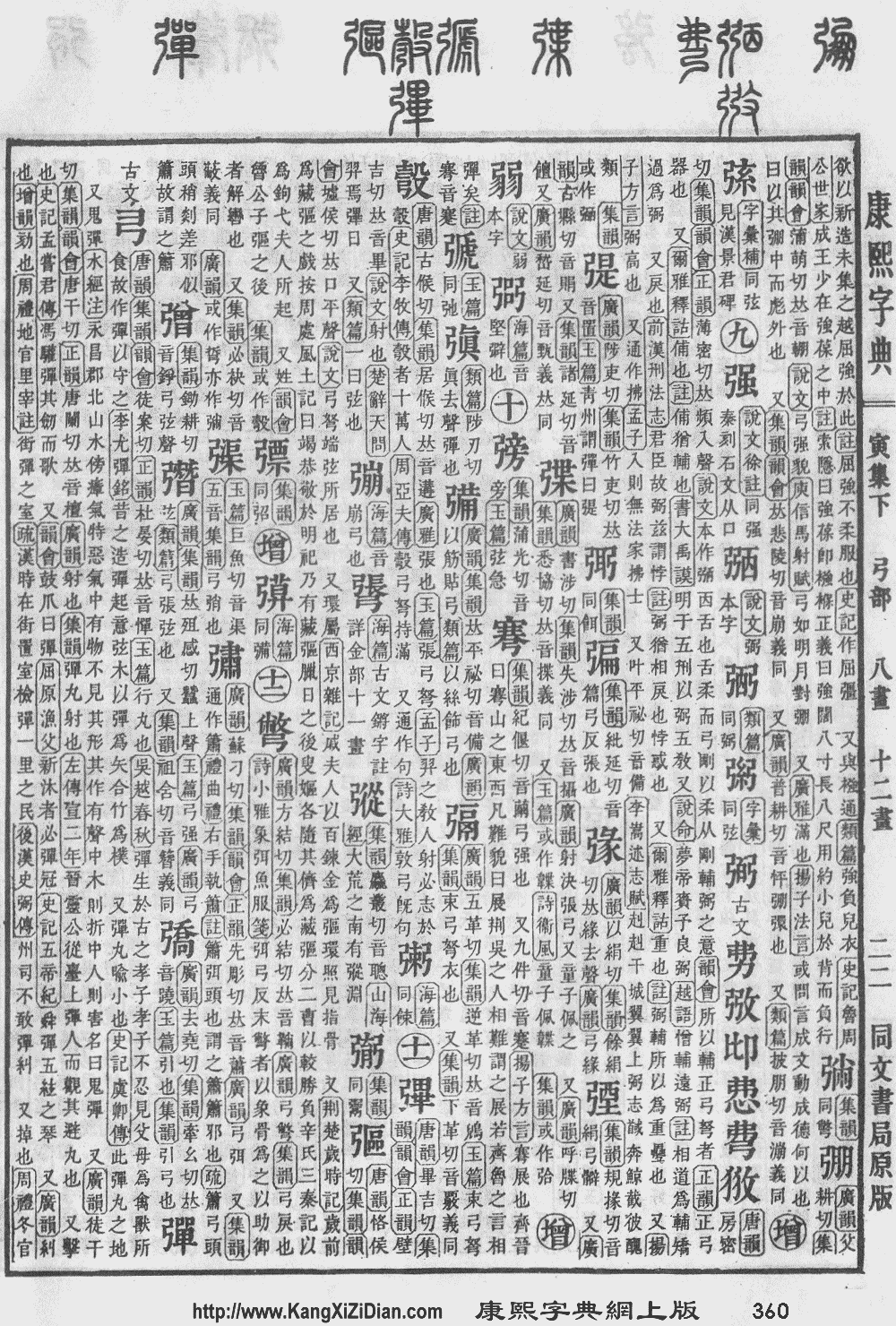
  • Kangxi Dictionary: page 360, character 39
  • Dai Kanwa Jiten: character 9859
  • Hanyu Da Zidian (first edition): volume 2, page 1002, character 7
  • Unihan data for U+5F46

Chinese

trad. 彆/別*
simp. 别*/彆
别: "to dissuade"

Glyph origin

Phono-semantic compound (形聲/形声, OC *peds, *peːd) : phonetic 敝 (OC *beds, *bed) + semantic 弓 (“bow”).

Pronunciation


Rime
Character 彆
Reading # 1/1
Initial (聲) 幫 (1)
Final (韻) 祭 (35)
Tone (調) Departing (H)
Openness (開合) Open
Division (等) III
Fanqie 必袂切
Baxter pjiejH
Reconstructions
Zhengzhang
Shangfang
/piᴇiH/
Pan
Wuyun
/piɛiH/
Shao
Rongfen
/pjæiH/
Edwin
Pulleyblank
/piajH/
Li
Rong
/piɛiH/
Wang
Li
/pĭɛiH/
Bernard
Karlgren
/pi̯ɛiH/
Expected
Mandarin
Reflex
bì
Expected
Cantonese
Reflex
bai3
Zhengzhang system (2003)
Character 彆 彆
Reading # 1/2 2/2
No. 630 649
Phonetic
component
敝 敝
Rime
group
祭 月
Rime
subdivision
2 2
Corresponding
MC rime
蔽 㢼
Old
Chinese
/*peds/ /*peːd/

Definitions

彆

  1. ends of bow
  2. to make somebody change their opinion; to dissuade
  3. to hold back

Compounds

  • 一彆頭/一别头
  • 彆口氣/别口气
  • 彆強/别强
  • 彆扭/别扭
  • 彆氣/别气
  • 拗彆/拗别
  • 拗彆攪炒/拗别搅炒
  • 皺彆/皱别
  • 鬥彆氣/斗别气
  • 鬧彆扭/闹别扭

Korean

Hanja

彆 (eumhun 활 뒤틀릴 별 (hwal dwiteullil byeol))

  1. Hanja form? of 별 (“warped bow”).
This article is issued from Wiktionary. The text is licensed under Creative Commons - Attribution - Sharealike. Additional terms may apply for the media files.